
Nexo Earn with Nexo
Ted Cruz plans markup to address federal AI regulation with light-touch framework

Ted Cruz plans markup to address federal AI regulation with light-touch framework

The Senate Commerce Committee chair wants to preempt state AI laws and create a federal regulatory sandbox for developers.

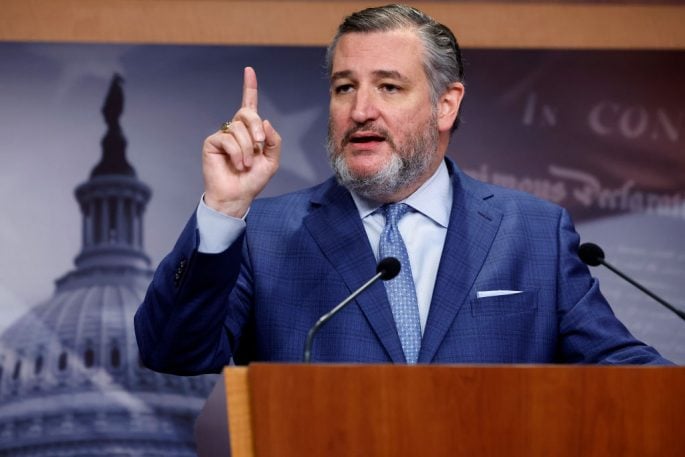
Senate Commerce Committee Chair Ted Cruz is pushing forward with a markup to establish a federal artificial intelligence regulation framework, one designed to keep the government’s hands relatively off the steering wheel while AI companies build the car.

The SANDBOX Act and Cruz’s regulatory vision

Cruz first unveiled his legislative framework for US AI policy on September 10, 2025, introducing the SANDBOX Act (S. 2750) as the opening salvo. The bill’s core mechanism is straightforward: it would create a federal regulatory sandbox that permits AI developers to apply for temporary waivers from federal regulations while testing new technologies.

Advertisement

Cruz has explicitly modeled his approach after the light-touch internet regulations from President Clinton’s era. The argument goes something like this: the US became the global leader in internet technology precisely because Washington didn’t strangle the industry with rules before anyone understood what it could become. Cruz wants to run the same playbook for AI.

Here’s the thing about Cruz’s framework that makes it particularly consequential: it aims to preempt state-level AI laws entirely. Instead of companies navigating a patchwork of 50 different regulatory regimes, there would be one federal standard.

Alignment with the Trump administration’s AI agenda

Cruz’s initiative doesn’t exist in a vacuum. It incorporates recommendations from the Trump administration’s AI Action Plan, which was released on July 23, 2025. The markup planned in the Senate Commerce Committee represents the next phase of turning this framework from a proposal into actual law. It’s the procedural step where committee members review, amend, and vote on the legislation before it can advance to the full Senate.

What this means for crypto and tech investors

A regulatory sandbox could be particularly relevant for companies working at the intersection of AI and decentralized technologies. Projects building AI models on blockchain infrastructure, or using machine learning for DeFi applications, would potentially benefit from the ability to test without immediately facing full regulatory scrutiny.

The preemption of state laws is worth watching closely. Several states have been moving aggressively on their own AI regulations, creating exactly the kind of fragmented landscape that makes compliance expensive and unpredictable. A single federal standard, even a permissive one, removes that uncertainty.

Disclosure: This article was edited by Editorial Team. For more information on how we create and review content, see our Editorial Policy.

Ted Cruz plans markup to address federal AI regulation with light-touch framework

Ted Cruz plans markup to address federal AI regulation with light-touch framework

The Senate Commerce Committee chair wants to preempt state AI laws and create a federal regulatory sandbox for developers.

Senate Commerce Committee Chair Ted Cruz is pushing forward with a markup to establish a federal artificial intelligence regulation framework, one designed to keep the government’s hands relatively off the steering wheel while AI companies build the car.

The SANDBOX Act and Cruz’s regulatory vision

Cruz first unveiled his legislative framework for US AI policy on September 10, 2025, introducing the SANDBOX Act (S. 2750) as the opening salvo. The bill’s core mechanism is straightforward: it would create a federal regulatory sandbox that permits AI developers to apply for temporary waivers from federal regulations while testing new technologies.

Advertisement

Cruz has explicitly modeled his approach after the light-touch internet regulations from President Clinton’s era. The argument goes something like this: the US became the global leader in internet technology precisely because Washington didn’t strangle the industry with rules before anyone understood what it could become. Cruz wants to run the same playbook for AI.

Here’s the thing about Cruz’s framework that makes it particularly consequential: it aims to preempt state-level AI laws entirely. Instead of companies navigating a patchwork of 50 different regulatory regimes, there would be one federal standard.

Alignment with the Trump administration’s AI agenda

Cruz’s initiative doesn’t exist in a vacuum. It incorporates recommendations from the Trump administration’s AI Action Plan, which was released on July 23, 2025. The markup planned in the Senate Commerce Committee represents the next phase of turning this framework from a proposal into actual law. It’s the procedural step where committee members review, amend, and vote on the legislation before it can advance to the full Senate.

What this means for crypto and tech investors

A regulatory sandbox could be particularly relevant for companies working at the intersection of AI and decentralized technologies. Projects building AI models on blockchain infrastructure, or using machine learning for DeFi applications, would potentially benefit from the ability to test without immediately facing full regulatory scrutiny.

The preemption of state laws is worth watching closely. Several states have been moving aggressively on their own AI regulations, creating exactly the kind of fragmented landscape that makes compliance expensive and unpredictable. A single federal standard, even a permissive one, removes that uncertainty.

Disclosure: This article was edited by Editorial Team. For more information on how we create and review content, see our Editorial Policy.