
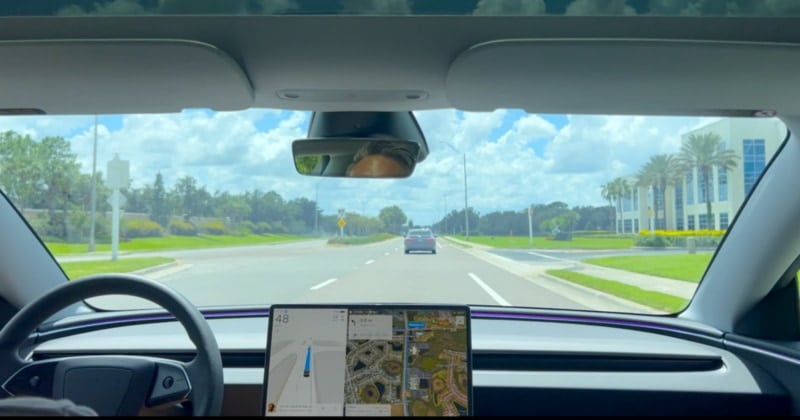
Tesla’s FSD Supervised completes coast-to-coast drives without human input
Multiple Tesla owners have driven thousands of miles across the US on FSD v14.x without a single disengagement, but the system still requires a human behind the wheel.
Back in 2016, Elon Musk promised a Tesla would drive itself from LA to New York by 2017. It’s 2026, and Tesla still hasn’t done it officially. But its customers have.
Multiple Tesla owners have now completed coast-to-coast drives across the United States using the Full Self-Driving Supervised software, version 14.x, with zero driver disengagements. The distances range from 2,700 to over 3,000 miles, spanning highways, city streets, construction zones, and winter weather. Tesla’s own social media accounts have been amplifying these achievements, which is telling in itself.
The numbers behind the drives
The most documented journey belongs to David Moss, who drove 2,732 miles from Los Angeles to Myrtle Beach on FSD v14.2 without touching the wheel for a single intervention. That trip included roughly 30 Supercharger stops and brought his cumulative intervention-free FSD mileage past the 10,000-mile mark.
Then there’s a team in a 2024 Model S that covered 3,081 miles from LA to New York in 58 hours and 22 minutes, charging stops included, also with zero interventions. They did it in winter conditions, which adds a layer of complexity that anyone who’s driven through a Midwest snowstorm can appreciate.
A Model 3 also completed a 2,833-mile Cannonball Run from New York to LA on FSD v14.3.2. Zero disengagements. And in late May 2026, another driver completed a coast-to-coast journey across Canada with the same result: no human input required beyond sitting in the driver’s seat.
AI, tech, and the markets they move—in one daily briefing.
Daily. Free. Join 34,000+ readers across crypto, finance, and policy.
Why it matters, and why it doesn’t
FSD Supervised is classified as a Level 2 driver-assistance system. The car can steer, accelerate, and brake on its own, but a licensed human driver must remain alert and ready to take over at all times.
The gap between “zero disengagements on a cross-country drive” and “fully autonomous vehicle” is wider than it appears. Zero disengagements means the driver never needed to intervene. It does not mean the driver could have been asleep, reading a book, or absent entirely.
Tesla has historically framed FSD as a stepping stone toward unsupervised autonomy and an eventual robotaxi service. The company still hasn’t conducted an official coast-to-coast demonstration of its own, a notable absence given how loudly its accounts promote the customer versions.
What this means for investors
The competitive landscape adds context. Waymo operates fully driverless robotaxis in multiple US cities but relies on expensive sensor suites and geofenced operating areas. Tesla’s approach, using cameras and neural networks in production vehicles already on the road, is fundamentally different in scale.
The regulatory path from Level 2 to unsupervised autonomy is neither quick nor guaranteed. The mixed messaging around what FSD can and can’t do has attracted scrutiny. Anyone pricing in a near-term robotaxi launch based on these owner trips should probably also remember that the original coast-to-coast promise was made nine years ago.