
Nexo Earn with Nexo
Tesla reports FSD Supervised is over 3x safer than manual driving in Netherlands

Tesla reports FSD Supervised is over 3x safer than manual driving in Netherlands

Tesla's first European safety dataset shows 3.5 times fewer collisions than manual driving, but the numbers come with a significant asterisk.

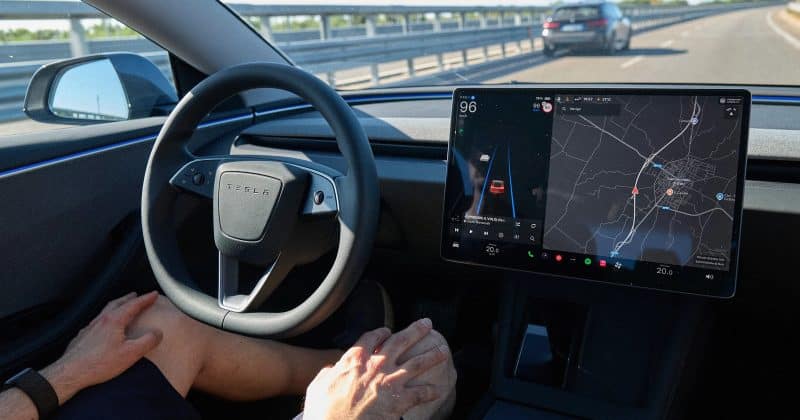
Tesla just dropped its first batch of European safety data for Full Self-Driving Supervised, and the numbers are eye-catching. Over a roughly two-month window from April 10 to June 5, 2026, vehicles running FSD in the Netherlands recorded 3.5 times fewer collisions than manually driven cars on the same roads.

The Netherlands became the first EU country to approve Tesla’s FSD Supervised system back in April 2026, making it the testing ground for what Tesla hopes will be a continent-wide rollout.

Breaking down the Dutch data

On highways, the improvement was dramatic: a 3.4x reduction in collision rates across 16.6 million kilometers driven with FSD engaged and, according to Tesla, zero reported collisions.

Non-highway roads told a different story. The system still outperformed human drivers, but at a more modest 1.6x improvement in collision rates.

Advertisement

Cumulative FSD driving across the Netherlands and Lithuania, the two European markets where the system has been active, reached approximately 20 to 23.6 million kilometers as of early June 2026.

All of this data comes from Tesla’s own telemetry. No independent verification of the dataset has been reported. Tesla is both the manufacturer of the system and the sole auditor of its safety performance.

Why the Netherlands matters for Tesla’s European ambitions

The Netherlands’ vehicle authority, the RDW, has been engaging with the European Commission on the initiative, which could accelerate acceptance of the system across other EU member states.

It is worth noting that the FSD Supervised label is important here. This is not fully autonomous driving. A human driver must remain attentive and ready to take over at all times. Tesla’s system is classified as a driver-assistance tool, not a self-driving one.

What this means for investors

Mercedes actually beat Tesla to Level 3 conditional automation approval in certain European markets. But Tesla’s approach, which relies on fleet-scale data collection and continuous over-the-air updates, gives it a structural advantage in iteration speed.

Most serious traffic injuries in the Netherlands occur on non-highway roads, where the FSD improvement was considerably smaller. A 1.6x improvement is still better than baseline, but it is not the kind of number that rewrites the safety narrative the way 3.4x on highways does.

Investors should watch two things closely. First, whether the RDW’s engagement with the European Commission produces concrete timelines for broader EU approval. Second, whether Tesla opens the door to independent verification of its safety claims, which would substantially increase the credibility of these metrics and likely accelerate regulatory acceptance across skeptical European markets.

Disclosure: This article was edited by Editorial Team. For more information on how we create and review content, see our Editorial Policy.

Tesla reports FSD Supervised is over 3x safer than manual driving in Netherlands

Tesla reports FSD Supervised is over 3x safer than manual driving in Netherlands

Tesla's first European safety dataset shows 3.5 times fewer collisions than manual driving, but the numbers come with a significant asterisk.

Tesla just dropped its first batch of European safety data for Full Self-Driving Supervised, and the numbers are eye-catching. Over a roughly two-month window from April 10 to June 5, 2026, vehicles running FSD in the Netherlands recorded 3.5 times fewer collisions than manually driven cars on the same roads.

The Netherlands became the first EU country to approve Tesla’s FSD Supervised system back in April 2026, making it the testing ground for what Tesla hopes will be a continent-wide rollout.

Breaking down the Dutch data

On highways, the improvement was dramatic: a 3.4x reduction in collision rates across 16.6 million kilometers driven with FSD engaged and, according to Tesla, zero reported collisions.

Non-highway roads told a different story. The system still outperformed human drivers, but at a more modest 1.6x improvement in collision rates.

Advertisement

Cumulative FSD driving across the Netherlands and Lithuania, the two European markets where the system has been active, reached approximately 20 to 23.6 million kilometers as of early June 2026.

All of this data comes from Tesla’s own telemetry. No independent verification of the dataset has been reported. Tesla is both the manufacturer of the system and the sole auditor of its safety performance.

Why the Netherlands matters for Tesla’s European ambitions

The Netherlands’ vehicle authority, the RDW, has been engaging with the European Commission on the initiative, which could accelerate acceptance of the system across other EU member states.

It is worth noting that the FSD Supervised label is important here. This is not fully autonomous driving. A human driver must remain attentive and ready to take over at all times. Tesla’s system is classified as a driver-assistance tool, not a self-driving one.

What this means for investors

Mercedes actually beat Tesla to Level 3 conditional automation approval in certain European markets. But Tesla’s approach, which relies on fleet-scale data collection and continuous over-the-air updates, gives it a structural advantage in iteration speed.

Most serious traffic injuries in the Netherlands occur on non-highway roads, where the FSD improvement was considerably smaller. A 1.6x improvement is still better than baseline, but it is not the kind of number that rewrites the safety narrative the way 3.4x on highways does.

Investors should watch two things closely. First, whether the RDW’s engagement with the European Commission produces concrete timelines for broader EU approval. Second, whether Tesla opens the door to independent verification of its safety claims, which would substantially increase the credibility of these metrics and likely accelerate regulatory acceptance across skeptical European markets.

Disclosure: This article was edited by Editorial Team. For more information on how we create and review content, see our Editorial Policy.