
Tether acquires SoftBank’s 26% stake in Twenty One Capital
The stablecoin giant is buying its way deeper into Bitcoin's financial infrastructure, snapping up SoftBank's entire position in the publicly traded Bitcoin treasury company.
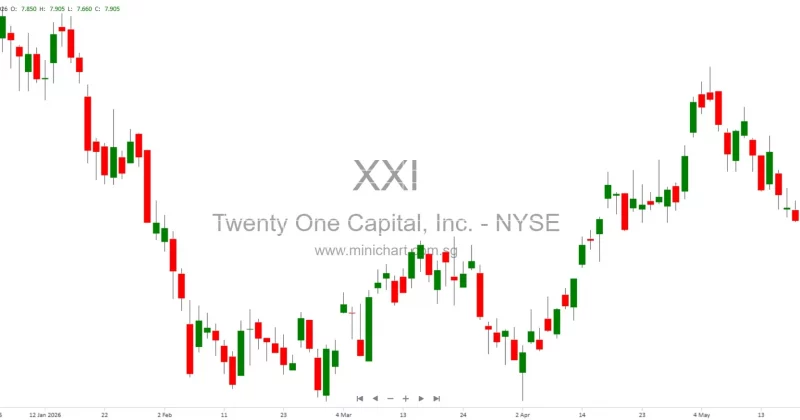
Tether just made itself the dominant force behind one of the largest publicly traded Bitcoin holders. The stablecoin issuer announced Wednesday that it purchased SoftBank Group’s roughly 26% stake in Twenty One Capital, the Bitcoin treasury company led by Jack Mallers and backed by Cantor Fitzgerald.
The purchase price was not disclosed. But the strategic signal is hard to miss: Tether is aggressively expanding beyond stablecoins and into the plumbing of Bitcoin-native finance.
From backer to boss
SoftBank was one of the earliest investors in Twenty One Capital, which launched in 2025 as a vehicle designed to accumulate and hold Bitcoin on a public balance sheet. Think of it as the MicroStrategy playbook, but with ambitions that stretch further, into lending, mining, and capital markets services.
By absorbing SoftBank’s entire position, Tether now wields significantly greater control over that operation. It’s the difference between being a shareholder and being the shareholder.
For SoftBank, the exit fits a familiar pattern. Masayoshi Son’s conglomerate has historically rotated out of positions once the strategic thesis either matures or shifts. In this case, it appears Tether was more than willing to take the other side of that trade.
Jack Mallers, the Strike CEO who leads Twenty One Capital, has been vocal about building Bitcoin-first financial products. With Tether now holding an even larger ownership position, Mallers has a deep-pocketed backer whose interests are tightly aligned with that vision.
Why Tether wants to own Bitcoin infrastructure
Here’s the thing about Tether: it’s not just a stablecoin company anymore. It hasn’t been for a while.
The issuer of USDT, the most widely used stablecoin in crypto, has been on a diversification tear. Its treasury operations already include significant Bitcoin holdings, and the company has made investments across mining, AI infrastructure, and emerging markets payments.
The news moving money, markets, and the world—before your day starts.
Daily. Free. Join 34,000+ readers across crypto, finance, and policy.
Twenty One Capital fits neatly into that expansion. The company isn’t a passive Bitcoin piggy bank. It’s building out active financial services: lending against Bitcoin collateral, participating in mining operations, and creating capital markets products. In English: it wants to be a full-service Bitcoin bank that happens to trade on a public exchange.
For Tether, owning a bigger piece of that means owning a bigger piece of the bridge between traditional finance and Bitcoin. Public markets give Twenty One Capital access to institutional capital, equity issuance, and a level of regulatory visibility that private crypto firms don’t enjoy. Tether gets to ride that access without going public itself.
It’s a clever structure. Tether operates the world’s most liquid stablecoin, generates billions in revenue from US Treasury holdings backing USDT, and now channels that firepower into owning stakes in publicly traded Bitcoin vehicles. The flywheel is obvious: stablecoin profits fund Bitcoin accumulation, which funds Bitcoin financial services, which drives more demand for stablecoins.
The competitive landscape just shifted
This deal doesn’t happen in a vacuum. The market for publicly traded Bitcoin treasury companies has been heating up since MicroStrategy (now Strategy) proved the model could work. Strategy’s stock became a leveraged Bitcoin bet that institutional investors could actually buy, and copycats followed.
Twenty One Capital entered that race with a different angle. Rather than simply buying and holding Bitcoin, it positioned itself as a platform company, one that would build financial products on top of its Bitcoin treasury. The Cantor Fitzgerald backing gave it credibility in traditional finance circles. Mallers brought crypto-native distribution.
Now Tether’s expanded ownership adds something else entirely: the backing of the single most profitable company in crypto. Tether’s ability to generate cash from USDT operations means Twenty One Capital has a parent-level investor that can continuously support capital raises, Bitcoin acquisitions, and product development without relying solely on public market financing.
That’s a meaningful competitive advantage over other Bitcoin treasury companies that depend on equity dilution or convertible debt to fund their Bitcoin purchases. When your largest shareholder prints money (stablecoins, technically) and earns yield on the reserves, the funding dynamics look very different.
For investors watching the publicly traded Bitcoin holder space, the question becomes whether this consolidation trend continues. Tether has the balance sheet to acquire stakes in multiple public Bitcoin vehicles. If it does, the stablecoin issuer could quietly become the most influential entity in Bitcoin’s public market infrastructure.
The risk side of this equation deserves attention too. Tether’s regulatory status remains a perennial concern. The company has faced scrutiny from lawmakers and regulators for years over the transparency of its reserves and its offshore structure. Any regulatory action against Tether would ripple directly into Twenty One Capital’s governance and valuation.
There’s also concentration risk. Having the world’s largest stablecoin issuer as the dominant shareholder of a major public Bitcoin holder creates a web of interconnected exposure. If Bitcoin prices drop sharply, both Tether’s balance sheet and Twenty One Capital’s treasury take hits simultaneously, and the feedback loop runs in reverse.
Look, SoftBank stepping away and Tether stepping in tells you something about where the gravitational center of Bitcoin finance is moving. It’s shifting from traditional venture and tech conglomerates toward crypto-native entities with deep operational ties to the Bitcoin ecosystem. Whether that concentration of power is healthy for the market is a question investors should be asking right now, not after the next stress test.