
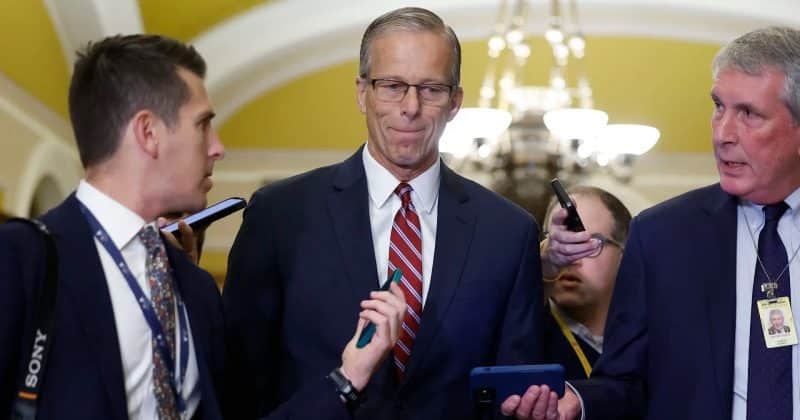
John Thune prepares to advance crypto legislation for Senate vote

John Thune prepares to advance crypto legislation for Senate vote

The Digital Asset Market Clarity Act cleared committee with bipartisan support and now awaits a full Senate floor vote as over 200 crypto firms push for action before summer recess.

Senate Majority Leader John Thune is signaling that the crypto industry’s most consequential piece of legislation could finally get its moment on the Senate floor. The Digital Asset Market Clarity Act, which passed the House back in July 2025 with a decisive 294-134 vote, has been sitting in legislative limbo ever since. That wait may be ending.

The bill cleared the Senate Banking Committee on May 14, 2026, with a bipartisan 15-9 vote, and was placed on the Senate legislative calendar on June 1. Now Thune says he may bring it to a full vote soon, a move that would represent the most significant step toward comprehensive crypto market regulation the US has ever taken.

What the Clarity Act actually does

The legislation, formally known as H.R. 3633, aims to establish a comprehensive regulatory framework for digital asset markets. It would finally define which digital assets fall under SEC oversight, which belong to the CFTC, and how companies in the space should operate.

Advertisement

This is distinct from the GENIUS Act, which Thune himself has been careful to differentiate. That earlier bill focused specifically on stablecoins and was signed into law in June 2025. The Clarity Act is broader in scope, attempting to address the entire digital asset market structure rather than just one corner of it.

The industry’s full-court press

On June 7, 2026, a coalition of over 200 crypto companies and organizations sent a letter to both Thune and Senate Minority Leader Chuck Schumer urging them to prioritize scheduling a vote.

A separate letter signed by 160 former law enforcement officials also called for the bill’s advancement in early June. Their argument centers on the idea that regulatory clarity would actually help fight financial crime, not hinder enforcement efforts.

The clock problem

Despite the momentum, the path to passage is far from guaranteed. Competing legislative priorities have caused some analysts to downgrade the odds of the Clarity Act passing during the 2026 session. Thune himself acknowledged the timeline challenge back in March 2026, when he noted that the bill was unlikely to even clear committee before April. It ended up doing so in May, which was progress, but the clock keeps ticking.

The bill’s critics haven’t gone quiet either. Concerns about anti-money laundering protections and consumer safeguards remain live issues that could slow or complicate floor debate.

What this means for investors

The House vote of 294-134 was not close. That kind of margin suggests this isn’t a bill that will die because of ideology. If it fails, it will be because of logistics, namely whether Thune can find floor time before senators scatter for summer.

The competitive angle matters too. Other jurisdictions, notably the EU with its MiCA framework, have already implemented comprehensive crypto regulations. Every month the US delays is another month where crypto companies have an incentive to set up shop somewhere with clearer rules. Thune and the bill’s supporters have made this argument repeatedly.

Disclosure: This article was edited by Editorial Team. For more information on how we create and review content, see our Editorial Policy.

John Thune prepares to advance crypto legislation for Senate vote

John Thune prepares to advance crypto legislation for Senate vote

The Digital Asset Market Clarity Act cleared committee with bipartisan support and now awaits a full Senate floor vote as over 200 crypto firms push for action before summer recess.

Senate Majority Leader John Thune is signaling that the crypto industry’s most consequential piece of legislation could finally get its moment on the Senate floor. The Digital Asset Market Clarity Act, which passed the House back in July 2025 with a decisive 294-134 vote, has been sitting in legislative limbo ever since. That wait may be ending.

The bill cleared the Senate Banking Committee on May 14, 2026, with a bipartisan 15-9 vote, and was placed on the Senate legislative calendar on June 1. Now Thune says he may bring it to a full vote soon, a move that would represent the most significant step toward comprehensive crypto market regulation the US has ever taken.

What the Clarity Act actually does

The legislation, formally known as H.R. 3633, aims to establish a comprehensive regulatory framework for digital asset markets. It would finally define which digital assets fall under SEC oversight, which belong to the CFTC, and how companies in the space should operate.

Advertisement

This is distinct from the GENIUS Act, which Thune himself has been careful to differentiate. That earlier bill focused specifically on stablecoins and was signed into law in June 2025. The Clarity Act is broader in scope, attempting to address the entire digital asset market structure rather than just one corner of it.

The industry’s full-court press

On June 7, 2026, a coalition of over 200 crypto companies and organizations sent a letter to both Thune and Senate Minority Leader Chuck Schumer urging them to prioritize scheduling a vote.

A separate letter signed by 160 former law enforcement officials also called for the bill’s advancement in early June. Their argument centers on the idea that regulatory clarity would actually help fight financial crime, not hinder enforcement efforts.

The clock problem

Despite the momentum, the path to passage is far from guaranteed. Competing legislative priorities have caused some analysts to downgrade the odds of the Clarity Act passing during the 2026 session. Thune himself acknowledged the timeline challenge back in March 2026, when he noted that the bill was unlikely to even clear committee before April. It ended up doing so in May, which was progress, but the clock keeps ticking.

The bill’s critics haven’t gone quiet either. Concerns about anti-money laundering protections and consumer safeguards remain live issues that could slow or complicate floor debate.

What this means for investors

The House vote of 294-134 was not close. That kind of margin suggests this isn’t a bill that will die because of ideology. If it fails, it will be because of logistics, namely whether Thune can find floor time before senators scatter for summer.

The competitive angle matters too. Other jurisdictions, notably the EU with its MiCA framework, have already implemented comprehensive crypto regulations. Every month the US delays is another month where crypto companies have an incentive to set up shop somewhere with clearer rules. Thune and the bill’s supporters have made this argument repeatedly.

Disclosure: This article was edited by Editorial Team. For more information on how we create and review content, see our Editorial Policy.