
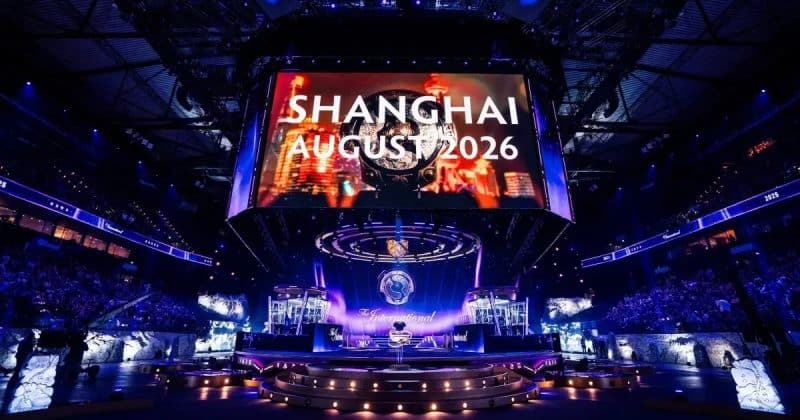
The International 2026 China Qualifier runs June 15-18 in Shanghai with zero crypto integration
Dota 2's biggest tournament returns to China with a $1.6M prize pool, but blockchain and crypto protocols remain completely absent from the picture
The International, Dota 2’s premier championship, is heading back to China for the first time in years. Before the main event kicks off in August, a regional qualifier will determine which Chinese teams earn their spot on the biggest stage in competitive Dota.
The China Qualifier runs June 15 to 18 using a double-elimination bracket, with two coveted main stage slots up for grabs. The main event itself takes place August 20-23 at Shanghai’s Oriental Sports Center, carrying a total prize pool of $1.6M.
What’s happening in Shanghai
Valve, the developer behind Dota 2 and the organizer of The International, announced seven direct invites to the main event on May 25. Among them was Xtreme Gaming, a Chinese squad that earned its seat without needing to grind through the qualifier. The remaining six invites went primarily to European organizations.
The main event features a group stage running August 13-16, followed by the playoff bracket from August 20-23. TI has historically relied on community-funded Battle Pass and Compendium purchases to build its prize pool, with previous editions reaching tens of millions of dollars. The $1.6M figure for this year represents a significant shift toward a more controlled funding model.
The crypto-shaped hole in competitive gaming
Valve’s official announcements and all contemporaneous reporting around TI 2026 contain zero references to crypto-native protocols, tokens, or blockchain features. Valve banned blockchain games and NFT-based titles from its Steam platform back in 2021, and that policy remains in effect. The prize pool continues to rely on community-driven purchases of in-game items, specifically Compendiums and Battle Passes, rather than any tokenized funding mechanism.
The news moving money, markets, and the world—before your day starts.
Daily. Free. Join 34,000+ readers across crypto, finance, and policy.
The China angle makes this predictable. Beijing has maintained some of the world’s strictest crypto regulations, having banned cryptocurrency trading and mining operations. Hosting a major international esports event in Shanghai while simultaneously integrating crypto features would create a significant regulatory conflict.
What this means for crypto-gaming investors
The largest, most established esports franchises continue to operate entirely within traditional financial rails. Prize pools funded by in-game purchases. Sponsorships from endemic and non-endemic brands. Revenue from media rights and ticket sales.
Dota 2’s item marketplace on Steam is one of the most successful digital economies in gaming history. Players buy, sell, and trade cosmetic items with real monetary value. Valve does not use blockchain infrastructure for this marketplace.
The $1.6M prize pool demonstrates that the traditional community funding model continues to function. Players buy Battle Passes because they want in-game content, and a portion of that revenue flows to the prize pool.
China’s regulatory posture makes the country effectively off-limits for crypto-gaming integrations at major events. Given that China represents one of the largest esports audiences globally, this regulatory constraint limits the addressable market for any protocol hoping to integrate with competitive gaming’s upper echelon.