Nexo Earn with Nexo
BOJ to conduct blockchain experiments for central bank reserve settlements

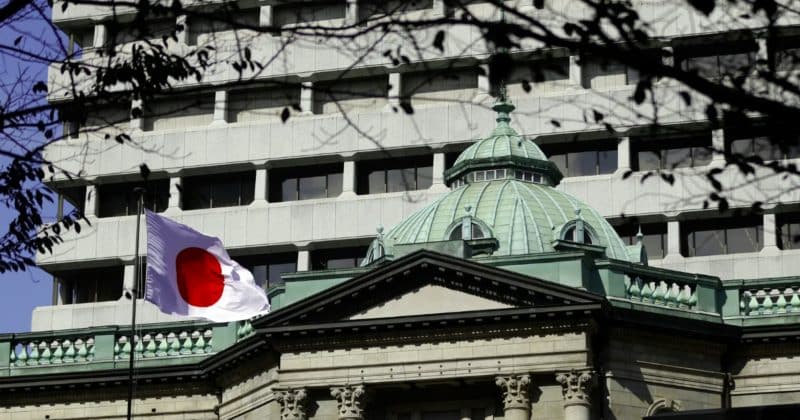
Photo: Kiyoshi Ota/Bloomberg

BOJ to conduct blockchain experiments for central bank reserve settlements

Across all projects, the central bank collaborates with external experts to ensure technical robustness and considers legal and operational challenges, including smart contract risks.

by Vivian Nguyen | Powered by Gloria

The Bank of Japan will test blockchain technology for settling deposits that financial institutions hold at the central bank, Governor Kazuo Ueda, the central bank’s leader since 2023, outlined the initiative during the FIN/SUM 2026 conference in Tokyo today.

The initiative is part of a sandbox project designed to examine the use of central bank money for multiple settlement activities, including domestic interbank and securities transactions.

Internationally, the BOJ has participated in Project Agorá, an experiment with multiple central banks and financial institutions to develop tokenized central bank deposits, which could streamline cross-border payments.

The project has brought together multiple central banks and major financial institutions to explore how smart contracts and atomic transactions could streamline international payments. Under the proposed framework, participating central banks would issue tokenized versions of their reserves on distributed ledgers.

“Central bank money fulfills its role as the anchor of trust for the economy by connecting all payment instruments, and functioning as the safest, most liquid settlement asset,” Ueda said.

The governor noted that distributed ledger technology has moved beyond experimentation into active deployment across financial services. He pointed to DeFi protocols as evidence of blockchain’s high programmability.

The BoJ launched a retail digital currency pilot in 2023 to assess technical requirements for issuing digital cash, though no decision on a public rollout has been made. Japan’s persistent preference for physical currency has shaped the cautious approach.

Ueda emphasized the need to ensure interoperability as multiple blockchain networks emerge alongside traditional payment rails. Without central bank involvement, he warned, users might perceive value differences between payment instruments on separate systems.

The governor also highlighted potential synergies between artificial intelligence and distributed ledgers, citing AI-driven advisory services and automated collateral management as emerging applications that could draw on transaction data stored on-chain.

BOJ to conduct blockchain experiments for central bank reserve settlements

BOJ to conduct blockchain experiments for central bank reserve settlements

Across all projects, the central bank collaborates with external experts to ensure technical robustness and considers legal and operational challenges, including smart contract risks.

by Vivian Nguyen | Powered by Gloria

Share

Add us on Google

Photo: Kiyoshi Ota/Bloomberg

The Bank of Japan will test blockchain technology for settling deposits that financial institutions hold at the central bank, Governor Kazuo Ueda, the central bank’s leader since 2023, outlined the initiative during the FIN/SUM 2026 conference in Tokyo today.

The initiative is part of a sandbox project designed to examine the use of central bank money for multiple settlement activities, including domestic interbank and securities transactions.

Internationally, the BOJ has participated in Project Agorá, an experiment with multiple central banks and financial institutions to develop tokenized central bank deposits, which could streamline cross-border payments.

The project has brought together multiple central banks and major financial institutions to explore how smart contracts and atomic transactions could streamline international payments. Under the proposed framework, participating central banks would issue tokenized versions of their reserves on distributed ledgers.

“Central bank money fulfills its role as the anchor of trust for the economy by connecting all payment instruments, and functioning as the safest, most liquid settlement asset,” Ueda said.

The governor noted that distributed ledger technology has moved beyond experimentation into active deployment across financial services. He pointed to DeFi protocols as evidence of blockchain’s high programmability.

The BoJ launched a retail digital currency pilot in 2023 to assess technical requirements for issuing digital cash, though no decision on a public rollout has been made. Japan’s persistent preference for physical currency has shaped the cautious approach.

Ueda emphasized the need to ensure interoperability as multiple blockchain networks emerge alongside traditional payment rails. Without central bank involvement, he warned, users might perceive value differences between payment instruments on separate systems.

The governor also highlighted potential synergies between artificial intelligence and distributed ledgers, citing AI-driven advisory services and automated collateral management as emerging applications that could draw on transaction data stored on-chain.