
Nexo Earn with Nexo
Tom Emmer calls CLARITY Act fifth iteration of crypto legislation

Tom Emmer calls CLARITY Act fifth iteration of crypto legislation

The House Majority Whip says years of failed attempts finally produced a crypto market structure bill that could actually stick.

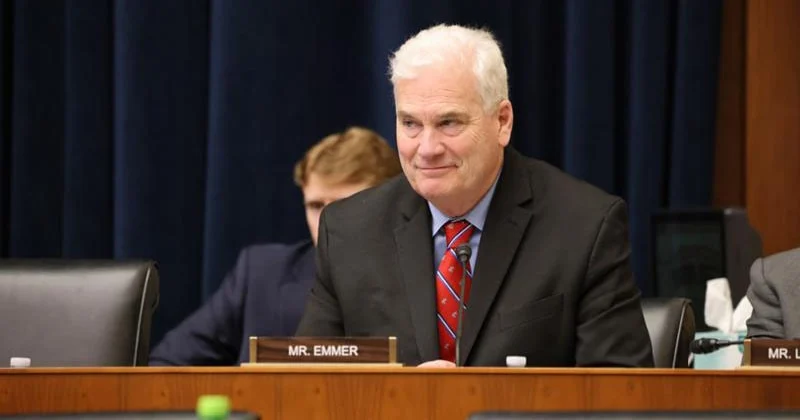
Rep. Tom Emmer wants you to know that the CLARITY Act didn’t materialize overnight. The House Majority Whip and co-chair of the Congressional Crypto Caucus described the Digital Asset Market Clarity Act of 2025 as roughly the “fifth or sixth iteration” of Congress’s attempts to build a federal regulatory framework for digital assets.

What the CLARITY Act actually does

The bill, formally known as H.R. 3633, was introduced on May 29, 2025, by House Financial Services Committee Chairman Rep. French Hill. Its core mission is deceptively simple: figure out which federal agency is in charge of what when it comes to digital assets.

Right now, the SEC and the CFTC have overlapping and sometimes contradictory claims over the crypto market. The CLARITY Act draws a line between the two agencies’ jurisdictions.

Advertisement

One of the more novel provisions is something called a “mature blockchain” test. This is a classification framework designed to determine when a digital asset qualifies as a commodity rather than a security. Once a network meets certain decentralization thresholds, its native token could be treated as a digital commodity rather than an investment contract subject to SEC oversight.

The bill also establishes that certain decentralized networks can be viewed as non-securities, and it provides that non-custodial digital asset providers will not be classified as money transmitters. Emmer has dismissed law enforcement concerns about this provision as overstated, expressing confidence that the bill’s framework adequately addresses illicit finance risks without crushing innovation.

The long road through Congress

The House passed the CLARITY Act on July 17, 2025, with a bipartisan vote of 294-134. The Senate Banking Committee then advanced an updated version of the bill on May 14, 2026, with a 15-9 vote.

Emmer’s involvement stretches well beyond this single bill. He has previously introduced and reintroduced the Blockchain Regulatory Certainty Act, which contains elements that eventually found their way into the CLARITY Act. The fact that he characterizes the current bill as the fifth or sixth version tells you something about both the difficulty of the task and the persistence of its champions.

What this means for investors

The “mature blockchain” test could be particularly consequential for major layer-1 networks and their ecosystems. If a blockchain can demonstrate sufficient decentralization, its token may escape the more burdensome securities regulations that come with SEC oversight. That has direct implications for how tokens are listed on exchanges, how they’re marketed to retail investors, and how projects structure their governance.

For DeFi specifically, the non-custodial provider provision could be transformative. Clarifying that writing or deploying non-custodial software doesn’t make you a money transmitter would remove a significant chilling effect on American developers.

That said, the bill still needs to pass the full Senate, and reconciliation between the House and Senate versions could introduce changes. The gap between the House’s 294-134 margin and the Senate committee’s 15-9 vote suggests the upper chamber will be a tougher audience, and the final version of the bill may look different from what the House passed.

Disclosure: This article was edited by Editorial Team. For more information on how we create and review content, see our Editorial Policy.

Tom Emmer calls CLARITY Act fifth iteration of crypto legislation

Tom Emmer calls CLARITY Act fifth iteration of crypto legislation

The House Majority Whip says years of failed attempts finally produced a crypto market structure bill that could actually stick.

Rep. Tom Emmer wants you to know that the CLARITY Act didn’t materialize overnight. The House Majority Whip and co-chair of the Congressional Crypto Caucus described the Digital Asset Market Clarity Act of 2025 as roughly the “fifth or sixth iteration” of Congress’s attempts to build a federal regulatory framework for digital assets.

What the CLARITY Act actually does

The bill, formally known as H.R. 3633, was introduced on May 29, 2025, by House Financial Services Committee Chairman Rep. French Hill. Its core mission is deceptively simple: figure out which federal agency is in charge of what when it comes to digital assets.

Right now, the SEC and the CFTC have overlapping and sometimes contradictory claims over the crypto market. The CLARITY Act draws a line between the two agencies’ jurisdictions.

Advertisement

One of the more novel provisions is something called a “mature blockchain” test. This is a classification framework designed to determine when a digital asset qualifies as a commodity rather than a security. Once a network meets certain decentralization thresholds, its native token could be treated as a digital commodity rather than an investment contract subject to SEC oversight.

The bill also establishes that certain decentralized networks can be viewed as non-securities, and it provides that non-custodial digital asset providers will not be classified as money transmitters. Emmer has dismissed law enforcement concerns about this provision as overstated, expressing confidence that the bill’s framework adequately addresses illicit finance risks without crushing innovation.

The long road through Congress

The House passed the CLARITY Act on July 17, 2025, with a bipartisan vote of 294-134. The Senate Banking Committee then advanced an updated version of the bill on May 14, 2026, with a 15-9 vote.

Emmer’s involvement stretches well beyond this single bill. He has previously introduced and reintroduced the Blockchain Regulatory Certainty Act, which contains elements that eventually found their way into the CLARITY Act. The fact that he characterizes the current bill as the fifth or sixth version tells you something about both the difficulty of the task and the persistence of its champions.

What this means for investors

The “mature blockchain” test could be particularly consequential for major layer-1 networks and their ecosystems. If a blockchain can demonstrate sufficient decentralization, its token may escape the more burdensome securities regulations that come with SEC oversight. That has direct implications for how tokens are listed on exchanges, how they’re marketed to retail investors, and how projects structure their governance.

For DeFi specifically, the non-custodial provider provision could be transformative. Clarifying that writing or deploying non-custodial software doesn’t make you a money transmitter would remove a significant chilling effect on American developers.

That said, the bill still needs to pass the full Senate, and reconciliation between the House and Senate versions could introduce changes. The gap between the House’s 294-134 margin and the Senate committee’s 15-9 vote suggests the upper chamber will be a tougher audience, and the final version of the bill may look different from what the House passed.

Disclosure: This article was edited by Editorial Team. For more information on how we create and review content, see our Editorial Policy.