
Nexo Earn with Nexo
US Treasury sanctions Sinaloa Cartel-linked cash-to-crypto network

US Treasury sanctions Sinaloa Cartel-linked cash-to-crypto network

OFAC blacklists over a dozen individuals and entities for converting fentanyl cash proceeds into digital assets using ATMs, exchanges, and corporate fronts in Mexico.

The US Treasury just made it significantly harder for one of the world’s most notorious drug cartels to use crypto as a financial escape hatch. The Office of Foreign Assets Control sanctioned over a dozen individuals and entities connected to the Sinaloa Cartel for allegedly laundering fentanyl proceeds through digital assets.

The operation targeted a network that converted bulk cash from fentanyl sales into cryptocurrency, using a combination of ATMs, exchanges, and shell companies in Mexico to move dirty money beyond the reach of traditional banking controls. Think of it as a high-tech money laundering assembly line: street-level drug cash goes in one end, and relatively clean-looking crypto comes out the other.

How the network operated

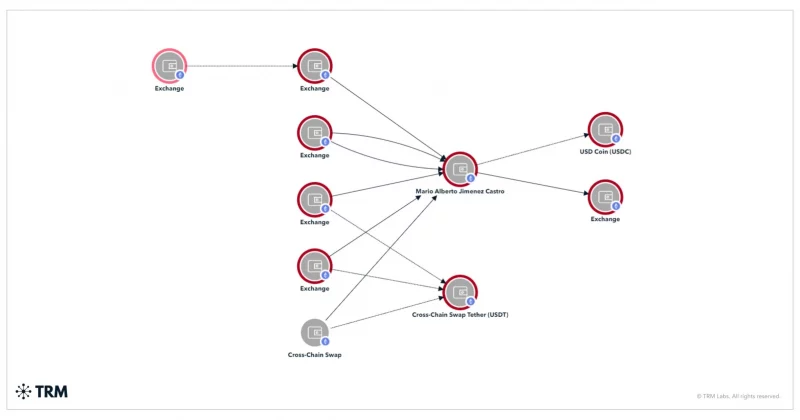
The sanctioned network’s playbook was built around speed and obfuscation. Large amounts of cash were deposited into crypto ATMs and exchanges, then rapidly transferred to external wallets before compliance teams could flag the activity. Mexican front companies provided an additional layer of cover, disguising where the money actually came from.

In English: the cartel was running a parallel financial system. Instead of trying to sneak suitcases of cash through regulated banks, which have decades of anti-money laundering infrastructure, they exploited the gaps in crypto’s compliance ecosystem.

OFAC didn’t just name individuals. The agency also blacklisted specific Ethereum addresses and crypto wallets tied to cartel operations. That means any US person or compliant platform that interacts with those addresses is now in violation of federal sanctions law. For exchanges operating in the US, touching those wallets would be the regulatory equivalent of stepping on a landmine.

Advertisement

The Treasury Department has also set up financial rewards for tips leading to enforcement actions exceeding $1 million, creating a direct incentive for anyone with knowledge of suspicious digital asset transactions linked to sanctioned entities to come forward.

Part of a much larger crackdown

This action didn’t happen in a vacuum. More than 600 individuals and entities have now been sanctioned under the Kingpin Act and Executive Order 14059 in connection with the Sinaloa Cartel’s operations. The sheer scale of that number tells you something important about how deeply embedded this organization’s financial tentacles have become.

The Kingpin Act, formally known as the Foreign Narcotics Kingpin Designation Act, gives the Treasury broad authority to freeze assets and block financial transactions for individuals and entities involved in international narcotics trafficking. Executive Order 14059, signed by President Biden in late 2021, specifically expanded the government’s toolkit to target the financial networks that enable the global drug trade, with a particular focus on synthetic opioids like fentanyl.

Fentanyl is the context that makes this more than a routine sanctions announcement. The synthetic opioid has been the leading driver of overdose deaths in the US for years, and the Sinaloa Cartel is one of its primary suppliers. Washington’s appetite for going after the cartel’s money, wherever it flows, has only grown as the crisis has deepened.

The crypto angle is relatively newer but increasingly prominent. As traditional financial channels have gotten harder for cartels to exploit, thanks to decades of bank compliance requirements, digital assets have emerged as an attractive alternative. They offer speed, pseudonymity, and the ability to move value across borders without a correspondent banking relationship.

Here’s the thing, though. Crypto’s pseudonymity is not the same as anonymity. Every transaction on a public blockchain like Ethereum leaves a permanent trail. That’s precisely how OFAC was able to identify and blacklist specific wallet addresses. The technology that makes crypto useful for laundering is also the technology that makes it traceable, if you have the resources and expertise to follow the breadcrumbs.

What this means for the crypto industry

For compliant exchanges and platforms, these sanctions add another set of addresses to an already long and growing blacklist. The operational burden is real. Platforms need robust wallet screening tools that can flag sanctioned addresses in real time, including addresses that are one or two hops removed from the blacklisted wallets. Cartel-linked operators are unlikely to keep using the exact addresses OFAC just published.

The broader signal here is that US regulators are getting increasingly comfortable using sanctions as a tool to police crypto-facilitated crime. The 2022 sanctioning of Tornado Cash, the Ethereum mixing protocol, was a watershed moment. These cartel-linked designations represent a continuation of that approach, applying traditional foreign policy tools to digital asset infrastructure.

For DeFi protocols and decentralized exchanges that lack centralized compliance teams, the question gets thornier. A sanctioned Ethereum address can interact with a smart contract just as easily as a compliant one. The protocol itself can’t refuse the transaction. But anyone who facilitates or benefits from that interaction could face serious legal exposure.

Investors and builders in the crypto space should watch the pace of these designations. Each new round of sanctions targeting crypto wallets forces the industry to invest more in compliance infrastructure, which raises costs for smaller platforms and could accelerate consolidation. It also strengthens the argument that on-chain analytics firms, the companies that specialize in tracing blockchain transactions, are becoming essential infrastructure rather than nice-to-have add-ons.

Look, the Sinaloa Cartel is not going to stop trying to launder money because OFAC blacklisted a handful of Ethereum addresses. They will adapt, rotate wallets, and find new intermediaries. But the sanctions do something important: they put every crypto platform on notice that facilitating these flows, even unknowingly, carries consequences. And that steady ratcheting of pressure is exactly how Washington intends to make digital assets a less attractive option for the world’s most dangerous criminal organizations.

Disclosure: This article was edited by Editorial Team. For more information on how we create and review content, see our Editorial Policy.

US Treasury sanctions Sinaloa Cartel-linked cash-to-crypto network

US Treasury sanctions Sinaloa Cartel-linked cash-to-crypto network

OFAC blacklists over a dozen individuals and entities for converting fentanyl cash proceeds into digital assets using ATMs, exchanges, and corporate fronts in Mexico.

The US Treasury just made it significantly harder for one of the world’s most notorious drug cartels to use crypto as a financial escape hatch. The Office of Foreign Assets Control sanctioned over a dozen individuals and entities connected to the Sinaloa Cartel for allegedly laundering fentanyl proceeds through digital assets.

The operation targeted a network that converted bulk cash from fentanyl sales into cryptocurrency, using a combination of ATMs, exchanges, and shell companies in Mexico to move dirty money beyond the reach of traditional banking controls. Think of it as a high-tech money laundering assembly line: street-level drug cash goes in one end, and relatively clean-looking crypto comes out the other.

How the network operated

The sanctioned network’s playbook was built around speed and obfuscation. Large amounts of cash were deposited into crypto ATMs and exchanges, then rapidly transferred to external wallets before compliance teams could flag the activity. Mexican front companies provided an additional layer of cover, disguising where the money actually came from.

In English: the cartel was running a parallel financial system. Instead of trying to sneak suitcases of cash through regulated banks, which have decades of anti-money laundering infrastructure, they exploited the gaps in crypto’s compliance ecosystem.

OFAC didn’t just name individuals. The agency also blacklisted specific Ethereum addresses and crypto wallets tied to cartel operations. That means any US person or compliant platform that interacts with those addresses is now in violation of federal sanctions law. For exchanges operating in the US, touching those wallets would be the regulatory equivalent of stepping on a landmine.

Advertisement

The Treasury Department has also set up financial rewards for tips leading to enforcement actions exceeding $1 million, creating a direct incentive for anyone with knowledge of suspicious digital asset transactions linked to sanctioned entities to come forward.

Part of a much larger crackdown

This action didn’t happen in a vacuum. More than 600 individuals and entities have now been sanctioned under the Kingpin Act and Executive Order 14059 in connection with the Sinaloa Cartel’s operations. The sheer scale of that number tells you something important about how deeply embedded this organization’s financial tentacles have become.

The Kingpin Act, formally known as the Foreign Narcotics Kingpin Designation Act, gives the Treasury broad authority to freeze assets and block financial transactions for individuals and entities involved in international narcotics trafficking. Executive Order 14059, signed by President Biden in late 2021, specifically expanded the government’s toolkit to target the financial networks that enable the global drug trade, with a particular focus on synthetic opioids like fentanyl.

Fentanyl is the context that makes this more than a routine sanctions announcement. The synthetic opioid has been the leading driver of overdose deaths in the US for years, and the Sinaloa Cartel is one of its primary suppliers. Washington’s appetite for going after the cartel’s money, wherever it flows, has only grown as the crisis has deepened.

The crypto angle is relatively newer but increasingly prominent. As traditional financial channels have gotten harder for cartels to exploit, thanks to decades of bank compliance requirements, digital assets have emerged as an attractive alternative. They offer speed, pseudonymity, and the ability to move value across borders without a correspondent banking relationship.

Here’s the thing, though. Crypto’s pseudonymity is not the same as anonymity. Every transaction on a public blockchain like Ethereum leaves a permanent trail. That’s precisely how OFAC was able to identify and blacklist specific wallet addresses. The technology that makes crypto useful for laundering is also the technology that makes it traceable, if you have the resources and expertise to follow the breadcrumbs.

What this means for the crypto industry

For compliant exchanges and platforms, these sanctions add another set of addresses to an already long and growing blacklist. The operational burden is real. Platforms need robust wallet screening tools that can flag sanctioned addresses in real time, including addresses that are one or two hops removed from the blacklisted wallets. Cartel-linked operators are unlikely to keep using the exact addresses OFAC just published.

The broader signal here is that US regulators are getting increasingly comfortable using sanctions as a tool to police crypto-facilitated crime. The 2022 sanctioning of Tornado Cash, the Ethereum mixing protocol, was a watershed moment. These cartel-linked designations represent a continuation of that approach, applying traditional foreign policy tools to digital asset infrastructure.

For DeFi protocols and decentralized exchanges that lack centralized compliance teams, the question gets thornier. A sanctioned Ethereum address can interact with a smart contract just as easily as a compliant one. The protocol itself can’t refuse the transaction. But anyone who facilitates or benefits from that interaction could face serious legal exposure.

Investors and builders in the crypto space should watch the pace of these designations. Each new round of sanctions targeting crypto wallets forces the industry to invest more in compliance infrastructure, which raises costs for smaller platforms and could accelerate consolidation. It also strengthens the argument that on-chain analytics firms, the companies that specialize in tracing blockchain transactions, are becoming essential infrastructure rather than nice-to-have add-ons.

Look, the Sinaloa Cartel is not going to stop trying to launder money because OFAC blacklisted a handful of Ethereum addresses. They will adapt, rotate wallets, and find new intermediaries. But the sanctions do something important: they put every crypto platform on notice that facilitating these flows, even unknowingly, carries consequences. And that steady ratcheting of pressure is exactly how Washington intends to make digital assets a less attractive option for the world’s most dangerous criminal organizations.

Disclosure: This article was edited by Editorial Team. For more information on how we create and review content, see our Editorial Policy.