
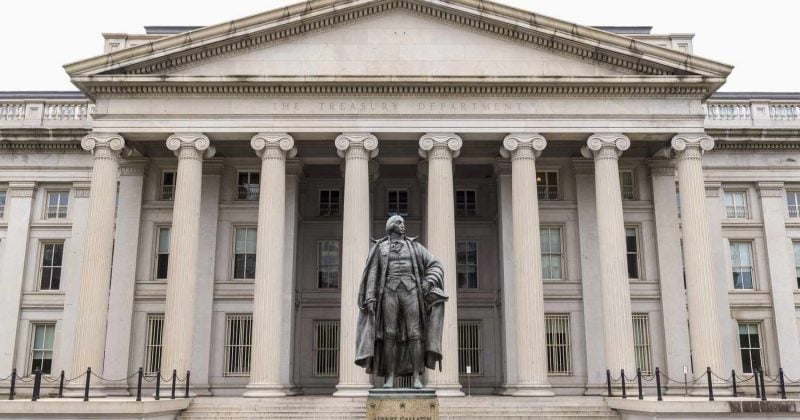
Treasury International Capital data shows dramatic shift in foreign investment flows heading into May
The gap between March and April capital flows into US assets was striking, and crypto markets should be paying attention to what comes next.
The US Department of the Treasury published its Treasury International Capital data for May 2026 on July 14, offering a fresh look at how foreign investors are positioning themselves relative to American assets. The TIC report tracks cross-border purchases of US securities, banking flows, and other financial instruments, essentially serving as a barometer for global confidence in the US economy.
Look at the trajectory heading into May. The March 2026 TIC report showed a net inflow of $150.7 billion into US assets. That’s a massive number, driven almost entirely by $162.1 billion in net foreign private inflows, partially offset by $11.4 billion in official outflows from foreign central banks and sovereign wealth funds.
Then April happened. Net inflows cratered to just $26.1 billion. That’s a decline of roughly 83% in a single month.
The composition of April’s flows was equally telling. Private foreign investors actually pulled $23.1 billion out of US assets on a net basis. The only reason the headline number stayed positive was $49.2 billion in net foreign official inflows, meaning government-linked entities abroad were buying while private money was heading for the exits.
The May data, freshly released, will reveal whether April’s private sector retreat was a one-month blip or the beginning of a trend. Given the magnitude of the swing from March to April, whatever May shows will carry outsized significance for markets trying to gauge foreign appetite for US debt and equities.
The news moving money, markets, and the world—before your day starts.
Daily. Free. Join 34,000+ readers across crypto, finance, and policy.
Foreign demand for US Treasuries is one of the most important inputs into the interest rate picture. When foreign buyers retreat, Treasury yields tend to rise as the government needs to offer better terms to attract capital. Higher yields make holding non-yielding assets like Bitcoin comparatively less attractive and tighten financial conditions broadly.
The pivot from private-led inflows in March to official-led inflows in April is particularly worth watching. When sovereign buyers dominate capital flows, it often reflects reserve management decisions rather than conviction about US economic fundamentals, and can reverse based on diplomatic considerations as easily as economic ones.
If May confirms the April pattern of private money retreating from US assets while only official buyers hold the line, it suggests a deteriorating confidence picture that could eventually pressure the dollar and reshape the macro backdrop for digital assets. Conversely, if private inflows rebounded toward March’s $162.1 billion level, it would signal that April was noise rather than signal, supporting a stronger dollar environment and potentially capping near-term upside for Bitcoin and other tokens that trade inversely to dollar strength.