
Treasury yields steady as US-Iran tensions rise, June inflation data awaited

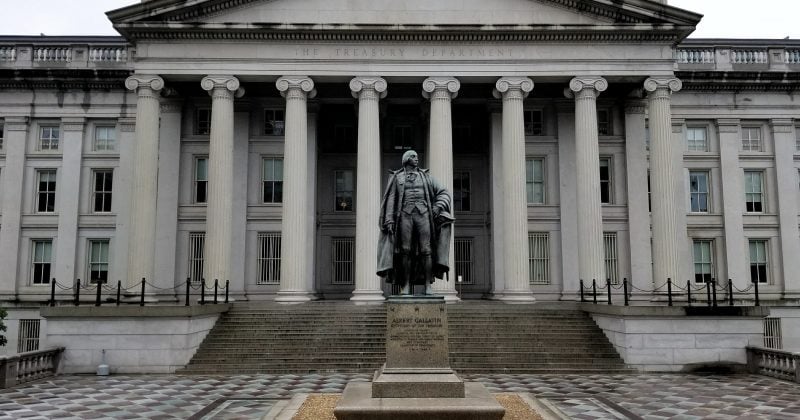
https://en.wikipedia.org/wiki/Treasury_Building_(Washington,_D.C.)

Treasury yields steady as US-Iran tensions rise, June inflation data awaited

Fed rate cuts predictions for 2026

Treasury yields remained relatively flat despite mounting tensions between the U.S. and Iran, with the recent ceasefire showing signs of strain. The geopolitical developments come as market participants await the release of the June 2026 core inflation report, a key economic indicator set to influence future monetary policy decisions. The ceasefire, established through a memorandum of understanding last month, faltered following Iranian attacks on commercial vessels and subsequent U.S. strikes. The upcoming inflation data, alongside the geopolitical landscape, could have significant implications for the Federal Reserve’s interest rate policy for the remainder of 2026.

Advertisement

Key Takeaways

  • Treasury yields appear steady amid renewed U.S.-Iran tensions, suggesting market participants are cautious about immediate economic impacts.
  • June 2026 core inflation report, anticipated by investors, could provide critical insights into future Fed rate decisions.
  • Current market pricing suggests a consistent outlook for no Fed rate cuts in 2026, reflecting expectations of persistent inflationary pressures.

What to Watch

Observers will closely monitor the release of the June 2026 core CPI data on July 14, which may influence the Federal Reserve’s rate decisions. In the geopolitical arena, any further escalation between the U.S. and Iran could impact global oil supplies and broader economic stability. Market participants will also look for potential Federal Reserve communications that might indicate shifts in monetary policy in response to these developments.

Get live prediction-market analysis, powered by Vera. Sign up for Vera.

Disclosure: This article was edited by Estefano Gomez. For more information on how we create and review content, see our Editorial Policy.

Treasury yields steady as US-Iran tensions rise, June inflation data awaited

Treasury yields steady as US-Iran tensions rise, June inflation data awaited

Fed rate cuts predictions for 2026

https://en.wikipedia.org/wiki/Treasury_Building_(Washington,_D.C.)

Treasury yields remained relatively flat despite mounting tensions between the U.S. and Iran, with the recent ceasefire showing signs of strain. The geopolitical developments come as market participants await the release of the June 2026 core inflation report, a key economic indicator set to influence future monetary policy decisions. The ceasefire, established through a memorandum of understanding last month, faltered following Iranian attacks on commercial vessels and subsequent U.S. strikes. The upcoming inflation data, alongside the geopolitical landscape, could have significant implications for the Federal Reserve’s interest rate policy for the remainder of 2026.

Advertisement

Key Takeaways

  • Treasury yields appear steady amid renewed U.S.-Iran tensions, suggesting market participants are cautious about immediate economic impacts.
  • June 2026 core inflation report, anticipated by investors, could provide critical insights into future Fed rate decisions.
  • Current market pricing suggests a consistent outlook for no Fed rate cuts in 2026, reflecting expectations of persistent inflationary pressures.

What to Watch

Observers will closely monitor the release of the June 2026 core CPI data on July 14, which may influence the Federal Reserve’s rate decisions. In the geopolitical arena, any further escalation between the U.S. and Iran could impact global oil supplies and broader economic stability. Market participants will also look for potential Federal Reserve communications that might indicate shifts in monetary policy in response to these developments.

Get live prediction-market analysis, powered by Vera. Sign up for Vera.

Disclosure: This article was edited by Estefano Gomez. For more information on how we create and review content, see our Editorial Policy.