
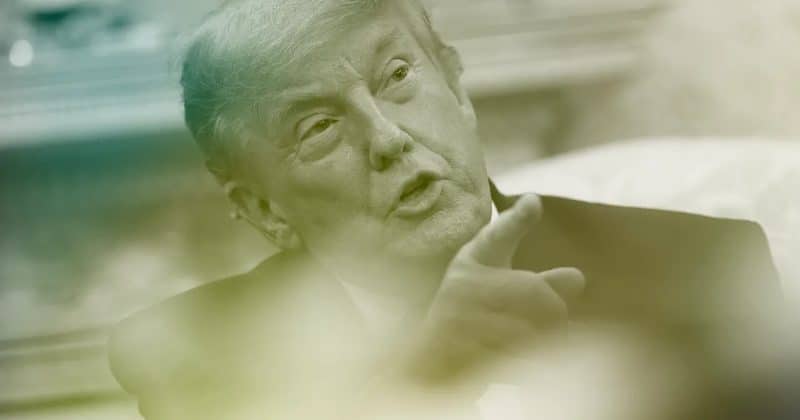
Donald Trump executed over 21,000 securities trades in his first year back in office

Donald Trump executed over 21,000 securities trades in his first year back in office

Financial disclosures reveal an unprecedented trading volume across eight accounts, raising serious ethics questions about conflicts of interest

Most presidents spend their first year back in office focused on policy. Donald Trump, it turns out, was also extremely busy trading stocks.

Financial disclosures filed with the Office of Government Ethics show Trump executed over 21,000 securities trades during 2025, his first year of his second term. That works out to roughly 60 to 80 trades per day, depending on how you count the weekends he presumably was not logged into a brokerage terminal.

For context: Joe Biden reported 13 trades during his presidency. Trump’s own first term generated fewer than 600 total. The jump from under 600 to over 21,000 is not a rounding error. It is a fundamentally different relationship with the market.

What the disclosures actually show

The trades span eight separate investment accounts and cover a wide range of securities, with particularly heavy concentration in major technology firms. An analysis of the OGE filings by FT and EBC Financial Group put the total trade count above 21,000 for calendar year 2025 alone.

Advertisement

Then came Q1 2026, when Trump reported an additional 3,642 transactions across 1,026 different firms and funds. The positions included Nvidia, Microsoft, Meta, Apple, and Amazon. The total value of those Q1 transactions ranged between $212 million and $695 million, a spread that reflects the disclosure format’s use of value brackets rather than precise figures.

Trump’s team has maintained throughout that these accounts are managed independently by third parties, meaning he is not personally sitting at a terminal executing orders. Ethics experts have pushed back on that framing, noting that a president who sets tariff policy on semiconductors and signs executive orders affecting cloud computing still has a direct financial interest in the companies those policies touch, regardless of who clicks the buy button.

The crypto side of the ledger

Trump’s 2025 disclosures show more than $635 million in royalties tied to meme token activity, along with more than $500 million attributed to token sales through World Liberty Financial, a crypto venture connected to his family. Combined with equity sales and other holdings, the crypto-related income from that single disclosure period runs well above $1 billion.

Holdings listed in the disclosures include significant positions in Bitcoin and Ethereum, held through entities including World Liberty Financial and DT Marks Defi LLC. The Bitcoin holdings alone exceed $50 million in reported value at various points in the filing period, with additional exposure through USDC and other tokens.

This matters because Trump’s second term has coincided with a dramatically more permissive regulatory posture toward digital assets. The SEC under the current administration has dropped multiple enforcement actions against crypto firms, and Congress has moved closer to passing comprehensive crypto market structure legislation. A president with nine-figure income from crypto ventures presiding over crypto-friendly regulation is the kind of overlap that keeps government ethics lawyers busy.

What this means for markets and investors

For equity investors, the trading disclosures create a specific kind of uncertainty. When a president holds concentrated exposure to technology stocks while simultaneously setting policy on AI regulation, chip export controls, and antitrust enforcement, every policy announcement carries a dual reading: what does this mean for the sector, and what does this mean for the president’s portfolio.

On the crypto side, the sheer scale of Trump’s personal exposure to digital assets has already functioned as a market signal. Institutional investors who were cautious about crypto under the previous administration’s enforcement-heavy approach have moved meaningfully into the space since January 2025.

Watch the Q2 2026 disclosures closely. The Q1 figures already showed an acceleration in transaction volume, and the sectors concentrated in those trades, AI, cloud infrastructure, and semiconductors, are precisely the sectors most exposed to ongoing tariff and export control decisions.

Disclosure: This article was edited by Editorial Team. For more information on how we create and review content, see our Editorial Policy.

Donald Trump executed over 21,000 securities trades in his first year back in office

Donald Trump executed over 21,000 securities trades in his first year back in office

Financial disclosures reveal an unprecedented trading volume across eight accounts, raising serious ethics questions about conflicts of interest

Most presidents spend their first year back in office focused on policy. Donald Trump, it turns out, was also extremely busy trading stocks.

Financial disclosures filed with the Office of Government Ethics show Trump executed over 21,000 securities trades during 2025, his first year of his second term. That works out to roughly 60 to 80 trades per day, depending on how you count the weekends he presumably was not logged into a brokerage terminal.

For context: Joe Biden reported 13 trades during his presidency. Trump’s own first term generated fewer than 600 total. The jump from under 600 to over 21,000 is not a rounding error. It is a fundamentally different relationship with the market.

What the disclosures actually show

The trades span eight separate investment accounts and cover a wide range of securities, with particularly heavy concentration in major technology firms. An analysis of the OGE filings by FT and EBC Financial Group put the total trade count above 21,000 for calendar year 2025 alone.

Advertisement

Then came Q1 2026, when Trump reported an additional 3,642 transactions across 1,026 different firms and funds. The positions included Nvidia, Microsoft, Meta, Apple, and Amazon. The total value of those Q1 transactions ranged between $212 million and $695 million, a spread that reflects the disclosure format’s use of value brackets rather than precise figures.

Trump’s team has maintained throughout that these accounts are managed independently by third parties, meaning he is not personally sitting at a terminal executing orders. Ethics experts have pushed back on that framing, noting that a president who sets tariff policy on semiconductors and signs executive orders affecting cloud computing still has a direct financial interest in the companies those policies touch, regardless of who clicks the buy button.

The crypto side of the ledger

Trump’s 2025 disclosures show more than $635 million in royalties tied to meme token activity, along with more than $500 million attributed to token sales through World Liberty Financial, a crypto venture connected to his family. Combined with equity sales and other holdings, the crypto-related income from that single disclosure period runs well above $1 billion.

Holdings listed in the disclosures include significant positions in Bitcoin and Ethereum, held through entities including World Liberty Financial and DT Marks Defi LLC. The Bitcoin holdings alone exceed $50 million in reported value at various points in the filing period, with additional exposure through USDC and other tokens.

This matters because Trump’s second term has coincided with a dramatically more permissive regulatory posture toward digital assets. The SEC under the current administration has dropped multiple enforcement actions against crypto firms, and Congress has moved closer to passing comprehensive crypto market structure legislation. A president with nine-figure income from crypto ventures presiding over crypto-friendly regulation is the kind of overlap that keeps government ethics lawyers busy.

What this means for markets and investors

For equity investors, the trading disclosures create a specific kind of uncertainty. When a president holds concentrated exposure to technology stocks while simultaneously setting policy on AI regulation, chip export controls, and antitrust enforcement, every policy announcement carries a dual reading: what does this mean for the sector, and what does this mean for the president’s portfolio.

On the crypto side, the sheer scale of Trump’s personal exposure to digital assets has already functioned as a market signal. Institutional investors who were cautious about crypto under the previous administration’s enforcement-heavy approach have moved meaningfully into the space since January 2025.

Watch the Q2 2026 disclosures closely. The Q1 figures already showed an acceleration in transaction volume, and the sectors concentrated in those trades, AI, cloud infrastructure, and semiconductors, are precisely the sectors most exposed to ongoing tariff and export control decisions.

Disclosure: This article was edited by Editorial Team. For more information on how we create and review content, see our Editorial Policy.