
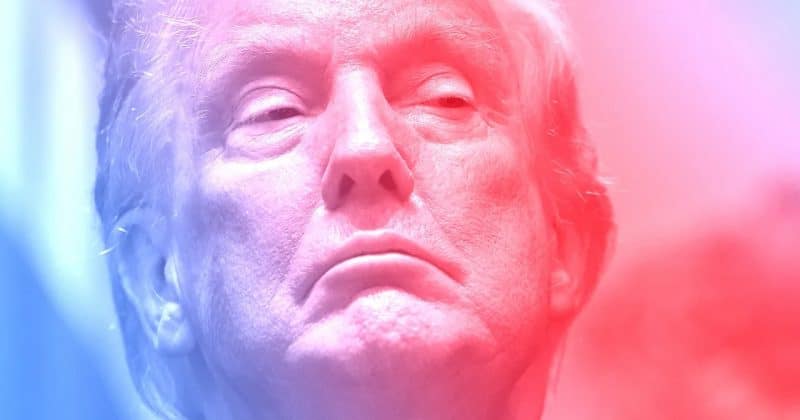
Trump discloses 327 unreported stock trades made hours before tariff pause that sent markets soaring

Trump discloses 327 unreported stock trades made hours before tariff pause that sent markets soaring

A $12.8M buying spree the day before a 90-day tariff pause triggered one of the S&P 500's biggest single-day rallies in history.

Here’s the thing about financial disclosure laws: they only work if the disclosures are timely. President Donald Trump’s annual government ethics filing, published in July 2026, revealed that accounts linked to him purchased 327 stocks on April 8, 2025, valued at up to $12.8 million. The very next day, Trump announced a 90-day pause on reciprocal tariffs, excluding China. The S&P 500 responded by surging nearly 10%, recovering roughly $4 trillion in market value in a single session.

The purchases were disclosed more than a year after they occurred. The penalty for late filing: $200.

What the timeline actually looks like

April 8, 2025: Trump-linked accounts execute 327 stock purchases. April 9, 2025: the White House announces the tariff pause. Markets rocket. One of the largest single-day rallies in the index’s history follows.

The Office of Government Ethics filing that surfaced this trading activity came in July 2026, more than fourteen months after the trades were made. In English: the public found out about these purchases after the profit window had already closed, the policy had already been announced, and the market had already moved.

Advertisement

The $200 late-filing penalty is, to put it generously, a rounding error on a $12.8 million position. For context, a standard parking ticket in Washington D.C. runs about $100. The consequence for disclosing nearly 13 million dollars in strategically timed stock trades a year late is roughly two parking tickets.

The holdings in question are not obscure. The filing references positions tied to major companies including Apple, Microsoft, and Amazon, which are precisely the kinds of large-cap names that benefit most directly from reduced trade friction with trading partners other than China.

The broader trading picture

The April 8 trades are not an isolated data point. Trump’s financial disclosures show thousands of trades throughout 2025, many clustered around policy announcements with direct market consequences. In the first quarter of 2026 alone, the accounts reported 3,642 transactions across more than 1,000 firms and funds.

Congressional Democrats have called for investigations, and ethics watchdog groups have flagged the disclosure pattern as a textbook example of why the STOCK Act was passed in 2012. That law requires members of Congress and senior executive branch officials to disclose trades within 45 days. A more than one-year lag is not a technicality. It is the entire point of the law, inverted.

The White House has not provided a detailed public response to the specific timing questions raised by the April 8 trades.

What this means for crypto and broader markets

Notably absent from the entire disclosure: any mention of crypto assets, tokens, or digital holdings. This is worth flagging given Trump’s very public embrace of the crypto industry throughout 2025, including support for a national Bitcoin reserve framework and meetings with major exchange executives. The financial disclosure that covers the same period shows zero digital assets.

The $4 trillion in market value recovered on April 9, 2025 did not appear from nowhere. Someone bought before it happened. The filing says who.

Disclosure: This article was edited by Editorial Team. For more information on how we create and review content, see our Editorial Policy.

Trump discloses 327 unreported stock trades made hours before tariff pause that sent markets soaring

Trump discloses 327 unreported stock trades made hours before tariff pause that sent markets soaring

A $12.8M buying spree the day before a 90-day tariff pause triggered one of the S&P 500's biggest single-day rallies in history.

Here’s the thing about financial disclosure laws: they only work if the disclosures are timely. President Donald Trump’s annual government ethics filing, published in July 2026, revealed that accounts linked to him purchased 327 stocks on April 8, 2025, valued at up to $12.8 million. The very next day, Trump announced a 90-day pause on reciprocal tariffs, excluding China. The S&P 500 responded by surging nearly 10%, recovering roughly $4 trillion in market value in a single session.

The purchases were disclosed more than a year after they occurred. The penalty for late filing: $200.

What the timeline actually looks like

April 8, 2025: Trump-linked accounts execute 327 stock purchases. April 9, 2025: the White House announces the tariff pause. Markets rocket. One of the largest single-day rallies in the index’s history follows.

The Office of Government Ethics filing that surfaced this trading activity came in July 2026, more than fourteen months after the trades were made. In English: the public found out about these purchases after the profit window had already closed, the policy had already been announced, and the market had already moved.

Advertisement

The $200 late-filing penalty is, to put it generously, a rounding error on a $12.8 million position. For context, a standard parking ticket in Washington D.C. runs about $100. The consequence for disclosing nearly 13 million dollars in strategically timed stock trades a year late is roughly two parking tickets.

The holdings in question are not obscure. The filing references positions tied to major companies including Apple, Microsoft, and Amazon, which are precisely the kinds of large-cap names that benefit most directly from reduced trade friction with trading partners other than China.

The broader trading picture

The April 8 trades are not an isolated data point. Trump’s financial disclosures show thousands of trades throughout 2025, many clustered around policy announcements with direct market consequences. In the first quarter of 2026 alone, the accounts reported 3,642 transactions across more than 1,000 firms and funds.

Congressional Democrats have called for investigations, and ethics watchdog groups have flagged the disclosure pattern as a textbook example of why the STOCK Act was passed in 2012. That law requires members of Congress and senior executive branch officials to disclose trades within 45 days. A more than one-year lag is not a technicality. It is the entire point of the law, inverted.

The White House has not provided a detailed public response to the specific timing questions raised by the April 8 trades.

What this means for crypto and broader markets

Notably absent from the entire disclosure: any mention of crypto assets, tokens, or digital holdings. This is worth flagging given Trump’s very public embrace of the crypto industry throughout 2025, including support for a national Bitcoin reserve framework and meetings with major exchange executives. The financial disclosure that covers the same period shows zero digital assets.

The $4 trillion in market value recovered on April 9, 2025 did not appear from nowhere. Someone bought before it happened. The filing says who.

Disclosure: This article was edited by Editorial Team. For more information on how we create and review content, see our Editorial Policy.