
Trump aims for over 50% of US chip industry by end of term
The president wants to go from roughly 2% of global chip production to majority share in under four years, a goal that has skeptics raising eyebrows
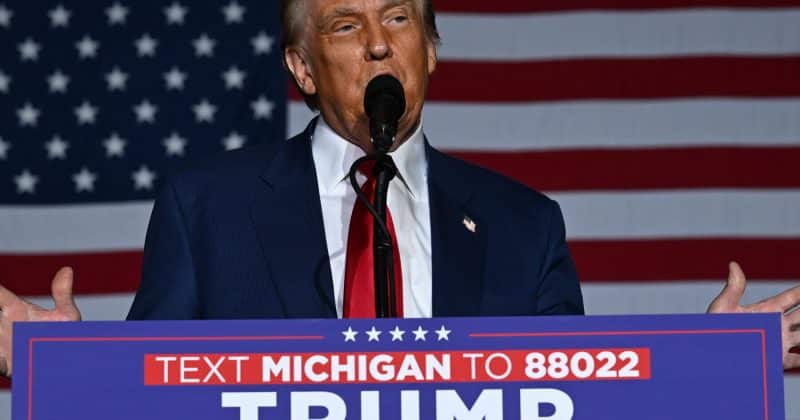
President Trump has predicted that the US will control over 50% of the chip industry by the time he leaves office. That’s a staggering ambition given that US domestic semiconductor production currently sits at roughly 2% of global output.
The plan behind the prediction
Commerce Secretary Howard Lutnick has been the operational force behind this push. His stated target is slightly more modest than the president’s: 40% domestic semiconductor production by the end of Trump’s term.
The administration’s strategy rests on several pillars working simultaneously. First, there are active negotiations with Taiwan, the undisputed heavyweight of advanced chip manufacturing, to relocate substantial production capacity to US soil. Taiwan, through companies like TSMC, currently dominates the world’s most advanced chip fabrication.
Taiwan has resisted the full relocation of 50% of its capacity. Semiconductor manufacturing is Taiwan’s single most important strategic asset, both economically and geopolitically.
Second, tariffs are doing heavy lifting in this strategy. In January 2026, Trump signed a proclamation imposing 25% tariffs on certain advanced computing chips.
Third, the administration is looking at adjusting provisions from the existing CHIPS and Science Act, the bipartisan legislation signed during the Biden era that allocated billions in subsidies for domestic semiconductor manufacturing. The current approach treats tariffs as either a substitute or complement to those CHIPS Act subsidies, potentially reshaping how incentive money flows to manufacturers willing to build on American soil.
Why 50% is an extraordinary claim
Semiconductor fabs take years to build. A cutting-edge fabrication facility typically requires three to five years from groundbreaking to production.
The US producing roughly 2% of global chips isn’t an accident or a recent development. It’s the result of decades of economic decisions where companies found it cheaper and more efficient to manufacture overseas, primarily in East Asia.
Even the more conservative 40% target from Lutnick represents a twentyfold increase from current levels.
What this means for investors
Companies like Intel, which already have significant US manufacturing footprints, could benefit from the combination of tariff protection and potential subsidy adjustments.
NVIDIA designs chips but relies on partners like TSMC for manufacturing. A 25% tariff on advanced computing chips could squeeze margins or force price increases on products that power everything from AI data centers to gaming rigs.
For TSMC, the pressure to build US facilities creates a strategic dilemma. Building in the US is significantly more expensive than building in Taiwan, with higher labor costs, different regulatory environments, and less established supplier ecosystems. TSMC is already constructing facilities in Arizona, but scaling that to meet the administration’s ambitions would require investment commitments that fundamentally alter the company’s capital allocation strategy.
Investors watching this space should pay close attention to actual construction timelines for new fabs, any modifications to CHIPS Act funding mechanisms, and the ongoing negotiations with Taiwan.