
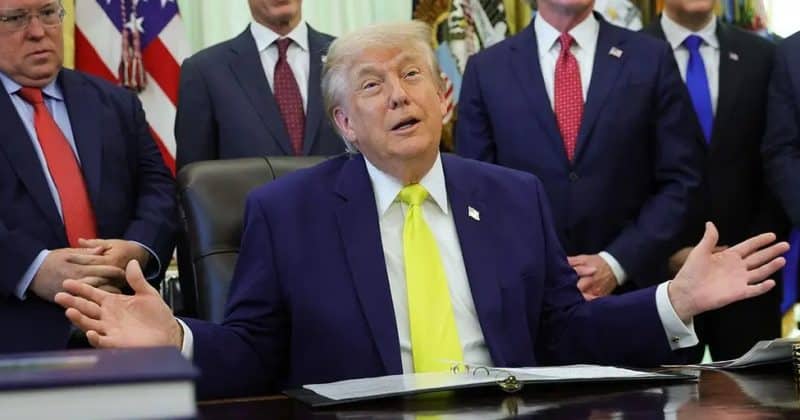
Trump secures $70B ICE funding after House passes Secure America Act
The narrowly passed immigration enforcement package allocates billions to ICE and CBP through FY2029, but contains zero crypto provisions despite the administration's parallel push on digital asset policy.
The House passed the Secure America Act on June 9 by a razor-thin 214-212 vote, unlocking roughly $70 billion in immigration enforcement funding over three years. Every single Democrat voted against it, joined by Rep. Kevin Kiley of California, the lone Republican-caucusing independent to break ranks.
The Senate had already cleared the package days earlier on a 52-47 party-line vote, meaning the bill now heads to President Trump’s desk.
Where the money goes
The three-year funding window runs through FY2029 and splits into three main buckets. ICE gets approximately $38.5 billion, the largest single allocation. Customs and Border Protection receives over $26 billion for border patrol operations. And the Department of Homeland Security secretary gets $5 billion in discretionary funds.
Democrats objected fiercely throughout the process. Their unanimous opposition made the math brutally tight for Republican leadership, which could afford to lose exactly two votes and still pass the bill. They lost one, Kevin Kiley, and survived.
No crypto provisions, despite overlapping political players
The Secure America Act contains precisely zero references to cryptocurrency, blockchain technology, or digital assets of any kind.
Senator Mike Crapo supported both the Secure America Act and the SAFE Crypto Act, a separate bipartisan measure targeting scams in digital asset markets. The legislative agendas are running on parallel tracks, but they are not intersecting.
What this means for crypto investors
The Secure America Act’s passage doesn’t move the needle on any active crypto regulatory question. It doesn’t expand or restrict digital asset authorities for any federal agency.
A 214-212 vote demonstrates just how narrow the Republican majority’s margin is for passing anything. If crypto-related legislation comes to the House floor under similarly partisan conditions, it will need near-unanimous Republican support or genuine bipartisan backing to survive.
Traders and investors watching for regulatory catalysts should keep their attention on standalone crypto legislation rather than hoping for provisions tucked into larger spending packages. The action, when it comes, will be in dedicated bills like the SAFE Crypto Act, not in omnibus packages where crypto is an afterthought.