
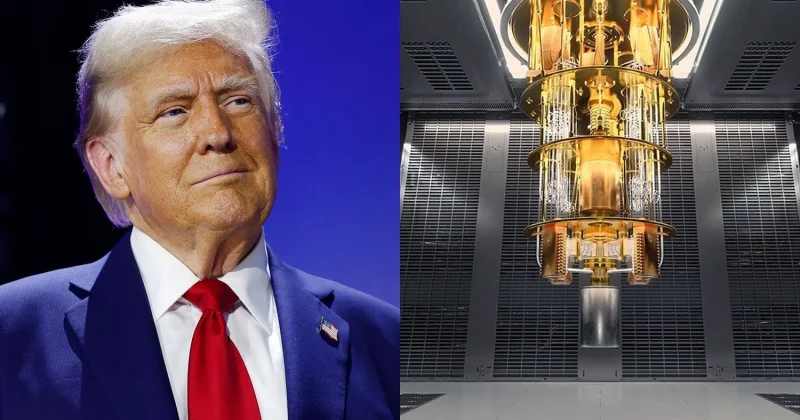
Trump administration reportedly buys into quantum stocks, triggering rally
Reports that the Commerce Department is in talks to take equity stakes in quantum computing firms sent shares soaring, but confirmed deals remain elusive.
Three quantum computing stocks surged with double-digit intraday gains after reports surfaced that the US Commerce Department is in discussions to provide federal funding to quantum firms in exchange for equity stakes. The companies at the center of the frenzy: IonQ, Rigetti Computing, and D-Wave Quantum.
Here’s the thing. No deals have actually been confirmed. What exists, according to a Wall Street Journal report, are talks. Early-stage ones, at that. CNBC’s own reporting went further, noting that at least one source denied the existence of any firm arrangements. So what traders got excited about was essentially a government maybe-possibly-someday investing in quantum computing. The market, never one to wait for confirmation, ran with it anyway.
What the reports actually say
The Wall Street Journal reported that the Commerce Department is in discussions with IonQ, Rigetti Computing, and D-Wave Quantum about a potential arrangement: federal dollars flowing into these companies in return for equity positions. Think of it as the government doing what venture capitalists do, buying a piece of the upside in exchange for writing a check, except the check would come from taxpayers.
Rigetti offered the closest thing to an on-the-record acknowledgment. The company said it is engaging with the US government on funding opportunities. But it stopped well short of confirming any equity deal. That’s a meaningful distinction. “Engaging on funding opportunities” could mean anything from a casual introductory meeting to an active term sheet negotiation.
IonQ and D-Wave Quantum have not publicly confirmed or denied the specifics of the reported discussions. Meanwhile, CNBC’s reporting painted a more skeptical picture, framing the situation as speculative rather than substantive. At least one report flatly denied the existence of firm arrangements between the government and any of these companies.
In English: people are trading on a rumor, and the rumor hasn’t been nailed down yet.
Why the market reaction was so violent
Double-digit percentage moves on unconfirmed news might seem extreme. But the mechanics here make it almost predictable.
All three stocks, IonQ (IONQ), Rigetti (RGTI), and D-Wave (QBTS), share a particular trait that makes them vulnerable to explosive moves: elevated short interest. When a large percentage of a stock’s available shares are sold short, any positive catalyst can trigger what’s known as a short squeeze. Short sellers need to buy shares to close their positions, which pushes prices higher, which forces more short sellers to cover, which pushes prices higher still. It’s a feedback loop that feeds on itself.
The news moving money, markets, and the world—before your day starts.
Daily. Free. Join 34,000+ readers across crypto, finance, and policy.
Add in the fact that these are relatively small companies with limited free floats, meaning fewer shares available for trading, and you get the conditions for exactly the kind of violent rally that played out. A rumor that would barely move the needle on a mega-cap stock became rocket fuel here.
The pattern is familiar. Quantum computing stocks have been on a rollercoaster for months, with sentiment swinging between “this technology will change everything” and “these companies don’t generate meaningful revenue yet.” The short sellers have been betting on the latter thesis. The Commerce Department rumors gave the bulls ammunition, even if that ammunition is still largely theoretical.
The bigger picture on government and quantum
The idea of the US government investing directly in quantum computing companies isn’t absurd on its face. Quantum computing sits at the intersection of national security and technological competitiveness, two areas where government funding has historical precedent. The semiconductor industry got its CHIPS Act. AI companies have benefited from defense contracts and research grants. A similar playbook for quantum wouldn’t be unprecedented.
What would be unusual is the equity component. The federal government typically supports emerging technologies through grants, contracts, and tax incentives, not by taking ownership stakes. An equity-for-funding model would represent a meaningful departure from how Washington usually deploys capital into the private sector. It would look more like a sovereign wealth fund strategy than traditional industrial policy.
That’s partly why the market got so excited. If the government were simply offering research grants, quantum stocks probably wouldn’t have moved much. An equity stake implies the government is betting on these companies’ commercial success, not just their research potential. It’s a signal, or would be if it were confirmed, that Washington views quantum computing as strategically important enough to put real skin in the game.
What this means for investors
Look, the gap between “in talks” and “signed deal” is enormous, especially when government bureaucracies are involved. Investors who bought into this rally are making a bet that these discussions materialize into something concrete. History suggests that many such talks don’t.
The short squeeze dynamics add another layer of risk. When the mechanical buying pressure from short covering subsides, the stocks need fundamental support to hold their new price levels. If no deal materializes, the same traders who drove prices up will likely reverse course just as aggressively.
For longer-term investors, the more interesting question isn’t whether this specific deal happens. It’s whether the Trump administration’s apparent interest in quantum computing signals a broader policy tailwind for the sector. Even if equity stakes don’t materialize, increased government attention could translate into expanded research funding, favorable procurement policies, or regulatory frameworks that benefit commercial quantum companies.
The risk-reward calculus for IONQ, RGTI, and QBTS depends almost entirely on your time horizon. Short-term traders are playing a game of headline roulette, betting on whether the next report confirms or denies the deal. Longer-term holders are betting that quantum computing’s moment is approaching regardless of any single government program. Both positions carry substantial risk, but for very different reasons. The short-term bet is binary: deal or no deal. The long-term bet requires patience with companies that are still in the early stages of proving their commercial viability, with or without Washington’s money on the table.