
Nexo Earn with Nexo
Trump weighs AI security order as Mythos concerns push Washington toward model reviews

Trump weighs AI security order as Mythos concerns push Washington toward model reviews

The reported order would add to a growing stack of AI-focused directives from an administration that has made artificial intelligence governance a central policy priority.


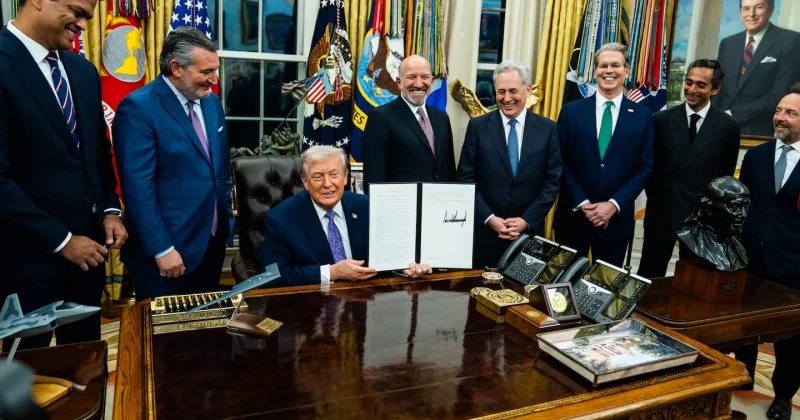
President Trump may sign a new executive order on AI security, according to the Washington Post, as the administration weighs whether frontier models should face deeper national security reviews before release.

The potential order would mark a shift from the administration’s earlier AI agenda, which focused largely on removing regulatory barriers and asserting federal control over AI policy. The White House is now debating whether the Commerce Department or US intelligence agencies should take the lead in reviewing powerful AI models for security risks.

The debate has intensified around models such as Anthropic’s Mythos, which has raised concerns among national security officials over its potential cybersecurity capabilities. The Commerce Department’s Center for AI Standards and Innovation already evaluates some frontier models through voluntary agreements with major AI developers, including OpenAI, Anthropic, Google, Microsoft, and xAI.

The intelligence community is pushing for a larger role in those reviews, arguing that spy agencies need early access to advanced models that could affect cyber operations, biological security, chemical weapons risks, or other national security areas. Commerce officials and Silicon Valley allies have favored a lighter framework that monitors risks without creating a formal approval regime for model releases.

The potential order would follow a year of AI directives from the Trump administration. In January 2025, Trump signed an executive order titled Removing Barriers to American Leadership in Artificial Intelligence, reversing parts of the prior administration’s approach and directing agencies to support US AI leadership.

In December, Trump signed an order aimed at creating a national AI policy framework and challenging state level AI rules that conflict with federal policy. That order created an AI Litigation Task Force and directed the Commerce Department to review state AI laws that the administration views as overly restrictive.

David Sacks, the White House’s special adviser for AI and crypto, has been involved in shaping the administration’s approach. His dual mandate reflects how Washington increasingly views AI and digital assets as strategic technologies that require coordinated federal policy.

Disclosure: This article was edited by Editorial Team. For more information on how we create and review content, see our Editorial Policy.

Trump weighs AI security order as Mythos concerns push Washington toward model reviews

Trump weighs AI security order as Mythos concerns push Washington toward model reviews

The reported order would add to a growing stack of AI-focused directives from an administration that has made artificial intelligence governance a central policy priority.

President Trump may sign a new executive order on AI security, according to the Washington Post, as the administration weighs whether frontier models should face deeper national security reviews before release.

The potential order would mark a shift from the administration’s earlier AI agenda, which focused largely on removing regulatory barriers and asserting federal control over AI policy. The White House is now debating whether the Commerce Department or US intelligence agencies should take the lead in reviewing powerful AI models for security risks.

The debate has intensified around models such as Anthropic’s Mythos, which has raised concerns among national security officials over its potential cybersecurity capabilities. The Commerce Department’s Center for AI Standards and Innovation already evaluates some frontier models through voluntary agreements with major AI developers, including OpenAI, Anthropic, Google, Microsoft, and xAI.

The intelligence community is pushing for a larger role in those reviews, arguing that spy agencies need early access to advanced models that could affect cyber operations, biological security, chemical weapons risks, or other national security areas. Commerce officials and Silicon Valley allies have favored a lighter framework that monitors risks without creating a formal approval regime for model releases.

The potential order would follow a year of AI directives from the Trump administration. In January 2025, Trump signed an executive order titled Removing Barriers to American Leadership in Artificial Intelligence, reversing parts of the prior administration’s approach and directing agencies to support US AI leadership.

In December, Trump signed an order aimed at creating a national AI policy framework and challenging state level AI rules that conflict with federal policy. That order created an AI Litigation Task Force and directed the Commerce Department to review state AI laws that the administration views as overly restrictive.

David Sacks, the White House’s special adviser for AI and crypto, has been involved in shaping the administration’s approach. His dual mandate reflects how Washington increasingly views AI and digital assets as strategic technologies that require coordinated federal policy.

Disclosure: This article was edited by Editorial Team. For more information on how we create and review content, see our Editorial Policy.