
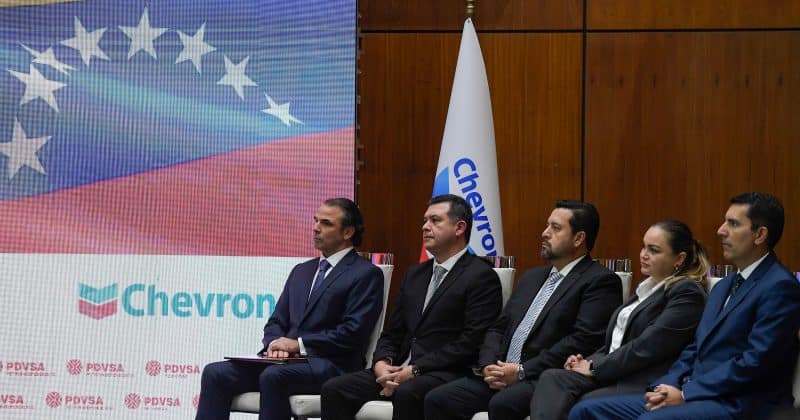
Trump administration amends Venezuela licenses to boost US investment in oil sector
New OFAC general licenses open the door for BP, Chevron, and other majors to operate in Venezuela's oil fields, with strict revenue controls attached.
The US government just rolled out the welcome mat for oil companies eyeing Venezuela’s vast crude reserves, but the mat comes with a lot of fine print. Through a series of amended general licenses issued by the Office of Foreign Assets Control (OFAC), the Trump administration has fundamentally reshaped the investment landscape for Venezuela’s energy sector.
The move follows the January 3, 2026, capture and extradition of Nicolás Maduro, an event that set in motion a rapid recalibration of Washington’s sanctions posture toward the South American nation.
What the new licenses actually allow
On January 29, 2026, General License 46 permitted US entities to begin marketing Venezuelan-origin oil.
On February 13, 2026, OFAC issued GL 49, which was subsequently amended as GL 49A on March 13. This license allows companies to negotiate and enter into new contingent investment contracts across Venezuela’s oil, gas, petrochemical, and electricity sectors. The catch: each contract still requires subsequent OFAC approval before operations can begin.
GL 50 and its amendment GL 50A, issued February 18, 2026, authorized specific major industry players to initiate actual operations on the ground. The companies named include BP, Chevron, Eni, Repsol, and Shell.
Every dollar of revenue generated through these enhanced operations must flow exclusively into US-controlled accounts. And one more notable restriction: cryptocurrency payments are categorically prohibited. The Venezuelan Petro token, once championed by the Maduro government as a sanctions-evasion tool, is explicitly banned from any transaction related to these licenses.
Macro, rates, and crypto—what moved markets and what matters next.
Daily. Free. Join 34,000+ readers across crypto, finance, and policy.
Why Venezuela’s oil matters now
The administration’s broader energy strategy appears aimed at boosting global oil supplies during a period of heightened geopolitical tension, including an ongoing conflict involving Iran. Adding Venezuelan barrels to the global market serves a dual purpose: it rewards regime change with economic engagement while simultaneously putting downward pressure on crude prices.
What this means for investors
For the five named companies, these licenses represent access to a market that’s been largely off-limits. Chevron had maintained a limited presence in Venezuela under prior license authorizations, but the scope of GL 50/50A is considerably broader. BP, Eni, Repsol, and Shell now have a regulatory pathway to establish or expand operations in a country with enormous untapped potential.
The OFAC approval requirement for each contract adds a layer of regulatory uncertainty. Venezuela’s infrastructure requires substantial foreign investment to revitalize its oil output capacity.
By explicitly banning the Petro token and any crypto-denominated payments from Venezuela’s oil trade, the US is drawing a hard line between sanctioned resource revenue and decentralized payment rails.
Investors tracking BP, Chevron, Eni, Repsol, and Shell should monitor quarterly disclosures for any mention of Venezuelan contract submissions to OFAC. The gap between license issuance and actual operational deployment will determine whether this regulatory shift translates into material revenue.