
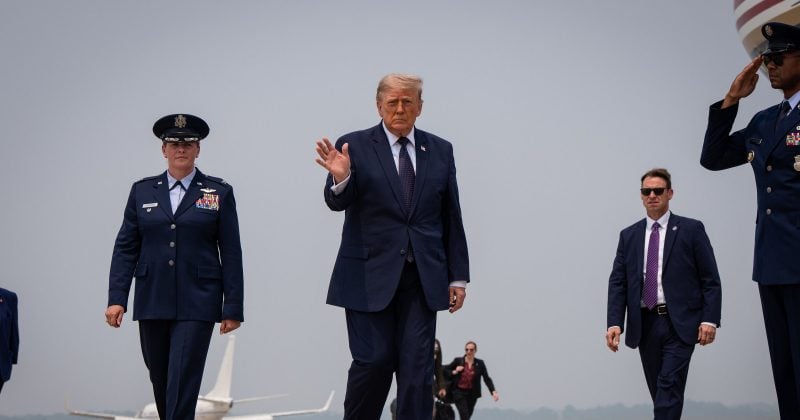
Trump threatens Canada with tariffs over wildfire smoke, adding new uncertainty to already jittery markets
The president accused Canada of 'willful negligence' in forest management, claiming cross-border smoke has cost the US economy billions
President Trump announced on Truth Social that he’s considering escalating tariffs on Canadian goods over something you don’t usually see in trade policy debates: wildfire smoke.
The target isn’t steel or lumber this time. It’s air quality. Trump accused Canada of “willful negligence” in managing its forests, claiming that smoke drifting south from intense Ontario wildfires has cost the American economy “billions of dollars.” He described the air hitting US cities as “filthy, polluted, and unhealthy.”
Smoke as a trade weapon
Tariffs have historically been about goods crossing borders. Cars, aluminum, soybeans. Trump is now framing pollution itself as an import, arguing that the costs associated with Canadian wildfire smoke should be “incorporated into the tariffs Canada currently pays.”
The wildfires driving this rhetoric are real and severe. Blazes burning across Ontario during the summer of 2026 have sent thick smoke into the Midwest and East Coast, triggering air quality alerts in major cities including New York and Chicago.
Trump indicated he plans to contact Canadian Prime Minister Mark Carney to discuss the situation. No specific tariff rates or immediate policy measures were outlined.
The news moving money, markets, and the world—before your day starts.
Daily. Free. Join 34,000+ readers across crypto, finance, and policy.
US lawmakers have previously criticized Canada’s forest management practices, so the political groundwork for this kind of pressure isn’t entirely new. But directly tying environmental grievances to trade penalties represents a novel escalation in the already complicated US-Canada relationship.
The bigger picture for markets
The June-July 2026 fire season in Canada has been notably severe, with geographic impacts stretching far beyond the country’s borders. When those disruptions get weaponized in trade negotiations, they introduce a category of risk that traditional financial models weren’t built to price.
The fact that no concrete tariff numbers were announced gives markets some breathing room. Trump’s stated intention to call Carney suggests there’s still room for negotiation before any actual policy changes take effect.