
Trump blames Canada for wildfire smoke, threatens to pile pollution costs onto tariffs

Trump blames Canada for wildfire smoke, threatens to pile pollution costs onto tariffs

The latest escalation in US-Canada trade tensions adds an unusual variable to an already fragile macro environment for risk assets.

President Donald Trump accused Canada of “willful negligence” over wildfire smoke blanketing major US cities and announced he would add the economic costs of the pollution to existing tariffs on Canadian goods. The threat, made on July 17, 2026, injects yet another unpredictable variable into a trade relationship that crypto and traditional markets have been nervously watching for years.

Trump described the US as being “unnecessarily invaded by filthy, polluted, and unhealthy air,” estimating the pollution’s economic toll in the billions. He said he plans to raise the issue directly with Canadian Prime Minister Mark Carney in a call scheduled for July 18.

Smoke, tariffs, and the art of escalation

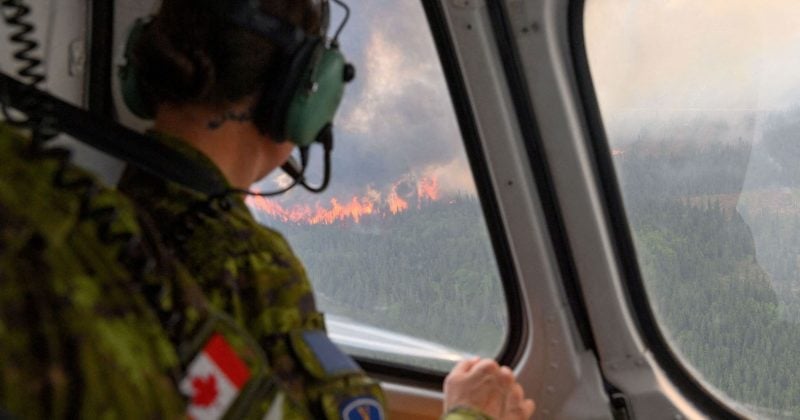
Hundreds of wildfires burning across Canada have pushed hazardous air quality into major US population centers, including New York and Chicago. The smoke has disrupted daily life, triggered health warnings, and given Trump a fresh justification to ratchet up pressure on America’s largest trading partner.

Advertisement

Republican lawmakers have echoed Trump’s criticisms, pointing to what they characterize as inadequate Canadian forest management.

This isn’t the first time Trump has weaponized tariffs against Canada. Previous disputes over steel and aluminum imports followed a similar playbook: identify a grievance, assign blame, and threaten trade penalties.

Why crypto traders should care about smoke signals

The mechanism is indirect but real. Tariff escalation creates economic uncertainty. Uncertainty drives investors toward safer positions. Risk assets, including crypto, tend to suffer in that environment. The counterargument, that Bitcoin serves as a hedge against fiat instability, has some merit on longer time horizons but hasn’t consistently held during acute trade war flare-ups.

The broader macro picture

The US-Canada trade relationship is worth roughly $900 billion annually in goods and services. Canada is a major exporter of oil, lumber, and metals to the US. Tariff increases on these goods would likely raise input costs for American businesses, contributing to inflationary pressure.

Prime Minister Carney, a former central banker himself, has generally taken a measured approach to Trump’s trade provocations. Canada imposed counter-tariffs during previous disputes, and a tit-for-tat escalation would amplify the economic uncertainty that markets are pricing in.

For crypto investors, the key variable to watch is whether this rhetoric translates into actual policy action and whether Canada responds in kind. The July 18 conversation between Trump and Carney could set the tone for risk assets heading into the second half of the month.

Disclosure: This article was edited by Editorial Team. For more information on how we create and review content, see our Editorial Policy.

Trump blames Canada for wildfire smoke, threatens to pile pollution costs onto tariffs

Trump blames Canada for wildfire smoke, threatens to pile pollution costs onto tariffs

The latest escalation in US-Canada trade tensions adds an unusual variable to an already fragile macro environment for risk assets.

President Donald Trump accused Canada of “willful negligence” over wildfire smoke blanketing major US cities and announced he would add the economic costs of the pollution to existing tariffs on Canadian goods. The threat, made on July 17, 2026, injects yet another unpredictable variable into a trade relationship that crypto and traditional markets have been nervously watching for years.

Trump described the US as being “unnecessarily invaded by filthy, polluted, and unhealthy air,” estimating the pollution’s economic toll in the billions. He said he plans to raise the issue directly with Canadian Prime Minister Mark Carney in a call scheduled for July 18.

Smoke, tariffs, and the art of escalation

Hundreds of wildfires burning across Canada have pushed hazardous air quality into major US population centers, including New York and Chicago. The smoke has disrupted daily life, triggered health warnings, and given Trump a fresh justification to ratchet up pressure on America’s largest trading partner.

Advertisement

Republican lawmakers have echoed Trump’s criticisms, pointing to what they characterize as inadequate Canadian forest management.

This isn’t the first time Trump has weaponized tariffs against Canada. Previous disputes over steel and aluminum imports followed a similar playbook: identify a grievance, assign blame, and threaten trade penalties.

Why crypto traders should care about smoke signals

The mechanism is indirect but real. Tariff escalation creates economic uncertainty. Uncertainty drives investors toward safer positions. Risk assets, including crypto, tend to suffer in that environment. The counterargument, that Bitcoin serves as a hedge against fiat instability, has some merit on longer time horizons but hasn’t consistently held during acute trade war flare-ups.

The broader macro picture

The US-Canada trade relationship is worth roughly $900 billion annually in goods and services. Canada is a major exporter of oil, lumber, and metals to the US. Tariff increases on these goods would likely raise input costs for American businesses, contributing to inflationary pressure.

Prime Minister Carney, a former central banker himself, has generally taken a measured approach to Trump’s trade provocations. Canada imposed counter-tariffs during previous disputes, and a tit-for-tat escalation would amplify the economic uncertainty that markets are pricing in.

For crypto investors, the key variable to watch is whether this rhetoric translates into actual policy action and whether Canada responds in kind. The July 18 conversation between Trump and Carney could set the tone for risk assets heading into the second half of the month.

Disclosure: This article was edited by Editorial Team. For more information on how we create and review content, see our Editorial Policy.