
Nexo Earn with Nexo
Trump criticizes Federal Reserve for straying from its mandate as Warsh prepares to take over

Trump criticizes Federal Reserve for straying from its mandate as Warsh prepares to take over

New Fed Chair Kevin Warsh takes the reins after a narrow Senate confirmation, inheriting an inflation rate of 3.8% and a president eager to reshape central bank priorities.

President Donald Trump swore in Kevin Warsh as the new Chair of the Federal Reserve on May 22, 2026, and he didn’t let the ceremony pass without taking a few shots at the institution’s prior leadership. Trump accused the previous Fed regime of losing its focus on the dual mandate, price stability and maximum employment, and blamed it for inflation levels he described as the worst in 40 to 48 years.

A hawk enters the building

Warsh is no stranger to the Fed. He served as a governor from 2006 to 2011 under President George W. Bush, a tenure that overlapped with the global financial crisis. His reputation as a monetary policy hawk, someone who prioritizes fighting inflation even if it means higher interest rates, is well established.

His path back to the central bank wasn’t exactly a coronation. Trump nominated Warsh on January 30, 2026, and the Senate confirmed him in mid-May with a narrow 54-45 vote.

Advertisement

Warsh has ties to Stanford University and the Hoover Institution, both known for producing economists who lean toward tighter monetary discipline.

Despite the criticism lobbed at the Fed during the ceremony, Trump also urged that Warsh should operate with complete independence from political pressures.

The inflation problem he inherits

Warsh isn’t walking into a clean house. The inflation rate for April 2026 hit 3.8%, a multi-year high that sits well above the Fed’s longstanding 2% target.

What this means for crypto and digital assets

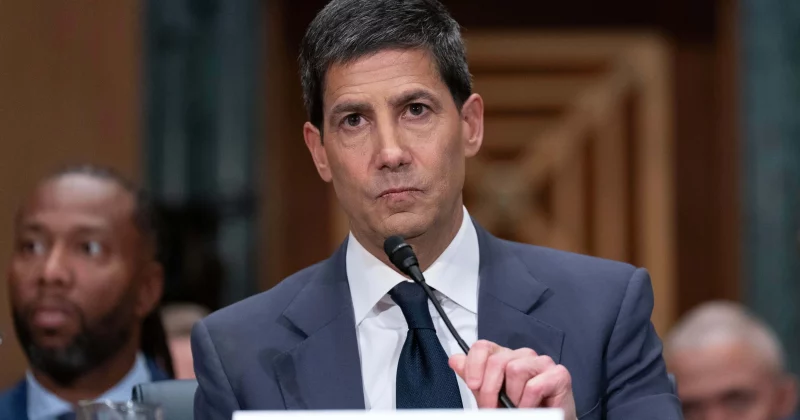
During his Senate confirmation hearings, Warsh made comments acknowledging that digital assets like Bitcoin are now integrated into the financial sector. When the person about to run the most powerful central bank on the planet says crypto is embedded in finance, it carries weight.

The tension is between Warsh’s apparent openness to digital assets and his hawkish monetary instincts. Tighter monetary policy is generally bad for Bitcoin and other risk-on assets in the short term. Higher rates make yield-bearing instruments like Treasury bonds more attractive relative to non-yielding assets.

Investors in the digital asset space should watch two things closely. First, any concrete policy signals from Warsh’s early speeches and FOMC meetings regarding the pace of potential rate adjustments. Second, whether the new chair’s stated recognition of crypto’s role in finance translates into any tangible regulatory guidance or coordination with other agencies like the SEC and CFTC.

Disclosure: This article was edited by Editorial Team. For more information on how we create and review content, see our Editorial Policy.

Trump criticizes Federal Reserve for straying from its mandate as Warsh prepares to take over

Trump criticizes Federal Reserve for straying from its mandate as Warsh prepares to take over

New Fed Chair Kevin Warsh takes the reins after a narrow Senate confirmation, inheriting an inflation rate of 3.8% and a president eager to reshape central bank priorities.

President Donald Trump swore in Kevin Warsh as the new Chair of the Federal Reserve on May 22, 2026, and he didn’t let the ceremony pass without taking a few shots at the institution’s prior leadership. Trump accused the previous Fed regime of losing its focus on the dual mandate, price stability and maximum employment, and blamed it for inflation levels he described as the worst in 40 to 48 years.

A hawk enters the building

Warsh is no stranger to the Fed. He served as a governor from 2006 to 2011 under President George W. Bush, a tenure that overlapped with the global financial crisis. His reputation as a monetary policy hawk, someone who prioritizes fighting inflation even if it means higher interest rates, is well established.

His path back to the central bank wasn’t exactly a coronation. Trump nominated Warsh on January 30, 2026, and the Senate confirmed him in mid-May with a narrow 54-45 vote.

Advertisement

Warsh has ties to Stanford University and the Hoover Institution, both known for producing economists who lean toward tighter monetary discipline.

Despite the criticism lobbed at the Fed during the ceremony, Trump also urged that Warsh should operate with complete independence from political pressures.

The inflation problem he inherits

Warsh isn’t walking into a clean house. The inflation rate for April 2026 hit 3.8%, a multi-year high that sits well above the Fed’s longstanding 2% target.

What this means for crypto and digital assets

During his Senate confirmation hearings, Warsh made comments acknowledging that digital assets like Bitcoin are now integrated into the financial sector. When the person about to run the most powerful central bank on the planet says crypto is embedded in finance, it carries weight.

The tension is between Warsh’s apparent openness to digital assets and his hawkish monetary instincts. Tighter monetary policy is generally bad for Bitcoin and other risk-on assets in the short term. Higher rates make yield-bearing instruments like Treasury bonds more attractive relative to non-yielding assets.

Investors in the digital asset space should watch two things closely. First, any concrete policy signals from Warsh’s early speeches and FOMC meetings regarding the pace of potential rate adjustments. Second, whether the new chair’s stated recognition of crypto’s role in finance translates into any tangible regulatory guidance or coordination with other agencies like the SEC and CFTC.

Disclosure: This article was edited by Editorial Team. For more information on how we create and review content, see our Editorial Policy.