
Trump defends Iran ceasefire deal at G-7 summit, criticizes Israel over Lebanon operations

Trump defends Iran ceasefire deal at G-7 summit, criticizes Israel over Lebanon operations

The president called Iranian leaders 'very rational' while expressing frustration with Israel's pace in dealing with Hezbollah, as G7 leaders backed a 60-day ceasefire framework

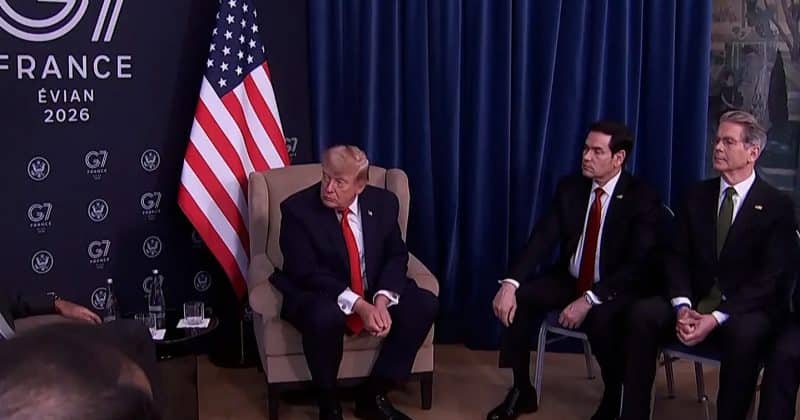
President Trump stood before G7 leaders in the French Alps and did something that would have seemed unthinkable during his first term: he praised Iran’s rationality while publicly scolding Israel.

At the G7 summit in Évian-les-Bains, France, held June 16-17, Trump defended a tentative US-Iran ceasefire agreement and took aim at Israel’s military operations in Lebanon, arguing they were undermining the broader deal. The summit produced a joint statement from all G7 leaders backing the ceasefire framework, a memorandum of understanding that aims to pause hostilities for at least 60 days.

What the deal actually involves

The ceasefire agreement centers on two core objectives: halting a conflict between the US and Iran that has stretched roughly 3.5 months, and reopening the Strait of Hormuz to commercial shipping. Trump indicated the strait would be “completely open” starting June 19.

Trump described the agreement as “very strong” and “fair,” while emphasizing one particular point: no direct US investment will flow to Iran under its terms.

Advertisement

The agreement is structured as a memorandum of understanding rather than a formal treaty, not a binding legal commitment that would require Senate ratification.

The Israel critique

Trump criticized Israel’s operations against Hezbollah in Lebanon, arguing that Israeli forces should have acted faster. His frustration appeared rooted not in moral objections to the military campaign itself, but in his belief that Israel’s actions were complicating the Iran deal.

Trump’s characterization of Iranian leaders as “very rational” is equally striking. This is the same president who ordered the killing of Iranian General Qassem Soleimani in 2020 and withdrew from the Iran nuclear deal in 2018.

G7 dynamics and the broader picture

The joint statement from G7 leaders supporting the ceasefire framework gives Trump multilateral cover. Having the backing of France, Germany, the UK, Japan, Italy, and Canada makes the agreement harder for domestic critics to dismiss as a unilateral gamble.

G7 discussions also addressed imposing tougher sanctions on Russia, with the Ukraine-Russia conflict continuing to shape the geopolitical backdrop. Trump held multiple side meetings with Gulf leaders during the summit to discuss regional tensions.

The 60-day ceasefire window creates breathing room for more substantive negotiations, but it also means the clock starts ticking immediately.

The potential reopening of the Strait of Hormuz may indirectly affect oil prices, which could ripple through financial markets, including cryptocurrency assets. Traders positioning around the deal should watch oil futures on June 19 as the first real test of whether the agreement holds in practice, not just on paper.

Disclosure: This article was edited by Editorial Team. For more information on how we create and review content, see our Editorial Policy.

Trump defends Iran ceasefire deal at G-7 summit, criticizes Israel over Lebanon operations

Trump defends Iran ceasefire deal at G-7 summit, criticizes Israel over Lebanon operations

The president called Iranian leaders 'very rational' while expressing frustration with Israel's pace in dealing with Hezbollah, as G7 leaders backed a 60-day ceasefire framework

President Trump stood before G7 leaders in the French Alps and did something that would have seemed unthinkable during his first term: he praised Iran’s rationality while publicly scolding Israel.

At the G7 summit in Évian-les-Bains, France, held June 16-17, Trump defended a tentative US-Iran ceasefire agreement and took aim at Israel’s military operations in Lebanon, arguing they were undermining the broader deal. The summit produced a joint statement from all G7 leaders backing the ceasefire framework, a memorandum of understanding that aims to pause hostilities for at least 60 days.

What the deal actually involves

The ceasefire agreement centers on two core objectives: halting a conflict between the US and Iran that has stretched roughly 3.5 months, and reopening the Strait of Hormuz to commercial shipping. Trump indicated the strait would be “completely open” starting June 19.

Trump described the agreement as “very strong” and “fair,” while emphasizing one particular point: no direct US investment will flow to Iran under its terms.

Advertisement

The agreement is structured as a memorandum of understanding rather than a formal treaty, not a binding legal commitment that would require Senate ratification.

The Israel critique

Trump criticized Israel’s operations against Hezbollah in Lebanon, arguing that Israeli forces should have acted faster. His frustration appeared rooted not in moral objections to the military campaign itself, but in his belief that Israel’s actions were complicating the Iran deal.

Trump’s characterization of Iranian leaders as “very rational” is equally striking. This is the same president who ordered the killing of Iranian General Qassem Soleimani in 2020 and withdrew from the Iran nuclear deal in 2018.

G7 dynamics and the broader picture

The joint statement from G7 leaders supporting the ceasefire framework gives Trump multilateral cover. Having the backing of France, Germany, the UK, Japan, Italy, and Canada makes the agreement harder for domestic critics to dismiss as a unilateral gamble.

G7 discussions also addressed imposing tougher sanctions on Russia, with the Ukraine-Russia conflict continuing to shape the geopolitical backdrop. Trump held multiple side meetings with Gulf leaders during the summit to discuss regional tensions.

The 60-day ceasefire window creates breathing room for more substantive negotiations, but it also means the clock starts ticking immediately.

The potential reopening of the Strait of Hormuz may indirectly affect oil prices, which could ripple through financial markets, including cryptocurrency assets. Traders positioning around the deal should watch oil futures on June 19 as the first real test of whether the agreement holds in practice, not just on paper.

Disclosure: This article was edited by Editorial Team. For more information on how we create and review content, see our Editorial Policy.