
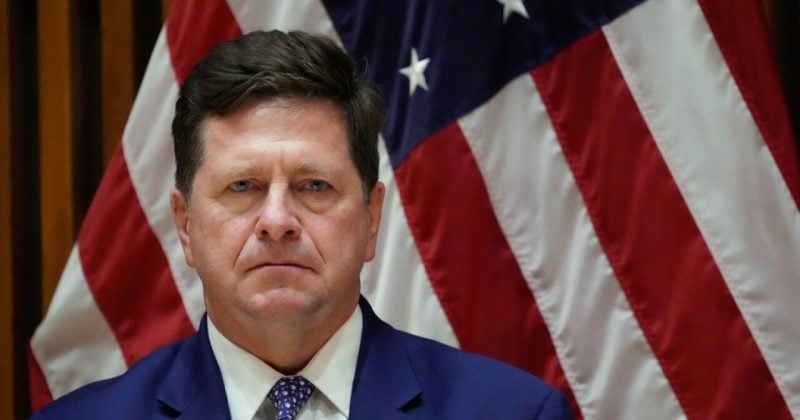
Trump delays Jay Clayton’s intelligence director nomination, tying it to SAVE AMERICA ACT and FISA renewal

Trump delays Jay Clayton’s intelligence director nomination, tying it to SAVE AMERICA ACT and FISA renewal

The president is using the DNI confirmation as leverage in a broader congressional standoff over voter ID legislation and surveillance powers.

President Trump has postponed Jay Clayton’s confirmation hearing for Director of National Intelligence, turning what should be a straightforward personnel move into a bargaining chip in a multi-front legislative battle on Capitol Hill.

The delay, announced on June 17 while Trump was attending the G7 summit in France, is explicitly tied to two stalled pieces of legislation: the SAVE AMERICA ACT, which aims to strengthen voter ID requirements, and the renewal of the Foreign Intelligence Surveillance Act.

Clayton’s nomination and the Pulte problem

Clayton was nominated around June 11-12 as Trump’s pick to lead the intelligence community on a permanent basis. The nomination itself was a response to growing controversy surrounding Bill Pulte, who has been serving as acting DNI.

Before this nomination, Clayton was best known in financial circles as the former SEC chairman during Trump’s first term, where he oversaw the agency from 2017 to 2020. He currently serves as US Attorney for the Southern District of New York, a role Trump has indicated he’ll retain until a successor is confirmed.

Advertisement

Trump intends to keep Pulte in the acting role until Clayton’s confirmation process plays out.

The legislative chess match

Democrats have taken the position that FISA renewal should be contingent on naming a permanent DNI. Their argument is straightforward: the surveillance powers authorized under FISA are too significant to operate without confirmed, Senate-approved leadership at the top of the intelligence apparatus.

Republicans, meanwhile, have pushed for Clayton’s swift confirmation while simultaneously advancing the SAVE AMERICA ACT, which would establish stricter voter identification requirements at the federal level. By linking Clayton’s hearing to the SAVE AMERICA ACT’s progress, Trump is essentially telling Congress that nobody gets what they want until everybody moves on his priorities.

A lapse in FISA authority would create genuine operational gaps for intelligence agencies.

Why crypto and tech investors should pay attention

The FISA renewal debate directly impacts the technology and surveillance sectors. FISA’s scope includes provisions around data collection from tech companies, and any changes to the law’s framework, or a prolonged lapse in its authority, would create regulatory uncertainty for firms operating in data-intensive industries.

Clayton’s own history matters here too. As SEC chairman, he presided over a period that shaped the regulatory landscape for digital assets in meaningful ways. His tenure at the SEC saw the rejection of multiple Bitcoin ETF applications and the early stages of enforcement actions against crypto projects.

The SAVE AMERICA ACT adds another variable. Voter ID legislation is politically charged enough to consume significant congressional bandwidth, potentially crowding out the crypto-related bills that the industry has been lobbying for throughout 2026.

Disclosure: This article was edited by Editorial Team. For more information on how we create and review content, see our Editorial Policy.

Trump delays Jay Clayton’s intelligence director nomination, tying it to SAVE AMERICA ACT and FISA renewal

Trump delays Jay Clayton’s intelligence director nomination, tying it to SAVE AMERICA ACT and FISA renewal

The president is using the DNI confirmation as leverage in a broader congressional standoff over voter ID legislation and surveillance powers.

President Trump has postponed Jay Clayton’s confirmation hearing for Director of National Intelligence, turning what should be a straightforward personnel move into a bargaining chip in a multi-front legislative battle on Capitol Hill.

The delay, announced on June 17 while Trump was attending the G7 summit in France, is explicitly tied to two stalled pieces of legislation: the SAVE AMERICA ACT, which aims to strengthen voter ID requirements, and the renewal of the Foreign Intelligence Surveillance Act.

Clayton’s nomination and the Pulte problem

Clayton was nominated around June 11-12 as Trump’s pick to lead the intelligence community on a permanent basis. The nomination itself was a response to growing controversy surrounding Bill Pulte, who has been serving as acting DNI.

Before this nomination, Clayton was best known in financial circles as the former SEC chairman during Trump’s first term, where he oversaw the agency from 2017 to 2020. He currently serves as US Attorney for the Southern District of New York, a role Trump has indicated he’ll retain until a successor is confirmed.

Advertisement

Trump intends to keep Pulte in the acting role until Clayton’s confirmation process plays out.

The legislative chess match

Democrats have taken the position that FISA renewal should be contingent on naming a permanent DNI. Their argument is straightforward: the surveillance powers authorized under FISA are too significant to operate without confirmed, Senate-approved leadership at the top of the intelligence apparatus.

Republicans, meanwhile, have pushed for Clayton’s swift confirmation while simultaneously advancing the SAVE AMERICA ACT, which would establish stricter voter identification requirements at the federal level. By linking Clayton’s hearing to the SAVE AMERICA ACT’s progress, Trump is essentially telling Congress that nobody gets what they want until everybody moves on his priorities.

A lapse in FISA authority would create genuine operational gaps for intelligence agencies.

Why crypto and tech investors should pay attention

The FISA renewal debate directly impacts the technology and surveillance sectors. FISA’s scope includes provisions around data collection from tech companies, and any changes to the law’s framework, or a prolonged lapse in its authority, would create regulatory uncertainty for firms operating in data-intensive industries.

Clayton’s own history matters here too. As SEC chairman, he presided over a period that shaped the regulatory landscape for digital assets in meaningful ways. His tenure at the SEC saw the rejection of multiple Bitcoin ETF applications and the early stages of enforcement actions against crypto projects.

The SAVE AMERICA ACT adds another variable. Voter ID legislation is politically charged enough to consume significant congressional bandwidth, potentially crowding out the crypto-related bills that the industry has been lobbying for throughout 2026.

Disclosure: This article was edited by Editorial Team. For more information on how we create and review content, see our Editorial Policy.