
Trump’s plan to deploy 20,000 peacekeeping troops to Gaza could reshape Middle East risk calculus for markets

Trump’s plan to deploy 20,000 peacekeeping troops to Gaza could reshape Middle East risk calculus for markets

A multinational stabilization force backed by $7 billion in reconstruction funding introduces a new variable for investors tracking geopolitical risk premiums.

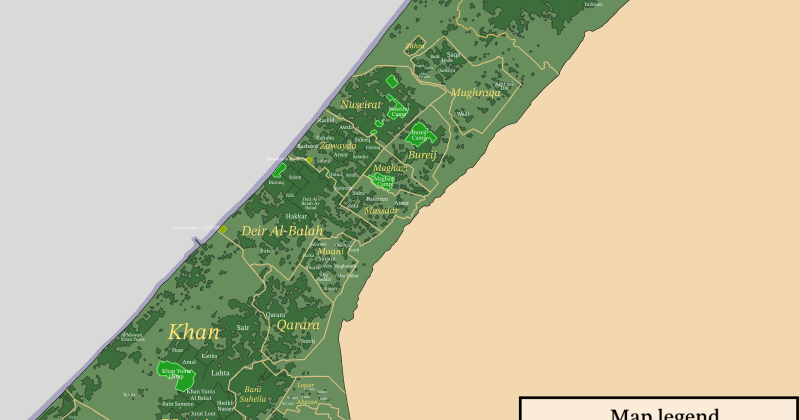
The US is assembling an International Stabilization Force of roughly 20,000 troops for postwar Gaza, with an initial deployment starting as small as 10 to 20 personnel. The plan, part of President Trump’s broader Middle East framework, represents one of the most ambitious US-backed peacekeeping efforts in years, and markets that price geopolitical risk, including crypto, should be paying attention.

What the stabilization force actually looks like

The ISF is designed as a multinational operation, not a unilateral American deployment. Five nations have officially committed troops: Indonesia, Morocco, Kazakhstan, Kosovo, and Albania.

Indonesia’s contribution is the headline number. The country initially pledged up to 20,000 troops, though that figure was later confirmed at approximately 8,000 personnel. Those aren’t just boots on the ground either. The Indonesian contingent includes specialized engineering and health units, signaling this is as much about reconstruction as security.

Advertisement

The full force is planned at 20,000 soldiers supplemented by 12,000 trained local police. The initial phase is deliberately modest. Starting with roughly 10 to 20 personnel focused on critical areas like Rafah, the deployment is structured to scale up over time rather than flood the zone immediately.

An inaugural Board of Peace meeting held in February 2026 produced $7 billion in reconstruction funding commitments.

The geopolitical timeline

The Gaza stabilization proposal was introduced as part of Trump’s broader Middle East framework in September 2025. The UN Security Council endorsed the plan in November of that year. By mid-February 2026, five nations had formally promised troop contributions.

Why crypto and risk asset traders should care

Bitcoin and the broader crypto market have repeatedly demonstrated sensitivity to Middle East geopolitical shocks. When Iran launched drone strikes against Israel in April 2024, Bitcoin dropped sharply within hours. Every subsequent escalation cycle in the region has produced measurable volatility spikes across digital assets.

A credible, internationally backed stabilization effort in Gaza doesn’t eliminate Middle East risk. But it does potentially reduce one of the most persistent sources of headline-driven volatility that crypto traders have dealt with since late 2023.

The $7 billion reconstruction commitment also matters for macro watchers. That capital has to come from somewhere, and the sourcing of those funds, whether from sovereign wealth, multilateral development banks, or bilateral aid, could influence capital flows in ways that ripple through emerging market debt and, indirectly, risk appetite broadly.

Disclosure: This article was edited by Editorial Team. For more information on how we create and review content, see our Editorial Policy.

Trump’s plan to deploy 20,000 peacekeeping troops to Gaza could reshape Middle East risk calculus for markets

Trump’s plan to deploy 20,000 peacekeeping troops to Gaza could reshape Middle East risk calculus for markets

A multinational stabilization force backed by $7 billion in reconstruction funding introduces a new variable for investors tracking geopolitical risk premiums.

The US is assembling an International Stabilization Force of roughly 20,000 troops for postwar Gaza, with an initial deployment starting as small as 10 to 20 personnel. The plan, part of President Trump’s broader Middle East framework, represents one of the most ambitious US-backed peacekeeping efforts in years, and markets that price geopolitical risk, including crypto, should be paying attention.

What the stabilization force actually looks like

The ISF is designed as a multinational operation, not a unilateral American deployment. Five nations have officially committed troops: Indonesia, Morocco, Kazakhstan, Kosovo, and Albania.

Indonesia’s contribution is the headline number. The country initially pledged up to 20,000 troops, though that figure was later confirmed at approximately 8,000 personnel. Those aren’t just boots on the ground either. The Indonesian contingent includes specialized engineering and health units, signaling this is as much about reconstruction as security.

Advertisement

The full force is planned at 20,000 soldiers supplemented by 12,000 trained local police. The initial phase is deliberately modest. Starting with roughly 10 to 20 personnel focused on critical areas like Rafah, the deployment is structured to scale up over time rather than flood the zone immediately.

An inaugural Board of Peace meeting held in February 2026 produced $7 billion in reconstruction funding commitments.

The geopolitical timeline

The Gaza stabilization proposal was introduced as part of Trump’s broader Middle East framework in September 2025. The UN Security Council endorsed the plan in November of that year. By mid-February 2026, five nations had formally promised troop contributions.

Why crypto and risk asset traders should care

Bitcoin and the broader crypto market have repeatedly demonstrated sensitivity to Middle East geopolitical shocks. When Iran launched drone strikes against Israel in April 2024, Bitcoin dropped sharply within hours. Every subsequent escalation cycle in the region has produced measurable volatility spikes across digital assets.

A credible, internationally backed stabilization effort in Gaza doesn’t eliminate Middle East risk. But it does potentially reduce one of the most persistent sources of headline-driven volatility that crypto traders have dealt with since late 2023.

The $7 billion reconstruction commitment also matters for macro watchers. That capital has to come from somewhere, and the sourcing of those funds, whether from sovereign wealth, multilateral development banks, or bilateral aid, could influence capital flows in ways that ripple through emerging market debt and, indirectly, risk appetite broadly.

Disclosure: This article was edited by Editorial Team. For more information on how we create and review content, see our Editorial Policy.