
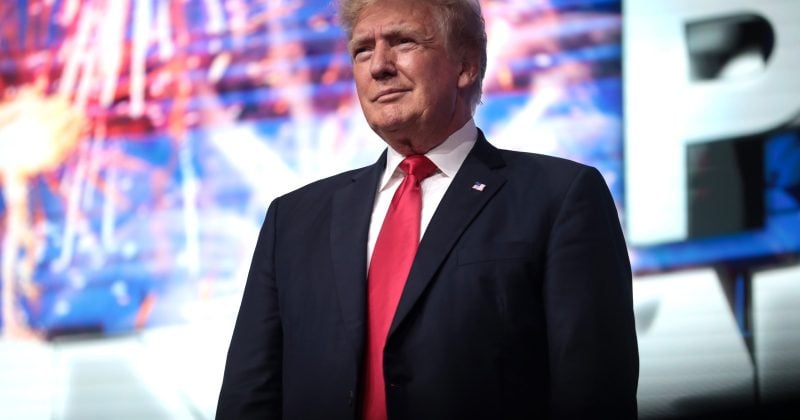
Trump warns of potential government shutdown in September, adding fuel to market uncertainty

Trump warns of potential government shutdown in September, adding fuel to market uncertainty

The president's filibuster ultimatum arrives as prediction markets price in a 77.6% chance of no Fed rate cuts this year, signaling a rough autumn for risk assets.

President Donald Trump issued a blunt warning on July 13: the US government could shut down in September if Senate Republicans don’t kill the filibuster. The 60-vote threshold for passing most legislation, Trump argued, is the obstacle standing between Congress and a funded government.

The deadline in question is September 30, when federal agency appropriations expire.

The filibuster gambit and what’s actually at stake

The SAVE America Act, which addresses unresolved funding for Immigration and Customs Enforcement and Customs and Border Protection, remains stuck in legislative limbo. Senate Majority Leader John Thune is now caught between a president who wants the filibuster gone and a chamber that has historically guarded its procedural traditions.

Advertisement

The filibuster requires 60 votes to advance most legislation, meaning Republicans would need Democratic cooperation to pass funding bills under current rules.

Earlier in 2026, a partial government shutdown lasted 76 days and directly impacted the Department of Homeland Security.

Why crypto and risk markets should care

Prediction markets currently show a 77.6% probability that the Federal Reserve will not cut interest rates at all in 2026. A government shutdown would only reinforce the Fed’s cautious posture, as fiscal chaos makes it harder to justify loosening policy.

A shutdown means federal agencies operate with skeleton crews. The SEC, CFTC, and other regulators that oversee crypto markets would likely slow or pause rulemaking, enforcement actions, and licensing reviews. Pending approvals for new crypto products, ETF applications, and banking partnerships all get delayed.

The bigger picture for investors

If Trump follows through on his threat and Congress fails to reach a deal, the US would enter its second partial shutdown of 2026.

The sectors most directly exposed are those with ties to federal funding or regulatory approvals. Blockchain companies seeking government contracts, stablecoin issuers awaiting legislative frameworks, and exchanges navigating licensing requirements all face potential delays.

If Thune moves to eliminate the filibuster, the legislative floodgates open for everything from crypto regulation to tax policy. If he doesn’t, the shutdown threat becomes very real, and markets will need to price in weeks or months of fiscal uncertainty heading into the fourth quarter.

Disclosure: This article was edited by Editorial Team. For more information on how we create and review content, see our Editorial Policy.

Trump warns of potential government shutdown in September, adding fuel to market uncertainty

Trump warns of potential government shutdown in September, adding fuel to market uncertainty

The president's filibuster ultimatum arrives as prediction markets price in a 77.6% chance of no Fed rate cuts this year, signaling a rough autumn for risk assets.

President Donald Trump issued a blunt warning on July 13: the US government could shut down in September if Senate Republicans don’t kill the filibuster. The 60-vote threshold for passing most legislation, Trump argued, is the obstacle standing between Congress and a funded government.

The deadline in question is September 30, when federal agency appropriations expire.

The filibuster gambit and what’s actually at stake

The SAVE America Act, which addresses unresolved funding for Immigration and Customs Enforcement and Customs and Border Protection, remains stuck in legislative limbo. Senate Majority Leader John Thune is now caught between a president who wants the filibuster gone and a chamber that has historically guarded its procedural traditions.

Advertisement

The filibuster requires 60 votes to advance most legislation, meaning Republicans would need Democratic cooperation to pass funding bills under current rules.

Earlier in 2026, a partial government shutdown lasted 76 days and directly impacted the Department of Homeland Security.

Why crypto and risk markets should care

Prediction markets currently show a 77.6% probability that the Federal Reserve will not cut interest rates at all in 2026. A government shutdown would only reinforce the Fed’s cautious posture, as fiscal chaos makes it harder to justify loosening policy.

A shutdown means federal agencies operate with skeleton crews. The SEC, CFTC, and other regulators that oversee crypto markets would likely slow or pause rulemaking, enforcement actions, and licensing reviews. Pending approvals for new crypto products, ETF applications, and banking partnerships all get delayed.

The bigger picture for investors

If Trump follows through on his threat and Congress fails to reach a deal, the US would enter its second partial shutdown of 2026.

The sectors most directly exposed are those with ties to federal funding or regulatory approvals. Blockchain companies seeking government contracts, stablecoin issuers awaiting legislative frameworks, and exchanges navigating licensing requirements all face potential delays.

If Thune moves to eliminate the filibuster, the legislative floodgates open for everything from crypto regulation to tax policy. If he doesn’t, the shutdown threat becomes very real, and markets will need to price in weeks or months of fiscal uncertainty heading into the fourth quarter.

Disclosure: This article was edited by Editorial Team. For more information on how we create and review content, see our Editorial Policy.