
 Earn with Nexo
Trump says Hormuz will reopen toll-free by Friday as Iran deal takes shape
A memorandum of understanding between the US and Iran promises to reopen the world's most critical oil chokepoint, and Bitcoin is already responding.
President Donald Trump announced that the Strait of Hormuz, the narrow waterway through which roughly a fifth of the world’s oil supply passes, will be fully open and toll-free by Friday. The declaration came alongside a broader memorandum of understanding with Iran aimed at preventing the country from developing nuclear weapons.
Bitcoin responded by pushing past $65,000 as traders digested the announcement. Oil prices moved in the opposite direction, falling on expectations that one of the world’s most persistent supply bottlenecks is about to unclog.
What the deal actually says
The MoU, announced on June 14-15, establishes a 60-day ceasefire window during which the US and Iran will negotiate nuclear disarmament terms. The formal signing ceremony is scheduled for June 19-20 in Geneva, Switzerland. Iran’s signatory is Parliament Speaker Mohammad Bagher Ghalibaf.
On the American side, the agreement requires lifting the US naval blockade on Iranian ports. In return, Iran commits to allowing unrestricted, toll-free commercial shipping through the Strait of Hormuz. Trump summarized the arrangement on social media: “Ships of the World, start your engines. Let the oil flow!”
Partial shipping traffic through the strait has already resumed, with vessels using safer southern routes while mine clearance operations continue. A complete reopening is expected once those operations wrap up, which the administration says will happen by Friday.
The full text of the MoU has not been released to the public. The deal reportedly builds on months of backchannel negotiations that involved Pakistan as an intermediary.
Why Hormuz matters more than you think
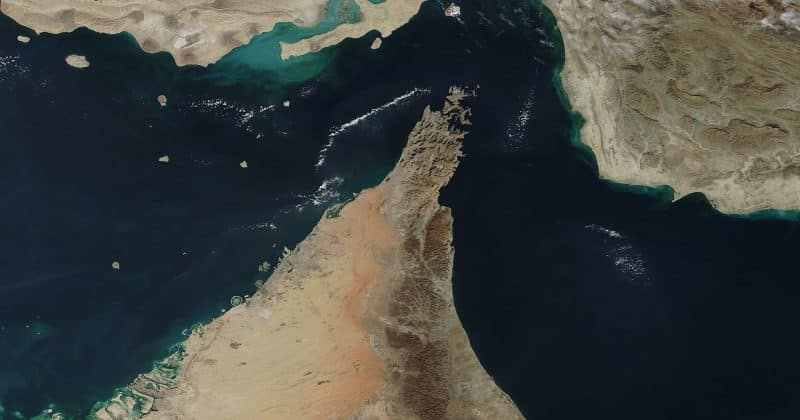
The Strait of Hormuz connects the Persian Gulf to the Gulf of Oman and is the transit point for oil exports from Saudi Arabia, Iraq, Kuwait, the UAE, and Qatar. It handles approximately 20% of the world’s oil supply.
What this means for crypto and broader markets
Bitcoin’s move above $65,000 on the news fits a pattern that crypto investors have seen before. Geopolitical de-escalation tends to be good for risk assets, and Bitcoin has increasingly behaved like one despite its reputation as a hedge against uncertainty.
The 60-day negotiation window introduces its own uncertainty. The MoU is a framework, not a final agreement. The 2015 JCPOA took years to negotiate, and the US ultimately withdrew from it.
The involvement of Ghalibaf rather than a figure from Iran’s executive branch is also worth watching. Parliament speakers can negotiate, but implementation requires buy-in from the broader power structure, including the Supreme Leader’s office.