
Trump announces 20% toll on Strait of Hormuz cargo, sending oil prices surging
The president's naval blockade and shipping toll on the world's most important oil chokepoint could ripple through crypto markets as energy costs spike
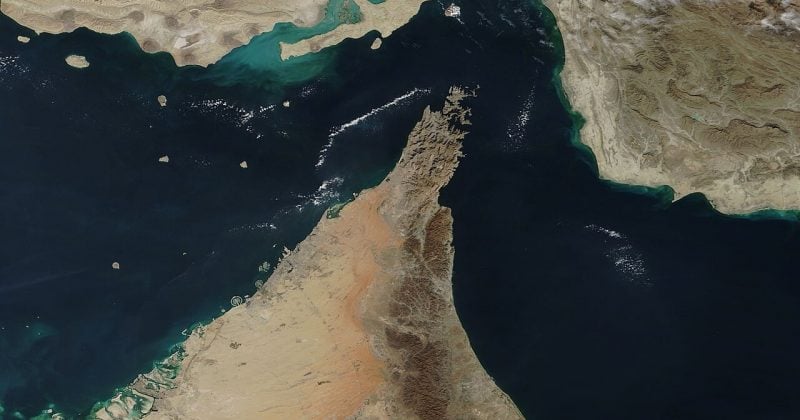
President Donald Trump just turned the world’s most critical oil chokepoint into a toll road. The president announced a naval blockade against Iranian ships in the Strait of Hormuz, paired with a 20% toll on all cargo shipped by non-Iranian vessels through the passage.
Oil prices surged 5-7% in intraday trading almost immediately.
The toll booth at the edge of the world
About 20% of the world’s oil trade flows through the Strait of Hormuz. That narrow waterway between Iran and the Arabian Peninsula is essentially the jugular vein of global energy supply.
Trump framed the toll as a matter of “safety and fairness,” positioning the US as what he called “THE GUARDIAN OF THE HORMUZ STRAIT.” The toll is set to commence immediately, though no implementation details or legal justification for the charge were provided.
The move directly contradicts previous US positions that advocated for the Strait remaining a toll-free passage. Washington has historically been the loudest voice insisting that international waterways stay open and unencumbered.
That predictability evaporated on July 13.
Why oil traders panicked, and why crypto should pay attention
The 5-7% jump in oil prices pushed benchmarks to levels not seen in about a month.
Bitcoin mining is energy-intensive. Sustained increases in energy costs compress miner margins, which can influence hash rate, network security economics, and ultimately selling pressure as miners liquidate holdings to cover higher operational costs.
The geopolitical backdrop is already tense
The US and Iran have been exchanging military strikes, and tensions in the region have been escalating for months. The Strait of Hormuz has been a flashpoint for decades, with Iran previously attempting to impose its own tolls on shipping traffic, efforts that were rebuffed by international shipping interests and naval coalitions.
International maritime law generally prohibits obstructing passage through straits used for international navigation. The UN Convention on the Law of the Sea, which the US has never ratified but has traditionally respected, guarantees transit passage through such waterways.
Without a detailed legal framework, the toll exists in a gray zone, backed primarily by naval force rather than international consensus.
What crypto investors should watch
First, watch inflation expectations. If oil stays elevated, consumer prices follow within weeks. Central banks that were considering rate cuts may pause or reverse course.
Second, monitor Bitcoin’s behavior relative to gold. If Bitcoin starts moving in tandem with gold rather than with tech stocks, it suggests the market is treating it as a hedge against geopolitical uncertainty rather than a speculative asset.
Third, keep an eye on stablecoin flows. Large inflows to USDT and USDC on exchanges can signal that capital is waiting on the sidelines. Fourth, energy-sensitive tokens and mining-related equities deserve scrutiny. Projects tied to proof-of-work consensus mechanisms or those with significant energy exposure could see outsized moves if oil prices sustain their current trajectory.