
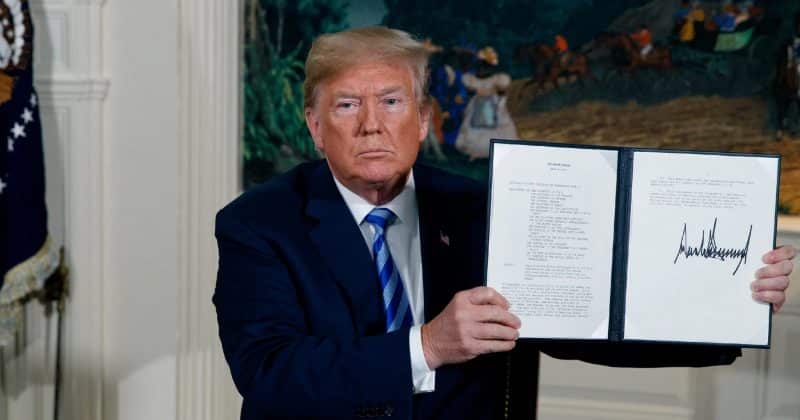
Trump asserts Iran accord prevents nuclear weapon development
The interim framework deal reopens the Strait of Hormuz and kicks off 60 days of nuclear negotiations, sending risk assets including Bitcoin and Ethereum higher.
President Donald Trump declared on June 15 that a newly signed interim agreement with Iran includes commitments from Tehran to refrain from developing nuclear weapons. The framework accord, which also reopens the Strait of Hormuz and lifts a US naval blockade, triggered an immediate rally across risk assets, with Bitcoin and Ethereum among the beneficiaries.
The deal was effectively signed by Trump, Vice President JD Vance, and Iranian Parliament Speaker Mohammad Bagher Ghalibaf. It establishes a 60-day negotiation window focused specifically on nuclear issues, meaning the hard details are still ahead.
What the deal actually says, and what it doesn’t
Iran has consistently maintained it does not seek nuclear weapons. The new framework essentially puts that claim in writing, which Trump is treating as a meaningful concession.
The previous major nuclear agreement, the Joint Comprehensive Plan of Action (JCPOA), was signed in 2015 and included detailed provisions on uranium enrichment limits, centrifuge operations, and international inspections. Trump pulled the US out of that deal in 2018, calling it “the worst deal ever.” The new interim framework has yet to approach that level of specificity.
The geopolitical backdrop
This announcement didn’t materialize from calm waters. The period spanning 2025 and early 2026 was marked by escalating tensions between the US and Iran, including military strikes and a series of temporary ceasefires that ultimately failed to hold.
Macro, rates, and crypto—what moved markets and what matters next.
Daily. Free. Join 34,000+ readers across crypto, finance, and policy.
The US naval blockade of the Strait of Hormuz, one of the world’s most critical oil chokepoints, had been a particularly aggressive lever. Roughly one-fifth of the world’s petroleum passes through that narrow waterway on any given day, so its closure had ripple effects well beyond the Middle East.
The 60-day negotiation clock starts now, meaning markets will be watching for progress, or lack thereof, through mid-August. That’s a tight timeline for what is essentially the most consequential arms control discussion since the JCPOA itself. The JCPOA negotiations spanned roughly two years of intensive diplomacy involving multiple world powers.
Why crypto markets are reacting
Bitcoin, Ethereum, XRP, and Dogecoin all posted gains in the immediate aftermath. When geopolitical uncertainty decreases, investors become more willing to move capital into higher-risk, higher-reward assets.