
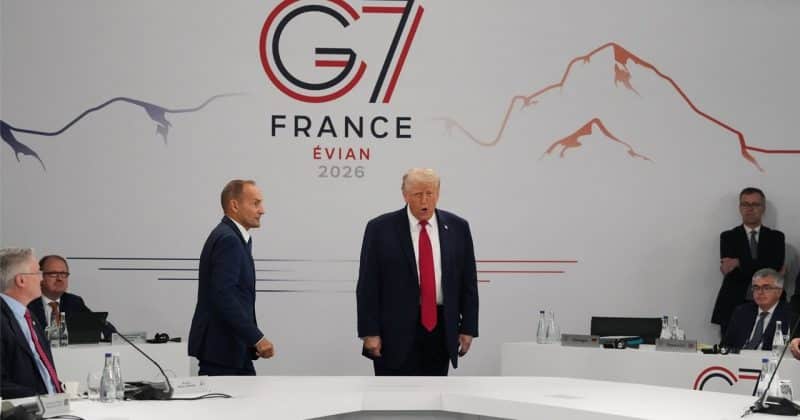
Trump and Iran sign interim ceasefire deal in France during G7 Summit

Trump and Iran sign interim ceasefire deal in France during G7 Summit

The 14-point memorandum of understanding aims to reopen the Strait of Hormuz and extend the existing ceasefire by 60 days, with crypto markets eyeing a risk-on shift.

US President Donald Trump and Iranian President Masoud Pezeshkian have digitally signed a memorandum of understanding to halt a conflict that has torn through the Middle East since late February. The 14-point MoU, signed on or around June 17, effectively extends an earlier April ceasefire by an additional 60 days.

The deal’s centerpiece: fully reopening the Strait of Hormuz, the narrow waterway that handles roughly one-fifth of global oil and natural gas transit.

What the deal actually says

The initial phase of the agreement was signed on Sunday by US Vice President JD Vance and Iran’s chief negotiator, Mohammad Bagher Ghalibaf, with Trump witnessing. The White House confirmed the digital signing, which took place at the Palace of Versailles during a post-G7 dinner in Evian-les-Bains, France.

Both leaders signed the MoU in English and Farsi, with G7 leaders backing the arrangement. A formal signing ceremony is scheduled for June 19 in Switzerland.

Advertisement

Beyond the ceasefire extension, the MoU lays groundwork for broader negotiations on Iran’s nuclear program and potential sanctions relief. Trump cautioned that military actions could resume if Iran fails to meet its commitments under the deal.

How we got here

The conflict traces back to failed nuclear negotiations in February 2026. US-Israeli military strikes began on February 28, marking a dramatic escalation. Thousands of deaths and widespread displacement followed, with Lebanon bearing a disproportionate share of the devastation.

An initial ceasefire in April provided the first real breathing room. The new MoU builds on that foundation, but 60 days is not a long time to negotiate the kind of comprehensive deal both sides claim to want. For context, the original Iran nuclear deal (the JCPOA) took roughly two years of intensive negotiations to finalize.

G7 leaders have broadly endorsed the agreement as a step toward regional stability. That diplomatic consensus matters because any eventual sanctions relief would require coordination among major economies, not just a bilateral handshake between Washington and Tehran.

What this means for crypto and risk assets

Oil prices have already begun sliding on expectations that Hormuz transit will normalize, increasing global supply. Lower energy costs reduce inflationary pressure, which in turn makes it easier for central banks to maintain or loosen monetary policy.

The risk to watch is straightforward: the deal falls apart. Trump’s explicit warning about resuming military action means the ceasefire has a built-in expiration mechanism. If compliance disputes emerge before the 60-day window closes, the same geopolitical risk premium that’s currently deflating could snap back violently.

The formal signing ceremony in Switzerland on June 19 will be the next catalyst to monitor.

Disclosure: This article was edited by Editorial Team. For more information on how we create and review content, see our Editorial Policy.

Trump and Iran sign interim ceasefire deal in France during G7 Summit

Trump and Iran sign interim ceasefire deal in France during G7 Summit

The 14-point memorandum of understanding aims to reopen the Strait of Hormuz and extend the existing ceasefire by 60 days, with crypto markets eyeing a risk-on shift.

US President Donald Trump and Iranian President Masoud Pezeshkian have digitally signed a memorandum of understanding to halt a conflict that has torn through the Middle East since late February. The 14-point MoU, signed on or around June 17, effectively extends an earlier April ceasefire by an additional 60 days.

The deal’s centerpiece: fully reopening the Strait of Hormuz, the narrow waterway that handles roughly one-fifth of global oil and natural gas transit.

What the deal actually says

The initial phase of the agreement was signed on Sunday by US Vice President JD Vance and Iran’s chief negotiator, Mohammad Bagher Ghalibaf, with Trump witnessing. The White House confirmed the digital signing, which took place at the Palace of Versailles during a post-G7 dinner in Evian-les-Bains, France.

Both leaders signed the MoU in English and Farsi, with G7 leaders backing the arrangement. A formal signing ceremony is scheduled for June 19 in Switzerland.

Advertisement

Beyond the ceasefire extension, the MoU lays groundwork for broader negotiations on Iran’s nuclear program and potential sanctions relief. Trump cautioned that military actions could resume if Iran fails to meet its commitments under the deal.

How we got here

The conflict traces back to failed nuclear negotiations in February 2026. US-Israeli military strikes began on February 28, marking a dramatic escalation. Thousands of deaths and widespread displacement followed, with Lebanon bearing a disproportionate share of the devastation.

An initial ceasefire in April provided the first real breathing room. The new MoU builds on that foundation, but 60 days is not a long time to negotiate the kind of comprehensive deal both sides claim to want. For context, the original Iran nuclear deal (the JCPOA) took roughly two years of intensive negotiations to finalize.

G7 leaders have broadly endorsed the agreement as a step toward regional stability. That diplomatic consensus matters because any eventual sanctions relief would require coordination among major economies, not just a bilateral handshake between Washington and Tehran.

What this means for crypto and risk assets

Oil prices have already begun sliding on expectations that Hormuz transit will normalize, increasing global supply. Lower energy costs reduce inflationary pressure, which in turn makes it easier for central banks to maintain or loosen monetary policy.

The risk to watch is straightforward: the deal falls apart. Trump’s explicit warning about resuming military action means the ceasefire has a built-in expiration mechanism. If compliance disputes emerge before the 60-day window closes, the same geopolitical risk premium that’s currently deflating could snap back violently.

The formal signing ceremony in Switzerland on June 19 will be the next catalyst to monitor.

Disclosure: This article was edited by Editorial Team. For more information on how we create and review content, see our Editorial Policy.