
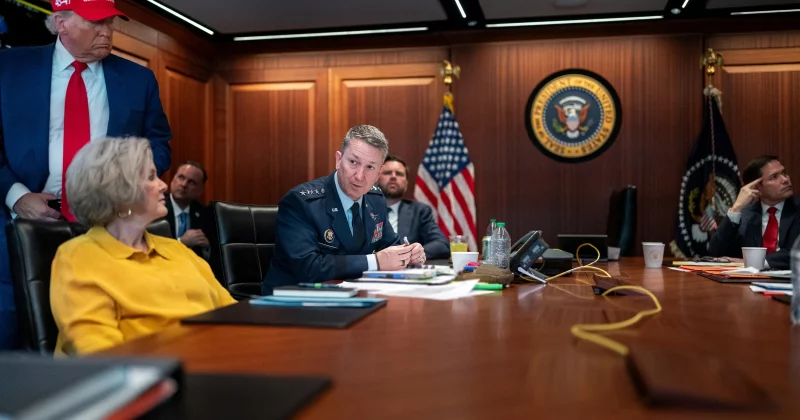
Trump heads to Situation Room for final decision on Iran deal as Bitcoin holds near $78K
A potential 14-point agreement covering nuclear restrictions, Strait of Hormuz reopening, and sanctions relief is driving risk-on sentiment across crypto markets.
President Donald Trump announced he would convene a Situation Room meeting to make a final decision on a sweeping deal with Iran. The proposed agreement covers nuclear restrictions, the reopening of shipping lanes through the Strait of Hormuz, mine removal, and sanctions relief.
Bitcoin has been holding steady in the $77K to $78K range as traders price in the possibility of significantly reduced geopolitical tensions in one of the world’s most strategically important regions.
What’s actually on the table
Negotiators have reportedly reached a preliminary 14-point memorandum of understanding. The tentative one-page MOU includes a 60-day extension of a fragile ceasefire that was first established after US-Israeli military actions against Iran earlier in 2026.
The deal framework also lays the groundwork for future nuclear negotiations, pending final sign-off from both Trump and Iranian leadership. US envoys Steve Witkoff and Jared Kushner have been working on the agreement.
The proposed sanctions relief component adds another layer of significance, potentially reshaping trade flows and energy markets simultaneously.
Macro, rates, and crypto—what moved markets and what matters next.
Daily. Free. Join 34,000+ readers across crypto, finance, and policy.
How crypto is reading the room
No specific cryptocurrency assets are directly tied to the Iran deal itself. This is a macro story, not a token-specific one.
Oil prices, meanwhile, dropped on the news. The logic is straightforward: a reopened Strait of Hormuz means more supply reaching global markets, which pushes prices down.
The broader context
The deal follows a period of significant military escalation. US-Israeli operations against Iran led to a temporary ceasefire in April 2026, but that arrangement was always understood to be fragile. The involvement of Kushner, who played a prominent role in Middle East diplomacy during Trump’s first term, suggests continuity with the broader regional strategy that produced the Abraham Accords.
The 60-day ceasefire extension built into the MOU is designed to buy time for the harder negotiations around nuclear restrictions.