
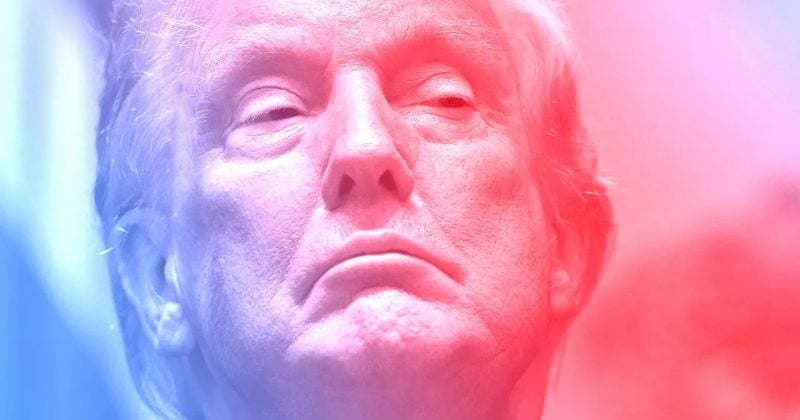
Trump calls $300B Iran investment report false, warns of military action
The president labeled reports of a massive Iran fund as 'fake news' while crypto markets digest sanctions on Nobitex and roughly $1 billion in seized digital assets
President Donald Trump on June 16 dismissed reports of a $300 billion investment deal with Iran, calling the claims “fake news” and warning that military force remains on the table if Tehran doesn’t cooperate.
“If they don’t behave, we’ll go right back to dropping bombs right smack in the middle of their head,” Trump said, making clear that no agreement has been finalized. He also stressed that any potential financial assistance would not involve taxpayer dollars.
What the deal supposedly looks like
The $300 billion figure appears to have originated from a draft memorandum circulated during ongoing US-Iran negotiations over the past month. The proposed fund, reportedly contingent on Iranian compliance with nuclear limits, would be Gulf-led or driven by private-sector interests rather than direct US government investment.
One of the key compliance conditions under discussion: Iran opening the Strait of Hormuz, the narrow waterway through which roughly a fifth of the world’s oil supply passes daily.
The crypto sanctions pipeline
On June 2, the US sanctioned Nobitex, Iran’s largest crypto exchange, citing alleged ties to the Islamic Revolutionary Guard Corps. The action was part of a broader enforcement campaign that has resulted in approximately $1 billion in Iranian crypto assets being seized.
The news moving money, markets, and the world—before your day starts.
Daily. Free. Join 34,000+ readers across crypto, finance, and policy.
Nobitex’s designation effectively cuts off Iran’s most popular on-ramp to digital currencies from the global financial system. For Iranian users, the consequences are immediate: reduced access to stablecoins, limited ability to move funds internationally, and increased surveillance on any alternative platforms that try to fill the gap.
Market reaction: de-escalation trades in full swing
The direction of US-Iran relations in June 2026, despite Trump’s bluster, has been toward de-escalation rather than conflict. That signal has been enough to push Bitcoin higher alongside global equities, while oil prices have declined sharply. The logic is straightforward: less Middle East tension means less supply disruption risk, which means lower energy costs, which means more room for risk assets to run.
The decline in oil prices is particularly relevant for crypto miners, whose energy costs represent their single largest operating expense. Lower crude typically correlates with cheaper electricity in regions dependent on natural gas generation, potentially improving margins for publicly traded mining operations.
The $1 billion in already-seized crypto assets also serves as a reminder that the US government is sitting on a significant pile of digital currency that could theoretically hit the market at some point, adding a supply overhang that few investors are pricing in.