
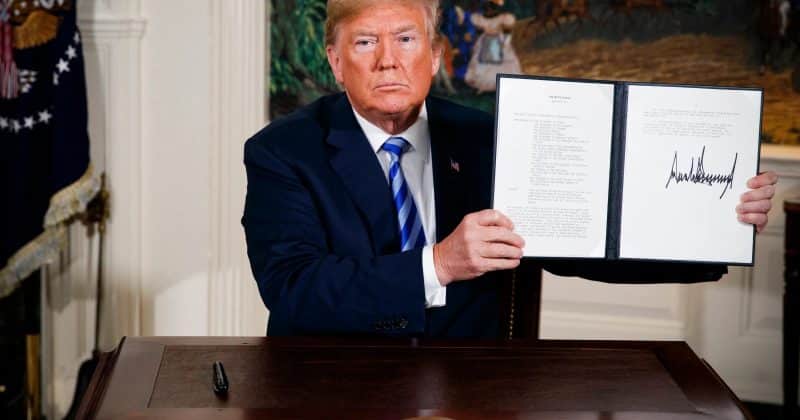
Trump expects swift signing of Iran deal, MoU to be released soon
The agreement lifts the US naval blockade on Iranian ports and reopens the Strait of Hormuz, with a formal ceremony set for June 20
The US and Iran just did something that would have seemed unthinkable a few months ago. President Trump, Vice President Vance, and Iranian Parliament Speaker Mohammad Bagher Ghalibaf electronically signed a Memorandum of Understanding on June 15, setting the stage for a dramatic de-escalation between two nations that have spent decades perfecting the art of mutual hostility.
Trump expects the deal to be signed quickly and completed within 60 days. A formal signing ceremony is scheduled for June 20, and the full text of the MoU is expected to be made public before that date.
What’s actually in the deal
The headline provisions are substantial. The MoU calls for lifting the US naval blockade on Iranian ports and reopening the Strait of Hormuz for shipping under toll-free conditions. For context, the Strait of Hormuz is the narrow waterway through which roughly a fifth of the world’s oil supply passes on any given day.
Beyond the immediate logistical concessions, the agreement establishes a 60-day negotiation window focused specifically on curbing Iran’s nuclear program.
The structure echoes the 2015 Joint Comprehensive Plan of Action, better known as the JCPOA, which was the last major nuclear deal between world powers and Iran. Trump pulled the US out of that agreement in May 2018, calling it “the worst deal ever negotiated.”
The geopolitical chessboard
The timing here is not accidental. This development lands just ahead of the G7 summit in Europe, where US-Iran relations are expected to dominate conversations among world leaders. Walking into that meeting with a signed MoU gives Trump a diplomatic card to play, one that reframes the narrative from military escalation to negotiation.
What this means for markets
The reopening of the Strait of Hormuz and the lifting of the naval blockade could meaningfully stabilize global oil prices, which have been subject to fear-driven spikes tied to US-Iran uncertainty.
Oil traders should brace for volatility in both directions. The announcement itself may push crude prices lower on expectations of increased Iranian supply hitting global markets. But the 60-day negotiation window introduces its own uncertainty: if nuclear talks collapse, the entire agreement could unravel, sending prices right back up.