
Nexo Earn with Nexo
Trump says Iran deal clearly prevents nuclear weapons acquisition

Trump says Iran deal clearly prevents nuclear weapons acquisition

The proposed framework agreement with Tehran has already started moving crypto markets as geopolitical risk recedes

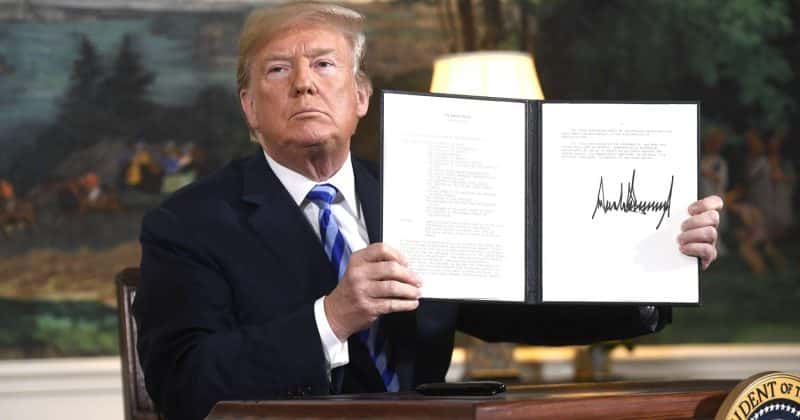
President Donald Trump declared that a new framework agreement with Iran ensures Tehran will not develop, purchase, or acquire a nuclear weapon. The deal, which represents a dramatic reversal from years of escalating tensions, is scheduled for formal signing on June 19, 2026.

Crypto markets responded almost immediately. Bitcoin pushed above $65,000 as traders priced in reduced geopolitical risk, while Ethereum and Solana also posted gains in the broader rally.

What’s actually in the deal

The framework agreement goes beyond nuclear restrictions. It includes provisions to reopen the Strait of Hormuz, the narrow waterway through which roughly a fifth of the world’s oil supply passes. In exchange, Iran would receive sanctions relief, but only if it complies with the terms laid out in the agreement.

After the formal signing, both sides will enter a 60-day window of additional nuclear negotiations.

Advertisement

Trump has characterized the deal as stronger than the 2015 Joint Comprehensive Plan of Action, commonly known as the JCPOA. He withdrew the US from that agreement back in 2018, arguing it failed to adequately address Iran’s ballistic missile program and its regional influence operations.

The current round of negotiations traces back to a period of heightened conflict between 2025 and 2026. Trump reportedly sent a letter to Supreme Leader Ali Khamenei in early 2025, which appears to have been the catalyst for renewed diplomatic engagement.

Why crypto traders are paying attention

Oil prices have already declined on the news, creating a more favorable macro backdrop for digital assets. Bitcoin’s move above $65,000 reflects traders betting that reduced Middle Eastern tensions translate into a friendlier environment for speculative assets.

The agreement hasn’t been formally signed yet. A framework is essentially a handshake with extra steps. Until ink hits paper on June 19 and both sides demonstrate compliance during the subsequent negotiation period, the deal remains aspirational rather than operational.

The JCPOA comparison and what investors should watch

The original 2015 JCPOA imposed strict limits on Iran’s uranium enrichment capabilities and subjected the country to rigorous International Atomic Energy Agency inspections. In return, Iran received substantial sanctions relief that allowed it to re-enter global oil markets.

Trump’s decision to withdraw from that deal in 2018 set off a cascade of consequences. Iran gradually resumed enrichment activities, eventually reaching levels far beyond what the JCPOA permitted.

The new framework attempts to rebuild from scratch, but under very different circumstances. Iran’s nuclear program is significantly more advanced than it was in 2015.

Skeptics have already raised questions about enforcement mechanisms. The specifics of verification and inspection protocols remain largely undisclosed.

The 60-day negotiation window following the June 19 signing is the critical period to monitor. Any indication that technical discussions are stalling or that either side is backtracking on commitments would likely trigger volatility well before any formal collapse of the agreement.

Disclosure: This article was edited by Editorial Team. For more information on how we create and review content, see our Editorial Policy.

Trump says Iran deal clearly prevents nuclear weapons acquisition

Trump says Iran deal clearly prevents nuclear weapons acquisition

The proposed framework agreement with Tehran has already started moving crypto markets as geopolitical risk recedes

President Donald Trump declared that a new framework agreement with Iran ensures Tehran will not develop, purchase, or acquire a nuclear weapon. The deal, which represents a dramatic reversal from years of escalating tensions, is scheduled for formal signing on June 19, 2026.

Crypto markets responded almost immediately. Bitcoin pushed above $65,000 as traders priced in reduced geopolitical risk, while Ethereum and Solana also posted gains in the broader rally.

What’s actually in the deal

The framework agreement goes beyond nuclear restrictions. It includes provisions to reopen the Strait of Hormuz, the narrow waterway through which roughly a fifth of the world’s oil supply passes. In exchange, Iran would receive sanctions relief, but only if it complies with the terms laid out in the agreement.

After the formal signing, both sides will enter a 60-day window of additional nuclear negotiations.

Advertisement

Trump has characterized the deal as stronger than the 2015 Joint Comprehensive Plan of Action, commonly known as the JCPOA. He withdrew the US from that agreement back in 2018, arguing it failed to adequately address Iran’s ballistic missile program and its regional influence operations.

The current round of negotiations traces back to a period of heightened conflict between 2025 and 2026. Trump reportedly sent a letter to Supreme Leader Ali Khamenei in early 2025, which appears to have been the catalyst for renewed diplomatic engagement.

Why crypto traders are paying attention

Oil prices have already declined on the news, creating a more favorable macro backdrop for digital assets. Bitcoin’s move above $65,000 reflects traders betting that reduced Middle Eastern tensions translate into a friendlier environment for speculative assets.

The agreement hasn’t been formally signed yet. A framework is essentially a handshake with extra steps. Until ink hits paper on June 19 and both sides demonstrate compliance during the subsequent negotiation period, the deal remains aspirational rather than operational.

The JCPOA comparison and what investors should watch

The original 2015 JCPOA imposed strict limits on Iran’s uranium enrichment capabilities and subjected the country to rigorous International Atomic Energy Agency inspections. In return, Iran received substantial sanctions relief that allowed it to re-enter global oil markets.

Trump’s decision to withdraw from that deal in 2018 set off a cascade of consequences. Iran gradually resumed enrichment activities, eventually reaching levels far beyond what the JCPOA permitted.

The new framework attempts to rebuild from scratch, but under very different circumstances. Iran’s nuclear program is significantly more advanced than it was in 2015.

Skeptics have already raised questions about enforcement mechanisms. The specifics of verification and inspection protocols remain largely undisclosed.

The 60-day negotiation window following the June 19 signing is the critical period to monitor. Any indication that technical discussions are stalling or that either side is backtracking on commitments would likely trigger volatility well before any formal collapse of the agreement.

Disclosure: This article was edited by Editorial Team. For more information on how we create and review content, see our Editorial Policy.