
Nexo Earn with Nexo
Trump says Iran deal signing could happen soon, Vance to attend

Trump says Iran deal signing could happen soon, Vance to attend

The potential agreement would extend a ceasefire by 60 days and reopen the Strait of Hormuz, with crypto markets already reacting to the geopolitical shift.

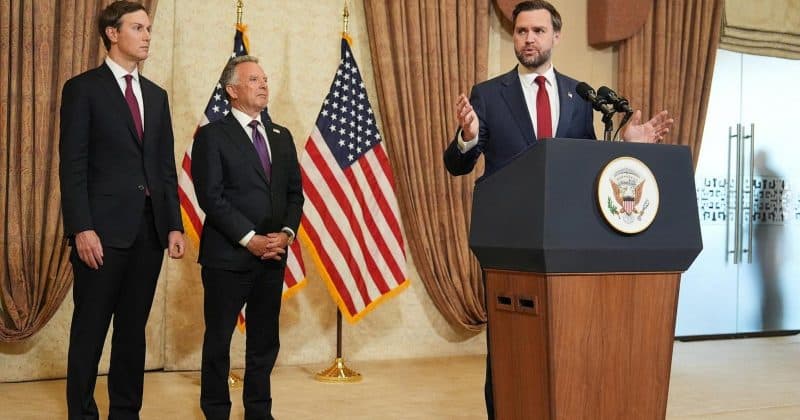
President Trump signaled on June 9 that a deal with Iran had a “good chance” of being finalized within “two or three days,” adding that Vice President JD Vance would attend the signing ceremony on his behalf.

What the deal looks like

The framework taking shape is a memorandum of understanding, not a full treaty. Vance, who has been closely involved in the back-channel discussions, described the US and Iran as “very close” to terms during remarks on May 28-29. The MOU would accomplish two immediate goals: extending a ceasefire by 60 days and reopening the Strait of Hormuz.

The Strait of Hormuz matters because roughly a fifth of the world’s daily oil supply passes through it.

Advertisement

The proposed deal also addresses Iran’s nuclear program, though the specifics of how compliance would be monitored and enforced remain part of the ongoing negotiations. Vance himself cautioned that Trump’s final sign-off was not guaranteed, noting that discussions still required “further progress” on certain sticking points.

The crypto connection: sanctions and volatility

A week before Trump’s optimistic comments, the US Treasury made a move that tied the Iran situation directly to the crypto industry. On June 2, the Treasury sanctioned Nobitex, Iran’s largest cryptocurrency exchange.

Nobitex accounted for approximately 50% of Iran’s crypto trading volume in 2025, making it the dominant on-ramp and off-ramp for Iranian users accessing digital assets.

Bitcoin has responded to the evolving situation with noticeable volatility. Price swings of 1-5% have tracked updates on the negotiation timeline, with early June seeing Bitcoin fluctuate in the $76,000-$78,000 range as optimism around the deal grew. Traders have been speculating that a confirmed positive outcome could push prices toward new targets, though the direction cuts both ways if talks collapse.

For the Iranian crypto ecosystem specifically, the Nobitex sanctions represent a significant contraction. Losing access to 50% of domestic trading volume disrupts the entire flow of capital in and out of the country’s digital economy, potentially pushing activity to smaller, less regulated venues or peer-to-peer networks.

Disclosure: This article was edited by Editorial Team. For more information on how we create and review content, see our Editorial Policy.

Trump says Iran deal signing could happen soon, Vance to attend

Trump says Iran deal signing could happen soon, Vance to attend

The potential agreement would extend a ceasefire by 60 days and reopen the Strait of Hormuz, with crypto markets already reacting to the geopolitical shift.

President Trump signaled on June 9 that a deal with Iran had a “good chance” of being finalized within “two or three days,” adding that Vice President JD Vance would attend the signing ceremony on his behalf.

What the deal looks like

The framework taking shape is a memorandum of understanding, not a full treaty. Vance, who has been closely involved in the back-channel discussions, described the US and Iran as “very close” to terms during remarks on May 28-29. The MOU would accomplish two immediate goals: extending a ceasefire by 60 days and reopening the Strait of Hormuz.

The Strait of Hormuz matters because roughly a fifth of the world’s daily oil supply passes through it.

Advertisement

The proposed deal also addresses Iran’s nuclear program, though the specifics of how compliance would be monitored and enforced remain part of the ongoing negotiations. Vance himself cautioned that Trump’s final sign-off was not guaranteed, noting that discussions still required “further progress” on certain sticking points.

The crypto connection: sanctions and volatility

A week before Trump’s optimistic comments, the US Treasury made a move that tied the Iran situation directly to the crypto industry. On June 2, the Treasury sanctioned Nobitex, Iran’s largest cryptocurrency exchange.

Nobitex accounted for approximately 50% of Iran’s crypto trading volume in 2025, making it the dominant on-ramp and off-ramp for Iranian users accessing digital assets.

Bitcoin has responded to the evolving situation with noticeable volatility. Price swings of 1-5% have tracked updates on the negotiation timeline, with early June seeing Bitcoin fluctuate in the $76,000-$78,000 range as optimism around the deal grew. Traders have been speculating that a confirmed positive outcome could push prices toward new targets, though the direction cuts both ways if talks collapse.

For the Iranian crypto ecosystem specifically, the Nobitex sanctions represent a significant contraction. Losing access to 50% of domestic trading volume disrupts the entire flow of capital in and out of the country’s digital economy, potentially pushing activity to smaller, less regulated venues or peer-to-peer networks.

Disclosure: This article was edited by Editorial Team. For more information on how we create and review content, see our Editorial Policy.