
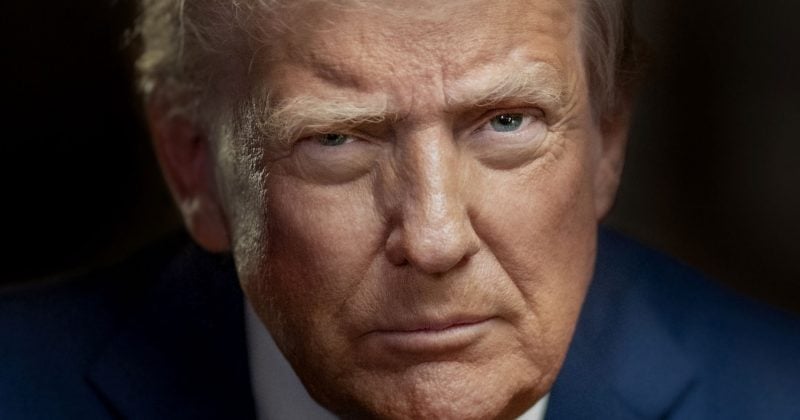
Trump insists Iran will allow nuclear inspections by IAEA as Tehran denies any new commitments
The conflicting claims between Washington and Tehran are rippling through crypto markets, with Bitcoin pushing past $67K on hopes of eased geopolitical tensions.
President Trump declared on June 23 that Iran has agreed to allow the International Atomic Energy Agency to conduct its highest level of nuclear inspections indefinitely. Iran’s foreign ministry, on the exact same day, said that’s not what happened.
Two countries, two very different stories
Trump framed the alleged agreement as a breakthrough in transparency, using the phrase “Nuclear Honesty” to describe what he characterized as Iran’s willingness to open its facilities to international scrutiny. Vice President JD Vance had previewed the claim a day earlier on June 22, stating that Iran would invite IAEA inspectors back as part of ongoing diplomatic talks.
Iran’s foreign ministry spokesperson Esmail Baghaei offered a blunt rebuttal. He stated that no new commitments had been made regarding inspectors visiting damage sites, specifically the nuclear facilities struck by US and Israeli military operations between 2025 and 2026.
Those strikes targeted some of the most sensitive locations in Iran’s nuclear program: Fordow, Natanz, and Isfahan. The IAEA has reported significant damage to these facilities in the aftermath.
The negotiations are being facilitated by Oman, a country that has historically served as a back channel between Washington and Tehran. The broader diplomatic context here traces back to the collapse of the 2015 Joint Comprehensive Plan of Action, commonly known as the Iran nuclear deal, which the US abandoned during Trump’s first term.
The news moving money, markets, and the world—before your day starts.
Daily. Free. Join 34,000+ readers across crypto, finance, and policy.
Crypto markets react to the geopolitical noise
Bitcoin surged past $67,000 following the initial claims of a potential de-escalation.
The US seized approximately $1 billion in Iranian crypto assets in May 2026 as part of its broader pressure campaign. Washington has also imposed sanctions on Iranian digital asset exchanges, cutting off a significant channel through which Iran’s economy interacted with global crypto markets.
What this means for investors
If negotiations do eventually produce a real agreement, the implications for crypto could be substantial. Sanctions relief would theoretically open Iran’s economy to more legitimate digital asset activity. Iran has a history of both state-level Bitcoin mining operations and grassroots crypto adoption driven by currency controls and inflation. Removing sanctions barriers could increase market participation from a country with a population of over 85 million people.
The $1 billion seizure from May sets a precedent that should make investors pay attention. The US has demonstrated both the willingness and the technical capability to go after crypto assets tied to sanctioned entities at scale.