
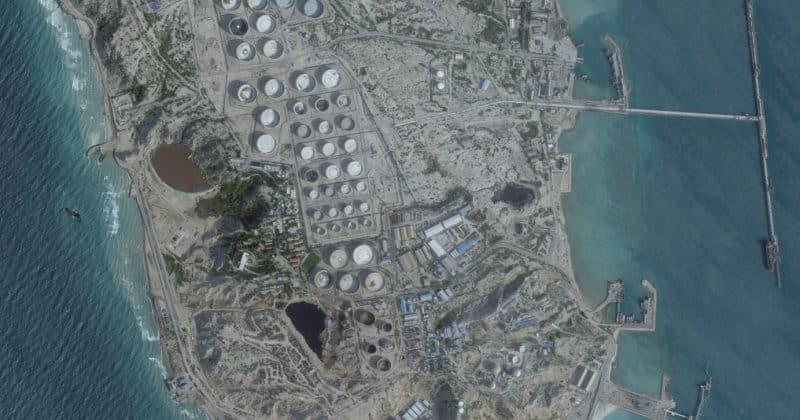
Trump plans to seize Iran’s Kharg Island oil-export hub
The tiny island handles 90% of Iran's crude exports, and its seizure could reshape oil markets and Bitcoin's safe-haven narrative simultaneously
Think of Kharg Island as Iran’s economic jugular vein. A small patch of land in the Persian Gulf, it handles roughly 90% of the country’s crude oil exports, with a loading capacity of up to 7 million barrels per day. Now Donald Trump is openly floating the idea of taking it.
“Maybe we take Kharg Island, maybe we don’t,” Trump said on March 30. The kind of statement that sounds casual until you remember it’s coming from the commander-in-chief of the world’s largest military, talking about seizing a sovereign nation’s most critical piece of infrastructure.
From strikes to seizure talk
This didn’t come out of nowhere. On March 13, US forces struck military targets on Kharg Island, deliberately avoiding the oil infrastructure. Trump called the decision to spare the oil facilities an act of “decency.” The subtext was less polite: the oil facilities were left standing as leverage, not charity.
Trump has since hinted that the oil facilities could be next if Iran continues to obstruct the Strait of Hormuz, the narrow waterway through which roughly a fifth of the world’s oil supply passes daily.
The escalation timeline tells its own story. First came military strikes. Then came rhetoric about potential seizure. Then, in early May, satellite imagery detected a suspected oil spill near Kharg Island.
Iran has repeatedly warned that any attack on its oil infrastructure would trigger retaliation across the region, including potential closures of the Strait of Hormuz.
The news moving money, markets, and the world—before your day starts.
Daily. Free. Join 34,000+ readers across crypto, finance, and policy.
What this means for oil and inflation
Kharg Island isn’t just important to Iran. It’s important to global energy markets.
The island’s loading capacity of up to 7 million barrels per day makes it one of the most significant oil export points on Earth. Any sustained disruption, whether from military action, blockade, or seizure, would ripple through crude markets almost immediately.
Higher oil prices mean higher energy costs. Higher energy costs mean higher inflation. Higher inflation means central banks face pressure to keep interest rates elevated.
During the 1980s Iran-Iraq war, Kharg Island was repeatedly targeted, and global oil prices spiked dramatically each time the island’s export capacity was threatened.
Bitcoin’s quiet rally through the chaos
Here’s where it gets interesting for crypto investors. Bitcoin didn’t crash when the strikes happened. It rallied.
Following the initial US strikes on Iran, Bitcoin fluctuated around $71K. By mid-March, it had climbed to approximately $74K. In a period when geopolitical risk was spiking and traditional safe-haven assets like gold were also rising, Bitcoin held its ground and then some.
The key trigger points to watch: any indication that Trump is moving from rhetoric to operational planning for a seizure, any Iranian retaliation affecting the Strait of Hormuz, and any concrete disruption to oil flows from the island.