
Nexo Earn with Nexo
Trump says Iran negotiations in final stages, warns of attacks if deal fails

Trump says Iran negotiations in final stages, warns of attacks if deal fails

The US president's ultimatum to Tehran raises the stakes for global oil markets, risk assets, and crypto traders watching for volatility catalysts.

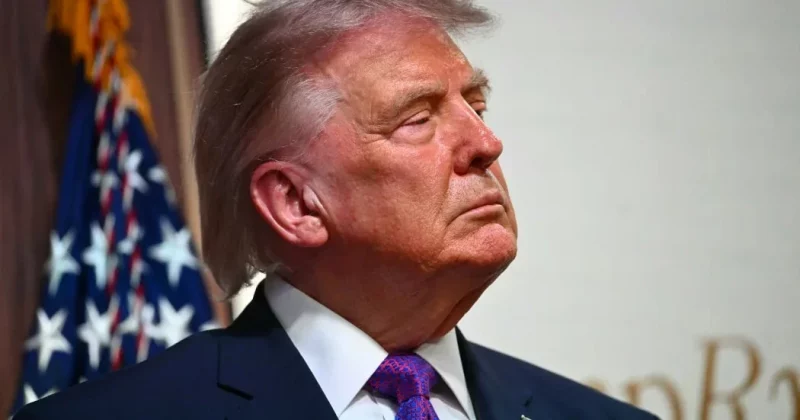
President Donald Trump declared on Wednesday that negotiations with Iran have entered their “final stages,” coupling the diplomatic update with a blunt warning: if Tehran doesn’t agree to a peace deal, further military strikes are on the table.

The statement lands at a moment when geopolitical risk is already running hot. A US-Israeli air campaign against Iran, a naval standoff around the Strait of Hormuz, and hardening positions on both sides have created a cocktail of uncertainty that’s rippling well beyond the Middle East.

What’s actually on the table

The gap between the two sides remains enormous. Iran is demanding the removal of all sanctions and reparations. The US wants a complete halt to uranium enrichment and missile activities. If that sounds like two people negotiating a car price where one starts at $500 and the other at $50,000, that’s because it basically is.

Pakistan has stepped in as mediator, shuttling a US ceasefire plan and Iranian counterproposals between the two governments. Both sides have shifted their positions throughout the process, which is diplomatic shorthand for “nobody is close to agreeing on anything.”

The military backdrop makes the diplomatic math even harder. Following recent US-Israeli strikes on Iranian targets, Tehran has stiffened its stance considerably. Domestic political pressure inside Iran makes concessions politically toxic for its leadership, while Trump’s public ultimatums narrow his own room to maneuver.

Here’s the thing: when Trump says “final stages,” it could mean a deal is imminent. It could also mean the window for diplomacy is closing and the next chapter involves cruise missiles. Markets have to price in both outcomes simultaneously.

Advertisement

Why the Strait of Hormuz matters to everyone

Roughly one-fifth of the world’s daily oil supply passes through the Strait of Hormuz, the narrow waterway between Iran and the Arabian Peninsula. Any disruption there doesn’t just spike crude prices. It rewires the entire global risk calculus.

NATO is already preparing a naval plan to help commercial vessels transit the strait if it remains blocked, a signal that Western defense planners are treating a sustained closure as a realistic scenario, not a theoretical one.

A blocked or contested strait would send oil prices sharply higher, which feeds into inflation expectations, which feeds into central bank rate decisions, which feeds into every asset class on the planet. It’s the geopolitical equivalent of pulling one thread and watching the whole sweater unravel.

For traditional markets, the playbook is well-established: oil spikes, defense stocks rally, airlines and shipping companies sell off, and gold catches a bid as the classic safe-haven trade. The crypto angle is less straightforward, but increasingly relevant.

What this means for crypto markets

Look, there are currently no reliable reports of Iran utilizing cryptocurrencies or blockchain technology in the context of these negotiations. So the direct crypto link here isn’t about Iran buying Bitcoin to dodge sanctions. It’s about how macro volatility translates into digital asset price action.

Bitcoin and other major crypto assets have become increasingly correlated with broader risk sentiment over the past several years. A sudden escalation in the Middle East, particularly one that disrupts energy markets and triggers a flight to safety in traditional finance, tends to create short-term selling pressure across risk assets, crypto included.

But the second-order effects cut the other way. If a conflict drives oil prices high enough to reignite inflation fears, that undermines confidence in fiat currencies and central bank policy. That narrative has historically been bullish for Bitcoin, which a growing segment of institutional investors now treat as a hedge against monetary instability.

The timing matters too. Bitcoin has been trading in a range where macro catalysts have outsized impact. A geopolitical shock, whether it’s a deal collapsing or strikes resuming, could provide the kind of volatility spark that breaks the current trading pattern in either direction.

Traders should watch three things. First, oil prices as a real-time barometer of escalation risk. Second, the US dollar index, because a stronger dollar on safe-haven flows typically pressures Bitcoin in the short term. Third, on-chain metrics for any unusual movement of stablecoins to exchanges, which often precedes major positioning shifts by crypto-native traders.

The sanctions dimension deserves attention as well. If negotiations fail and the US tightens the screws further on Iran, that could have knock-on effects for crypto compliance frameworks globally. Regulators have already been scrutinizing how sanctioned entities might use digital assets to circumvent restrictions. A high-profile diplomatic collapse would almost certainly intensify that scrutiny.

Conversely, a successful deal that lifts sanctions would remove one of the persistent geopolitical overhangs that has kept risk premiums elevated across markets. That kind of de-escalation tends to benefit risk-on assets broadly, and crypto sits squarely in that bucket.

The most dangerous scenario for portfolios isn’t war or peace. It’s prolonged ambiguity, where negotiations drag on without resolution while military posturing escalates. That’s the environment where volatility stays elevated, correlations between asset classes tighten, and diversification stops working the way it’s supposed to. For crypto investors already navigating regulatory uncertainty and shifting monetary policy expectations, adding a Middle Eastern conflict to the mix doesn’t simplify anything.

Disclosure: This article was edited by Editorial Team. For more information on how we create and review content, see our Editorial Policy.

Trump says Iran negotiations in final stages, warns of attacks if deal fails

Trump says Iran negotiations in final stages, warns of attacks if deal fails

The US president's ultimatum to Tehran raises the stakes for global oil markets, risk assets, and crypto traders watching for volatility catalysts.

President Donald Trump declared on Wednesday that negotiations with Iran have entered their “final stages,” coupling the diplomatic update with a blunt warning: if Tehran doesn’t agree to a peace deal, further military strikes are on the table.

The statement lands at a moment when geopolitical risk is already running hot. A US-Israeli air campaign against Iran, a naval standoff around the Strait of Hormuz, and hardening positions on both sides have created a cocktail of uncertainty that’s rippling well beyond the Middle East.

What’s actually on the table

The gap between the two sides remains enormous. Iran is demanding the removal of all sanctions and reparations. The US wants a complete halt to uranium enrichment and missile activities. If that sounds like two people negotiating a car price where one starts at $500 and the other at $50,000, that’s because it basically is.

Pakistan has stepped in as mediator, shuttling a US ceasefire plan and Iranian counterproposals between the two governments. Both sides have shifted their positions throughout the process, which is diplomatic shorthand for “nobody is close to agreeing on anything.”

The military backdrop makes the diplomatic math even harder. Following recent US-Israeli strikes on Iranian targets, Tehran has stiffened its stance considerably. Domestic political pressure inside Iran makes concessions politically toxic for its leadership, while Trump’s public ultimatums narrow his own room to maneuver.

Here’s the thing: when Trump says “final stages,” it could mean a deal is imminent. It could also mean the window for diplomacy is closing and the next chapter involves cruise missiles. Markets have to price in both outcomes simultaneously.

Advertisement

Why the Strait of Hormuz matters to everyone

Roughly one-fifth of the world’s daily oil supply passes through the Strait of Hormuz, the narrow waterway between Iran and the Arabian Peninsula. Any disruption there doesn’t just spike crude prices. It rewires the entire global risk calculus.

NATO is already preparing a naval plan to help commercial vessels transit the strait if it remains blocked, a signal that Western defense planners are treating a sustained closure as a realistic scenario, not a theoretical one.

A blocked or contested strait would send oil prices sharply higher, which feeds into inflation expectations, which feeds into central bank rate decisions, which feeds into every asset class on the planet. It’s the geopolitical equivalent of pulling one thread and watching the whole sweater unravel.

For traditional markets, the playbook is well-established: oil spikes, defense stocks rally, airlines and shipping companies sell off, and gold catches a bid as the classic safe-haven trade. The crypto angle is less straightforward, but increasingly relevant.

What this means for crypto markets

Look, there are currently no reliable reports of Iran utilizing cryptocurrencies or blockchain technology in the context of these negotiations. So the direct crypto link here isn’t about Iran buying Bitcoin to dodge sanctions. It’s about how macro volatility translates into digital asset price action.

Bitcoin and other major crypto assets have become increasingly correlated with broader risk sentiment over the past several years. A sudden escalation in the Middle East, particularly one that disrupts energy markets and triggers a flight to safety in traditional finance, tends to create short-term selling pressure across risk assets, crypto included.

But the second-order effects cut the other way. If a conflict drives oil prices high enough to reignite inflation fears, that undermines confidence in fiat currencies and central bank policy. That narrative has historically been bullish for Bitcoin, which a growing segment of institutional investors now treat as a hedge against monetary instability.

The timing matters too. Bitcoin has been trading in a range where macro catalysts have outsized impact. A geopolitical shock, whether it’s a deal collapsing or strikes resuming, could provide the kind of volatility spark that breaks the current trading pattern in either direction.

Traders should watch three things. First, oil prices as a real-time barometer of escalation risk. Second, the US dollar index, because a stronger dollar on safe-haven flows typically pressures Bitcoin in the short term. Third, on-chain metrics for any unusual movement of stablecoins to exchanges, which often precedes major positioning shifts by crypto-native traders.

The sanctions dimension deserves attention as well. If negotiations fail and the US tightens the screws further on Iran, that could have knock-on effects for crypto compliance frameworks globally. Regulators have already been scrutinizing how sanctioned entities might use digital assets to circumvent restrictions. A high-profile diplomatic collapse would almost certainly intensify that scrutiny.

Conversely, a successful deal that lifts sanctions would remove one of the persistent geopolitical overhangs that has kept risk premiums elevated across markets. That kind of de-escalation tends to benefit risk-on assets broadly, and crypto sits squarely in that bucket.

The most dangerous scenario for portfolios isn’t war or peace. It’s prolonged ambiguity, where negotiations drag on without resolution while military posturing escalates. That’s the environment where volatility stays elevated, correlations between asset classes tighten, and diversification stops working the way it’s supposed to. For crypto investors already navigating regulatory uncertainty and shifting monetary policy expectations, adding a Middle Eastern conflict to the mix doesn’t simplify anything.

Disclosure: This article was edited by Editorial Team. For more information on how we create and review content, see our Editorial Policy.