
Nexo Earn with Nexo
Trump claims deal will prevent Iran from acquiring nuclear weapons

Trump claims deal will prevent Iran from acquiring nuclear weapons

The proposed framework includes a 60-day negotiation window for nuclear provisions, with a formal signing planned for June 19 in Switzerland.

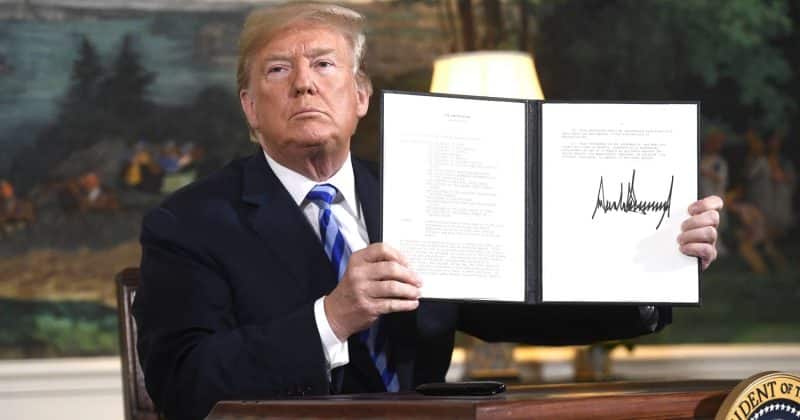
President Donald Trump says a proposed agreement with Iran will ensure the country never acquires a nuclear weapon. The claim sets the stage for what could be one of the most consequential geopolitical deals in years, with potential ripple effects across energy markets, global risk sentiment, and by extension, crypto.

The framework is scheduled for a formal signing on June 19, 2026, in Switzerland. After that, a 60-day negotiation period kicks in to finalize the nuclear-specific provisions, meaning the hardest part of the deal hasn’t actually been written yet.

What the deal actually includes

Beyond the nuclear component, the proposed agreement addresses the Strait of Hormuz, one of the world’s most critical oil chokepoints. The framework reportedly includes provisions for reopening the strait and easing certain US naval restrictions in the area.

Advertisement

Trump has described Iran’s enriched uranium stockpiles as “nuclear dust” in the context of inspections and compliance discussions. On the other side of the table, Iran has maintained that “zero enrichment” is a non-negotiable red line, which is precisely what the US appears to be demanding.

Iran has already disputed some US interpretations of the framework’s terms, signaling that the 60-day negotiation window could be more of a starting gun than a finish line.

The long road to this moment

To understand why this matters, you need to rewind to 2015. That’s when the Joint Comprehensive Plan of Action, better known as the JCPOA or the Iran nuclear deal, was signed under the Obama administration. It placed limits on Iran’s nuclear program in exchange for sanctions relief.

Trump withdrew the US from that agreement in 2018, calling it “the worst deal ever negotiated.” The withdrawal reimposed sweeping sanctions on Iran and effectively killed the diplomatic framework that had taken years to build.

Negotiations for this new deal began in 2025, following Trump’s return to office.

What this means for markets and crypto investors

The Strait of Hormuz handles roughly a fifth of the world’s oil supply. Any agreement that credibly reopens or stabilizes passage through it could put downward pressure on oil prices, which have been elevated partly due to geopolitical risk premiums baked into the market.

The 60-day negotiation window means investors face weeks of headline risk, where every leak, every disputed term, and every inflammatory quote from either side could whipsaw sentiment.

Disclosure: This article was edited by Editorial Team. For more information on how we create and review content, see our Editorial Policy.

Trump claims deal will prevent Iran from acquiring nuclear weapons

Trump claims deal will prevent Iran from acquiring nuclear weapons

The proposed framework includes a 60-day negotiation window for nuclear provisions, with a formal signing planned for June 19 in Switzerland.

President Donald Trump says a proposed agreement with Iran will ensure the country never acquires a nuclear weapon. The claim sets the stage for what could be one of the most consequential geopolitical deals in years, with potential ripple effects across energy markets, global risk sentiment, and by extension, crypto.

The framework is scheduled for a formal signing on June 19, 2026, in Switzerland. After that, a 60-day negotiation period kicks in to finalize the nuclear-specific provisions, meaning the hardest part of the deal hasn’t actually been written yet.

What the deal actually includes

Beyond the nuclear component, the proposed agreement addresses the Strait of Hormuz, one of the world’s most critical oil chokepoints. The framework reportedly includes provisions for reopening the strait and easing certain US naval restrictions in the area.

Advertisement

Trump has described Iran’s enriched uranium stockpiles as “nuclear dust” in the context of inspections and compliance discussions. On the other side of the table, Iran has maintained that “zero enrichment” is a non-negotiable red line, which is precisely what the US appears to be demanding.

Iran has already disputed some US interpretations of the framework’s terms, signaling that the 60-day negotiation window could be more of a starting gun than a finish line.

The long road to this moment

To understand why this matters, you need to rewind to 2015. That’s when the Joint Comprehensive Plan of Action, better known as the JCPOA or the Iran nuclear deal, was signed under the Obama administration. It placed limits on Iran’s nuclear program in exchange for sanctions relief.

Trump withdrew the US from that agreement in 2018, calling it “the worst deal ever negotiated.” The withdrawal reimposed sweeping sanctions on Iran and effectively killed the diplomatic framework that had taken years to build.

Negotiations for this new deal began in 2025, following Trump’s return to office.

What this means for markets and crypto investors

The Strait of Hormuz handles roughly a fifth of the world’s oil supply. Any agreement that credibly reopens or stabilizes passage through it could put downward pressure on oil prices, which have been elevated partly due to geopolitical risk premiums baked into the market.

The 60-day negotiation window means investors face weeks of headline risk, where every leak, every disputed term, and every inflammatory quote from either side could whipsaw sentiment.

Disclosure: This article was edited by Editorial Team. For more information on how we create and review content, see our Editorial Policy.