
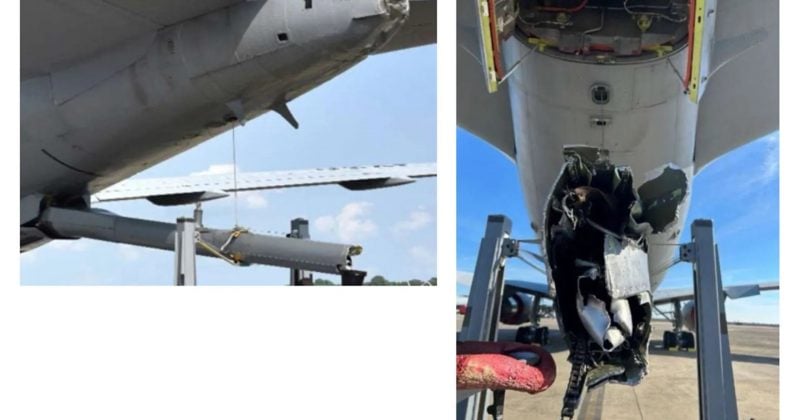
Trump escalates military campaign against Iran as US sends refueling planes to Israel

Trump escalates military campaign against Iran as US sends refueling planes to Israel

The intensifying conflict has rattled crypto markets, with Bitcoin dropping over 2% during escalation periods and $344 million in Iran-linked crypto assets frozen under sanctions.

The Trump administration is ramping up its military footprint in the Middle East. The US has moved 31 KC-135 and KC-46 refueling aircraft to Europe to support operations in the region, deployed the USS Nimitz aircraft carrier, and conducted six consecutive nights of precision airstrikes on Iranian military targets as of mid-July 2026.

What’s happening on the ground

The current military campaign traces back to February 28, 2026, when US-Israeli airstrikes first hit a range of critical Iranian infrastructure, including military installations and nuclear facilities. Since then, the conflict has cycled through escalations and partial ceasefires.

The positioning of refueling aircraft in Europe, which happened back in June 2025, laid the logistical groundwork for exactly this kind of extended operation.

Advertisement

The Strait of Hormuz, through which a massive share of global oil shipments pass, sits right in the middle of this mess. Any disruption to traffic through that chokepoint sends shockwaves through energy markets, which then ripple into equities, currencies, and yes, crypto.

Crypto’s war reflex

Bitcoin has developed a remarkably consistent pattern during this conflict. Each time hostilities escalate, the price corrects by more than 2%. Some of those dips have triggered over $350 million in liquidated positions.

When ceasefire announcements have surfaced, Bitcoin has bounced to levels above $72,000, suggesting the market treats de-escalation as a green light for risk-on positioning.

The sanctions front

The US has frozen $344 million in cryptocurrency assets linked to Iran, deploying sanctions as a parallel weapon alongside airstrikes. Tether, the dominant stablecoin issuer, has been involved in these enforcement actions.

What this means for investors

Military escalations have consistently triggered short-term sell-offs in Bitcoin, while ceasefire signals have driven recoveries. Traders running leveraged positions during active conflict periods are essentially playing roulette with geopolitical headlines as the spinning wheel.

As enforcement actions become more sophisticated and target crypto-native infrastructure, exchanges and protocols with any exposure to sanctioned jurisdictions face potential legal liability. Compliance costs are rising, and the regulatory perimeter around crypto is expanding in ways directly tied to this conflict.

Disclosure: This article was edited by Editorial Team. For more information on how we create and review content, see our Editorial Policy.

Trump escalates military campaign against Iran as US sends refueling planes to Israel

Trump escalates military campaign against Iran as US sends refueling planes to Israel

The intensifying conflict has rattled crypto markets, with Bitcoin dropping over 2% during escalation periods and $344 million in Iran-linked crypto assets frozen under sanctions.

The Trump administration is ramping up its military footprint in the Middle East. The US has moved 31 KC-135 and KC-46 refueling aircraft to Europe to support operations in the region, deployed the USS Nimitz aircraft carrier, and conducted six consecutive nights of precision airstrikes on Iranian military targets as of mid-July 2026.

What’s happening on the ground

The current military campaign traces back to February 28, 2026, when US-Israeli airstrikes first hit a range of critical Iranian infrastructure, including military installations and nuclear facilities. Since then, the conflict has cycled through escalations and partial ceasefires.

The positioning of refueling aircraft in Europe, which happened back in June 2025, laid the logistical groundwork for exactly this kind of extended operation.

Advertisement

The Strait of Hormuz, through which a massive share of global oil shipments pass, sits right in the middle of this mess. Any disruption to traffic through that chokepoint sends shockwaves through energy markets, which then ripple into equities, currencies, and yes, crypto.

Crypto’s war reflex

Bitcoin has developed a remarkably consistent pattern during this conflict. Each time hostilities escalate, the price corrects by more than 2%. Some of those dips have triggered over $350 million in liquidated positions.

When ceasefire announcements have surfaced, Bitcoin has bounced to levels above $72,000, suggesting the market treats de-escalation as a green light for risk-on positioning.

The sanctions front

The US has frozen $344 million in cryptocurrency assets linked to Iran, deploying sanctions as a parallel weapon alongside airstrikes. Tether, the dominant stablecoin issuer, has been involved in these enforcement actions.

What this means for investors

Military escalations have consistently triggered short-term sell-offs in Bitcoin, while ceasefire signals have driven recoveries. Traders running leveraged positions during active conflict periods are essentially playing roulette with geopolitical headlines as the spinning wheel.

As enforcement actions become more sophisticated and target crypto-native infrastructure, exchanges and protocols with any exposure to sanctioned jurisdictions face potential legal liability. Compliance costs are rising, and the regulatory perimeter around crypto is expanding in ways directly tied to this conflict.

Disclosure: This article was edited by Editorial Team. For more information on how we create and review content, see our Editorial Policy.