
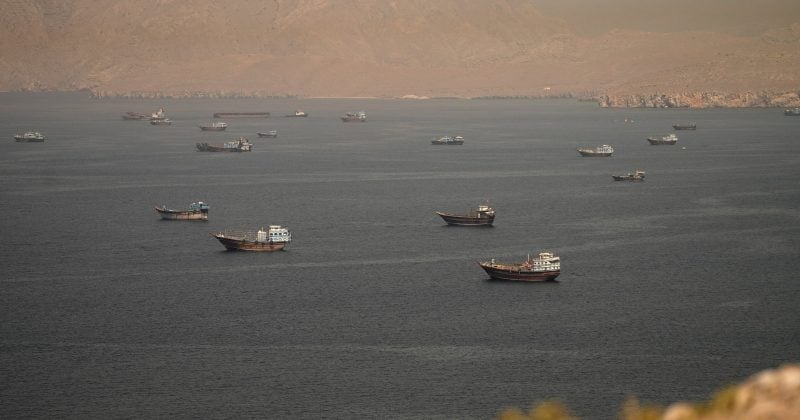
Trump says Iran assures US no tolls sought at Strait of Hormuz

Trump says Iran assures US no tolls sought at Strait of Hormuz

The announcement follows a tense standoff over transit fees in one of the world's most critical oil shipping corridors, with earlier reports suggesting Iran had explored accepting Bitcoin and Tether as payment.

President Donald Trump announced on June 24 that Iran has assured the United States it is not seeking tolls, insurance costs, or any other charges on ships passing through the Strait of Hormuz. The statement, posted on Truth Social, quoted Iran as promising “NO TOLLS, NO INSURANCE COSTS, & NO OTHER CHARGES OF ANY KIND BEING SOUGHT OR RECEIVED BY IRAN ON SHIPS TRAVELING THE STRAIT OF HORMUZ.”

Earlier in the standoff, reports surfaced that Iran had explored accepting Bitcoin, USDT, and yuan as potential payment methods for transit fees, a move widely interpreted as an attempt to sidestep US sanctions. If tolls are off the table entirely, that particular use case for digital assets in Iranian commerce effectively evaporates, at least for now.

What happened at the Strait of Hormuz

The Strait of Hormuz is a narrow waterway between Iran and Oman through which a significant portion of global oil trade flows. Iran had previously established what it called the Persian Gulf Strait Authority to manage fees on vessels transiting the corridor. Reports indicated potential charges of up to approximately $2 million per vessel.

Advertisement

The US and Iran had already agreed to a temporary 60-day toll-free arrangement while the two sides discussed the release of Iranian funds for US agricultural purchases. Trump’s latest announcement appears to extend that understanding, or at least frame it as a broader commitment from Tehran.

The crypto angle

During the period when Iran was actively exploring transit fees, multiple reports indicated that Tehran was open to receiving payments in digital currencies. Bitcoin and Tether (USDT) were specifically mentioned alongside Chinese yuan as acceptable payment methods. Iran has a documented history of using cryptocurrency mining operations and digital asset transactions to work around economic restrictions, with cheap energy costs from subsidized natural gas making it an attractive location for Bitcoin mining.

Trump’s announcement did not reference any digital currencies. On-chain data suggests only limited Bitcoin usage for transit fee payments during the period when Iran was actively exploring the toll system.

What this means for investors

No major market reaction was observed immediately following Trump’s June 24 announcement. The stabilization of shipping through the Strait of Hormuz is primarily a story about oil prices and energy logistics, with the removal of the toll threat reducing the geopolitical risk premium in commodity markets.

The 60-day framework underlying this arrangement is worth watching. If talks break down and Iran resumes toll collection, the crypto payment question resurfaces immediately, with established precedent already in place.

Disclosure: This article was edited by Editorial Team. For more information on how we create and review content, see our Editorial Policy.

Trump says Iran assures US no tolls sought at Strait of Hormuz

Trump says Iran assures US no tolls sought at Strait of Hormuz

The announcement follows a tense standoff over transit fees in one of the world's most critical oil shipping corridors, with earlier reports suggesting Iran had explored accepting Bitcoin and Tether as payment.

President Donald Trump announced on June 24 that Iran has assured the United States it is not seeking tolls, insurance costs, or any other charges on ships passing through the Strait of Hormuz. The statement, posted on Truth Social, quoted Iran as promising “NO TOLLS, NO INSURANCE COSTS, & NO OTHER CHARGES OF ANY KIND BEING SOUGHT OR RECEIVED BY IRAN ON SHIPS TRAVELING THE STRAIT OF HORMUZ.”

Earlier in the standoff, reports surfaced that Iran had explored accepting Bitcoin, USDT, and yuan as potential payment methods for transit fees, a move widely interpreted as an attempt to sidestep US sanctions. If tolls are off the table entirely, that particular use case for digital assets in Iranian commerce effectively evaporates, at least for now.

What happened at the Strait of Hormuz

The Strait of Hormuz is a narrow waterway between Iran and Oman through which a significant portion of global oil trade flows. Iran had previously established what it called the Persian Gulf Strait Authority to manage fees on vessels transiting the corridor. Reports indicated potential charges of up to approximately $2 million per vessel.

Advertisement

The US and Iran had already agreed to a temporary 60-day toll-free arrangement while the two sides discussed the release of Iranian funds for US agricultural purchases. Trump’s latest announcement appears to extend that understanding, or at least frame it as a broader commitment from Tehran.

The crypto angle

During the period when Iran was actively exploring transit fees, multiple reports indicated that Tehran was open to receiving payments in digital currencies. Bitcoin and Tether (USDT) were specifically mentioned alongside Chinese yuan as acceptable payment methods. Iran has a documented history of using cryptocurrency mining operations and digital asset transactions to work around economic restrictions, with cheap energy costs from subsidized natural gas making it an attractive location for Bitcoin mining.

Trump’s announcement did not reference any digital currencies. On-chain data suggests only limited Bitcoin usage for transit fee payments during the period when Iran was actively exploring the toll system.

What this means for investors

No major market reaction was observed immediately following Trump’s June 24 announcement. The stabilization of shipping through the Strait of Hormuz is primarily a story about oil prices and energy logistics, with the removal of the toll threat reducing the geopolitical risk premium in commodity markets.

The 60-day framework underlying this arrangement is worth watching. If talks break down and Iran resumes toll collection, the crypto payment question resurfaces immediately, with established precedent already in place.

Disclosure: This article was edited by Editorial Team. For more information on how we create and review content, see our Editorial Policy.