
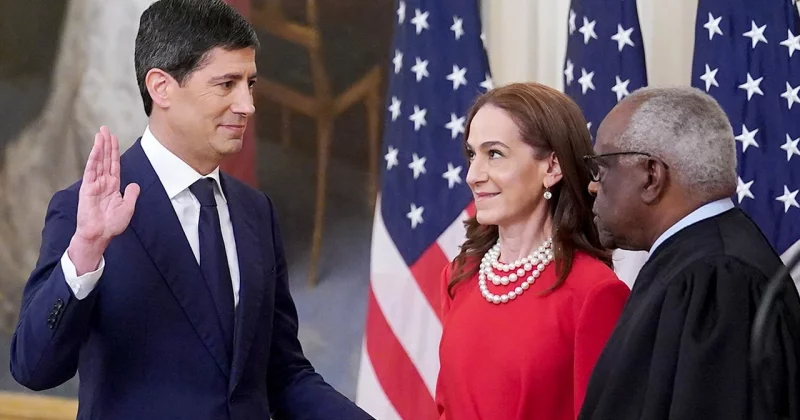
Trump says Kevin Warsh will restore confidence in the Federal Reserve
The new Fed chair, sworn in at the White House, promises 'regime change' at the central bank while Trump urges him to 'do your own thing.'
Kevin Warsh is officially the new chair of the Federal Reserve, sworn in on May 22, 2026, at a White House ceremony. President Donald Trump used the occasion to declare that Warsh would restore public confidence in the institution and keep it independent.
The Senate confirmed Warsh on May 13 by a vote of 54-45. Trump had nominated him on January 30, 2026, to succeed Jerome Powell, whose term concluded earlier that month.
A crisis-tested pick with a reform agenda
Warsh is not a newcomer to the Fed. He served on the Board of Governors from February 2006 to March 2011, a period that included the worst financial crisis since the Great Depression. He was just 35 when he was appointed, making him the youngest Fed governor at the time.
During those years, he worked closely with then-Chair Ben Bernanke as the central bank scrambled to prevent a complete meltdown of the global financial system.
Warsh has been vocally critical of the Fed’s post-pandemic policies, arguing that the central bank was too slow to tighten and too aggressive in expanding its balance sheet. Now at 56, he returns to the institution with what he’s calling a “regime change” agenda.
Before his time at the Fed, Warsh served as a special assistant to President George W. Bush for economic policy.
The news moving money, markets, and the world—before your day starts.
Daily. Free. Join 34,000+ readers across crypto, finance, and policy.
Independence, with an asterisk
Trump told Warsh to “do your own thing,” stressing the importance of the Fed operating free from political interference. Holding the swearing-in at the White House, rather than at the Fed’s own headquarters on Constitution Avenue, sent a visual message about which building matters more.
Warsh himself has pledged to keep political influence out of the Fed’s decision-making processes.
What this means for markets and crypto
For investors across asset classes, including crypto, the Warsh era at the Fed could mark a meaningful departure from the monetary policy framework that has dominated since the pandemic. His well-documented skepticism of the Fed’s balance sheet expansion suggests he may pursue a faster unwinding of the central bank’s holdings than markets currently expect.
For Bitcoin and the broader crypto market, tighter monetary policy historically pressures speculative assets as the cost of capital rises and yield-bearing alternatives become more attractive. Bitcoin’s correlation with macro liquidity conditions has been well-documented over the past several years.
The 54-45 confirmation vote is worth noting here as well. A narrow margin means Warsh doesn’t arrive with overwhelming political capital, which could constrain how aggressively he pursues his reform agenda in practice.