
Nexo Earn with Nexo
Donald Trump claims Mojtaba Khamenei has agreed to nuclear deal

Donald Trump claims Mojtaba Khamenei has agreed to nuclear deal

The president says Iran will not possess nuclear weapons, but frozen assets and verification gaps cloud the path forward, and Bitcoin is watching closely

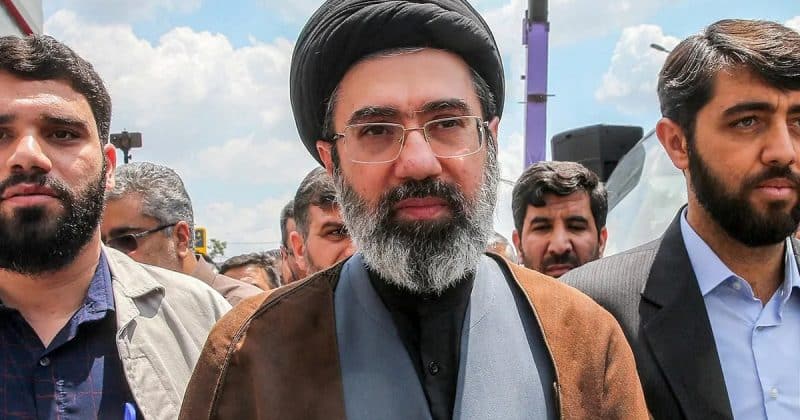
President Donald Trump declared on June 3, 2026, that Iran has agreed not to develop nuclear weapons, adding that Mojtaba Khamenei, the country’s Supreme Leader, has personally signed off on the emerging deal. When a reporter at the White House asked whether Khamenei had confirmed the agreement, Trump responded simply: “As far as I know, the answer is yes.”

No independent verification of Khamenei’s personal agreement to the critical terms has surfaced.

What we actually know about the negotiations

The diplomatic track traces back to a violent origin. On February 28, 2026, a series of US-Israeli military strikes commenced against Iranian targets, resulting in the death of former Supreme Leader Ali Khamenei. Those strikes eventually led to a ceasefire on April 8, 2026, setting the stage for what has become one of the most closely watched diplomatic processes in recent memory.

Trump has pushed for stringent terms, including the complete disbandment and destruction of Iran’s stockpile of highly enriched uranium. Tehran, for its part, is reportedly demanding the release of $24 billion in frozen assets as a precondition for moving talks forward, with $12 billion requested up front just for an interim agreement.

Advertisement

Iranian officials have actively dismissed some claims of progress as overstated. Since late February 2026, Trump has claimed a deal is “very close” or “just around the corner” on at least 37 separate occasions.

The core sticking points remain unresolved. Enrichment limits, the timeline for asset releases, and the verification mechanisms for any eventual agreement all appear to be areas where the two sides remain far apart.

Bitcoin’s geopolitical antenna is twitching

During May and June 2026, Bitcoin’s trading range fluctuated between $70,000 and $78,000, with 1-3% price swings correlating directly to headlines about the Iran talks.

The $24 billion in frozen Iranian assets adds another layer. Should a formal agreement eventually unlock those funds, it could relieve pressure on global oil prices that spiked during the conflict period.

What this means for investors

A verified nuclear deal removes a major source of geopolitical uncertainty, eases sanctions-related oil supply constraints, and creates a broadly risk-on environment where digital assets tend to perform well. Bitcoin sitting in the mid-$70K range during active negotiation headlines suggests the market is pricing in partial success but hasn’t fully committed to the upside scenario.

Trump has made 37 claims of imminent progress. Iranian officials are publicly contradicting the characterization of how advanced these talks are. No independent source has confirmed that Khamenei personally agreed to the key terms.

An interim agreement with partial asset releases is a very different animal from a comprehensive framework with international verification. The former might give markets a brief sugar high. The latter would represent a genuine structural shift in Middle Eastern geopolitics.

Disclosure: This article was edited by Editorial Team. For more information on how we create and review content, see our Editorial Policy.

Donald Trump claims Mojtaba Khamenei has agreed to nuclear deal

Donald Trump claims Mojtaba Khamenei has agreed to nuclear deal

The president says Iran will not possess nuclear weapons, but frozen assets and verification gaps cloud the path forward, and Bitcoin is watching closely

President Donald Trump declared on June 3, 2026, that Iran has agreed not to develop nuclear weapons, adding that Mojtaba Khamenei, the country’s Supreme Leader, has personally signed off on the emerging deal. When a reporter at the White House asked whether Khamenei had confirmed the agreement, Trump responded simply: “As far as I know, the answer is yes.”

No independent verification of Khamenei’s personal agreement to the critical terms has surfaced.

What we actually know about the negotiations

The diplomatic track traces back to a violent origin. On February 28, 2026, a series of US-Israeli military strikes commenced against Iranian targets, resulting in the death of former Supreme Leader Ali Khamenei. Those strikes eventually led to a ceasefire on April 8, 2026, setting the stage for what has become one of the most closely watched diplomatic processes in recent memory.

Trump has pushed for stringent terms, including the complete disbandment and destruction of Iran’s stockpile of highly enriched uranium. Tehran, for its part, is reportedly demanding the release of $24 billion in frozen assets as a precondition for moving talks forward, with $12 billion requested up front just for an interim agreement.

Advertisement

Iranian officials have actively dismissed some claims of progress as overstated. Since late February 2026, Trump has claimed a deal is “very close” or “just around the corner” on at least 37 separate occasions.

The core sticking points remain unresolved. Enrichment limits, the timeline for asset releases, and the verification mechanisms for any eventual agreement all appear to be areas where the two sides remain far apart.

Bitcoin’s geopolitical antenna is twitching

During May and June 2026, Bitcoin’s trading range fluctuated between $70,000 and $78,000, with 1-3% price swings correlating directly to headlines about the Iran talks.

The $24 billion in frozen Iranian assets adds another layer. Should a formal agreement eventually unlock those funds, it could relieve pressure on global oil prices that spiked during the conflict period.

What this means for investors

A verified nuclear deal removes a major source of geopolitical uncertainty, eases sanctions-related oil supply constraints, and creates a broadly risk-on environment where digital assets tend to perform well. Bitcoin sitting in the mid-$70K range during active negotiation headlines suggests the market is pricing in partial success but hasn’t fully committed to the upside scenario.

Trump has made 37 claims of imminent progress. Iranian officials are publicly contradicting the characterization of how advanced these talks are. No independent source has confirmed that Khamenei personally agreed to the key terms.

An interim agreement with partial asset releases is a very different animal from a comprehensive framework with international verification. The former might give markets a brief sugar high. The latter would represent a genuine structural shift in Middle Eastern geopolitics.

Disclosure: This article was edited by Editorial Team. For more information on how we create and review content, see our Editorial Policy.