
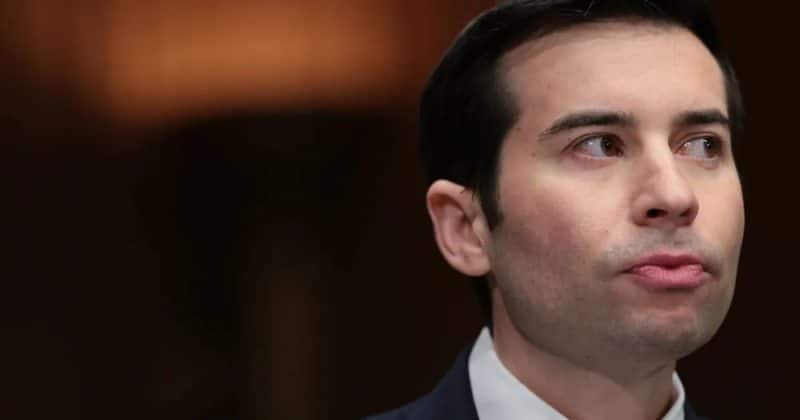
Trump nominates Keith Sonderling to lead Department of Labor
Sonderling's nomination signals a more open regulatory stance on crypto in retirement accounts
Keith Sonderling is getting the permanent job. President Trump nominated Sonderling to serve as Secretary of Labor on June 30, 2026, elevating a familiar face who has been running the department in an acting capacity since April 20, 2026.
For crypto markets, this is worth paying attention to. Sonderling has already moved to reshape how the Department of Labor thinks about digital assets in retirement accounts, and a permanent appointment would give him a longer runway to finish what he started.
From EEOC to the top of the Labor Department
Sonderling is not new to the federal bureaucracy. He served as a Commissioner at the Equal Employment Opportunity Commission from 2020 to 2024, then worked in the Wage and Hour Division during Trump’s first term.
Trump confirmed him as Deputy Secretary of Labor on March 12, 2025. When the prior secretary departed, Sonderling stepped into the acting role and, by most accounts inside the department, handled the transition steadily enough to earn the permanent nomination.
Early June 2026 reports described him as a stabilizing presence within the department, someone who kept operations on track during a period of leadership uncertainty.
The nomination still requires Senate confirmation, the same process Sonderling cleared as recently as March 2025 when he was confirmed as deputy.
The retirement account question and what it means for crypto
The Department of Labor holds significant sway over how 401(k) plans are managed. Under the Employee Retirement Income Security Act, the department sets fiduciary standards that govern what investment options plan sponsors can offer workers.
The news moving money, markets, and the world—before your day starts.
Daily. Free. Join 34,000+ readers across crypto, finance, and policy.
Under Sonderling’s leadership, the department proposed rules clarifying those fiduciary duties in a way that takes a neutral stance on digital assets. The proposal treats crypto alongside other alternative assets like private equity, rather than singling it out for special scrutiny.
That is a meaningful departure from prior guidance. The Biden-era DOL issued guidance that explicitly discouraged plan fiduciaries from adding cryptocurrency investment options to 401(k) plans, citing concerns about speculative risk and volatility. Sonderling’s department rescinded that guidance.
Democrats have pushed back. The argument from opposition lawmakers centers on retirement security: that workers saving for retirement should not be exposed to the volatility associated with crypto markets, and that a neutral federal stance effectively encourages risky behavior with money people cannot afford to lose.
What this means for the broader crypto market
Sonderling’s permanent nomination signals that the current administration intends to maintain the regulatory reset it has been running since early 2025.
This connects to a broader pattern. The Trump administration has been systematically reviewing federal guidance on alternative asset inclusion across retirement-related entities. Sonderling’s DOL proposals fit within that executive framework rather than representing a solo initiative.
A permanent secretary has more leverage to finalize proposed rules than an acting one. Finalized rules are harder to reverse than proposed guidance, which means a confirmed Sonderling could lock in the current neutral stance in a way that outlasts any single administration.
The Senate confirmation process will likely surface the cryptocurrency question prominently. Expect Democratic senators to press Sonderling on retirement security and the specifics of the fiduciary rule proposal.