
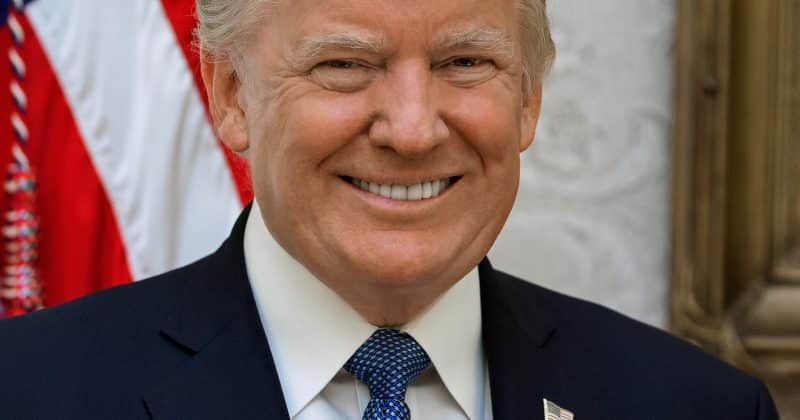
Donald Trump and Masoud Pezeshkian sign memorandum to end US-Iran conflict

Donald Trump and Masoud Pezeshkian sign memorandum to end US-Iran conflict

The 14-point agreement, signed at the Palace of Versailles, includes a $300 billion reconstruction fund and Iran's commitment to never pursue nuclear weapons

The US and Iran just signed a deal that, on paper at least, ends a military conflict that has rattled global markets since late February. President Donald Trump and Iranian President Masoud Pezeshkian put their names to a 14-point Memorandum of Understanding at the Palace of Versailles on June 17, 2026, following a G7 summit dinner hosted by French President Emmanuel Macron.

The agreement covers an immediate and permanent cessation of military operations between the US-Israel alliance and Iran, the reopening of the Strait of Hormuz for commercial shipping, and the lifting of certain US sanctions on Iranian ports and oil sales.

What the deal actually says

The MoU was digitally signed around June 14-17 before the hard-copy ceremony took place on June 17. Iranian officials have characterized the agreement as already “in effect,” which is a notable framing choice for a document that is, legally speaking, non-binding.

The Strait of Hormuz, through which roughly a fifth of the world’s oil passes on any given day, reopens for 60 days under the agreement. Certain US sanctions targeting Iranian ports and oil exports get lifted. And a ceasefire originally established in April 2026 is extended by an additional 60 days to allow further negotiations.

Advertisement

Perhaps the most eye-catching provision is a $300 billion fund earmarked for reconstruction and economic development in Iran. The US is not required to contribute financially to this fund.

In exchange, Iran commits to never pursuing nuclear weapons. The US-Israel military conflict with Iran began on February 28, 2026, and was centered precisely around nuclear issues, so this commitment sits at the heart of the entire framework.

Pakistan played a key role in brokering the agreement.

Why a memorandum is not a treaty

A memorandum of understanding is not a binding treaty. It does not require Senate ratification. It can be walked away from by either side without formal legal consequences.

Trump has explicitly reserved the right to reinstate hostilities if the terms are not met. The next round of negotiations is set to take place in Geneva, with the agenda covering nuclear verification protocols, the permanence of sanctions relief, and detailed reconstruction plans.

What this means for crypto and broader markets

The immediate market implications center on oil. The Strait of Hormuz reopening, even on a 60-day provisional basis, removes one of the most acute supply disruption risks that energy traders have been pricing in since the conflict began in late February.

The $300 billion reconstruction fund, regardless of its funding sources, signals a potentially massive capital deployment into a region that has been largely cut off from global financial flows.

The sanctions relief component deserves particular attention from crypto investors. Sanctions have historically been one of the primary regulatory pressure points for the crypto industry. When sanctions get lifted, it reduces the compliance burden on exchanges, payment processors, and DeFi protocols that operate across borders. Conversely, if the deal collapses and sanctions snap back, those same entities face renewed scrutiny.

The 60-day extension window creates a natural clock for markets. Two months is long enough for optimism to build positions but short enough that any sign of deterioration will trigger rapid repricing.

Disclosure: This article was edited by Editorial Team. For more information on how we create and review content, see our Editorial Policy.

Donald Trump and Masoud Pezeshkian sign memorandum to end US-Iran conflict

Donald Trump and Masoud Pezeshkian sign memorandum to end US-Iran conflict

The 14-point agreement, signed at the Palace of Versailles, includes a $300 billion reconstruction fund and Iran's commitment to never pursue nuclear weapons

The US and Iran just signed a deal that, on paper at least, ends a military conflict that has rattled global markets since late February. President Donald Trump and Iranian President Masoud Pezeshkian put their names to a 14-point Memorandum of Understanding at the Palace of Versailles on June 17, 2026, following a G7 summit dinner hosted by French President Emmanuel Macron.

The agreement covers an immediate and permanent cessation of military operations between the US-Israel alliance and Iran, the reopening of the Strait of Hormuz for commercial shipping, and the lifting of certain US sanctions on Iranian ports and oil sales.

What the deal actually says

The MoU was digitally signed around June 14-17 before the hard-copy ceremony took place on June 17. Iranian officials have characterized the agreement as already “in effect,” which is a notable framing choice for a document that is, legally speaking, non-binding.

The Strait of Hormuz, through which roughly a fifth of the world’s oil passes on any given day, reopens for 60 days under the agreement. Certain US sanctions targeting Iranian ports and oil exports get lifted. And a ceasefire originally established in April 2026 is extended by an additional 60 days to allow further negotiations.

Advertisement

Perhaps the most eye-catching provision is a $300 billion fund earmarked for reconstruction and economic development in Iran. The US is not required to contribute financially to this fund.

In exchange, Iran commits to never pursuing nuclear weapons. The US-Israel military conflict with Iran began on February 28, 2026, and was centered precisely around nuclear issues, so this commitment sits at the heart of the entire framework.

Pakistan played a key role in brokering the agreement.

Why a memorandum is not a treaty

A memorandum of understanding is not a binding treaty. It does not require Senate ratification. It can be walked away from by either side without formal legal consequences.

Trump has explicitly reserved the right to reinstate hostilities if the terms are not met. The next round of negotiations is set to take place in Geneva, with the agenda covering nuclear verification protocols, the permanence of sanctions relief, and detailed reconstruction plans.

What this means for crypto and broader markets

The immediate market implications center on oil. The Strait of Hormuz reopening, even on a 60-day provisional basis, removes one of the most acute supply disruption risks that energy traders have been pricing in since the conflict began in late February.

The $300 billion reconstruction fund, regardless of its funding sources, signals a potentially massive capital deployment into a region that has been largely cut off from global financial flows.

The sanctions relief component deserves particular attention from crypto investors. Sanctions have historically been one of the primary regulatory pressure points for the crypto industry. When sanctions get lifted, it reduces the compliance burden on exchanges, payment processors, and DeFi protocols that operate across borders. Conversely, if the deal collapses and sanctions snap back, those same entities face renewed scrutiny.

The 60-day extension window creates a natural clock for markets. Two months is long enough for optimism to build positions but short enough that any sign of deterioration will trigger rapid repricing.

Disclosure: This article was edited by Editorial Team. For more information on how we create and review content, see our Editorial Policy.