
Trump postpones AI executive order to protect US competitiveness against China
The president pulled back from signing after expressing concerns that certain provisions could undermine America's edge in the global AI race.
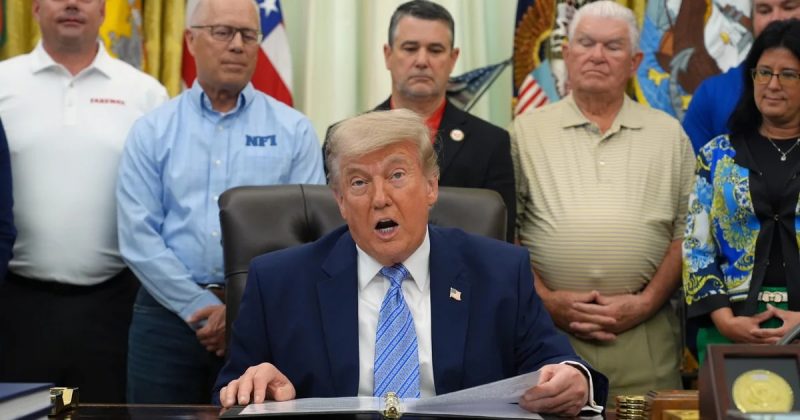
President Trump shelved a planned executive order on artificial intelligence on May 21, 2026, after concluding that parts of the draft could weaken the country’s competitive position against China. The signing ceremony was called off, and the order was sent back for revisions.
Here’s the thing: the executive order was supposed to be a victory lap for the administration’s AI agenda. Instead, it became a public example of how difficult it is to balance national security concerns with the breakneck pace of AI development.
What was in the draft order
The proposed executive order centered on a voluntary framework requiring developers of advanced AI models to consult with the US government before releasing them to the public. Think of it as a soft check-in system, not a hard gate, but a structured conversation between Washington and Silicon Valley before the next frontier model goes live.
Federal agencies would also have been directed to deploy advanced AI models to bolster cybersecurity across critical sectors, including banking and healthcare. The draft included 90-day security testing protocols for AI models, a timeline that would have created a standardized evaluation window before deployment in sensitive government applications.
The order was partly a response to growing alarm in the private sector about AI-driven cyberattacks. Concerns raised by executives have been linked to models like Anthropic’s Mythos, which apparently spooked enough people in both government and industry to push the administration toward action.
But Trump wasn’t satisfied. He indicated that specific provisions in the draft could hamper US leadership in AI, and he wasn’t interested in signing something that handed China any advantage, however marginal.
The broader policy context
This postponement doesn’t exist in a vacuum. It builds on a policy trajectory the administration established early in Trump’s term with Executive Order 14179, signed on January 23, 2025. That earlier order focused on removing regulatory barriers to national AI leadership, essentially clearing the runway for American companies to build and deploy AI systems faster than their global competitors.
The crypto and markets news you actually need—every morning.
Daily. Free. Join 34,000+ readers across crypto, finance, and policy.
The tension is obvious: EO 14179 was about getting out of the way, while the new draft order was about inserting the government into the development pipeline, even if only through a voluntary framework. Those two impulses don’t naturally coexist, and the postponement suggests the administration recognized the contradiction before it became permanent policy.
The AI race between the US and China has been a defining feature of the administration’s technology posture. Every policy decision gets filtered through a competitive lens, and any regulation that could slow American AI companies, even temporarily, faces intense scrutiny. The 90-day security testing protocols, for instance, might sound reasonable in isolation. But if Chinese AI labs face no equivalent constraint, that’s 90 days of unilateral delay.
This is the core problem with AI governance right now. Security and speed are both genuine priorities, and they pull in opposite directions.
What this means for investors and the tech sector
The immediate effect of the postponement is uncertainty, which markets generally don’t love. AI-related stocks and investments had been riding a wave of enthusiasm fueled partly by the administration’s deregulatory stance. A new executive order that reintroduced even voluntary oversight mechanisms was already a shift in tone. The fact that it was pulled before signing adds another layer of unpredictability.
For investors in AI-adjacent sectors, the key question is what the revised order will look like when it eventually resurfaces. If the administration strips out provisions it views as competitively disadvantageous, the final version could end up being more permissive than the original draft. That would likely be welcomed by the market. If the security concerns that motivated the order in the first place, particularly around models like Anthropic’s Mythos, continue to escalate, the revised order might actually be more restrictive in targeted areas while loosening constraints elsewhere.
Look, the crypto and digital asset space doesn’t have a direct line to this particular policy debate. But AI policy and broader technology regulation are increasingly intertwined. Federal agencies deploying AI for cybersecurity in banking, for example, has downstream implications for fintech infrastructure, which overlaps heavily with crypto custody and compliance systems. The regulatory environment for one emerging technology tends to influence expectations for others.
The administration has been sending mixed signals. On one hand, it wants to be seen as aggressively pro-innovation. On the other, the cybersecurity threats that advanced AI models pose are real enough that even a deregulation-minded White House felt compelled to draft an oversight framework. The fact that Trump personally intervened to delay it suggests the final policy will reflect his instinct to prioritize competitive advantage over precautionary regulation.
For anyone building or investing in AI, the watch item is straightforward: how much of the voluntary consultation framework survives the revision process, and whether the 90-day testing protocols make it into the final version. Those two provisions will determine whether this executive order ends up being a meaningful check on AI deployment or mostly symbolic. Given the administration’s track record with EO 14179, betting on the symbolic end of the spectrum isn’t unreasonable.