
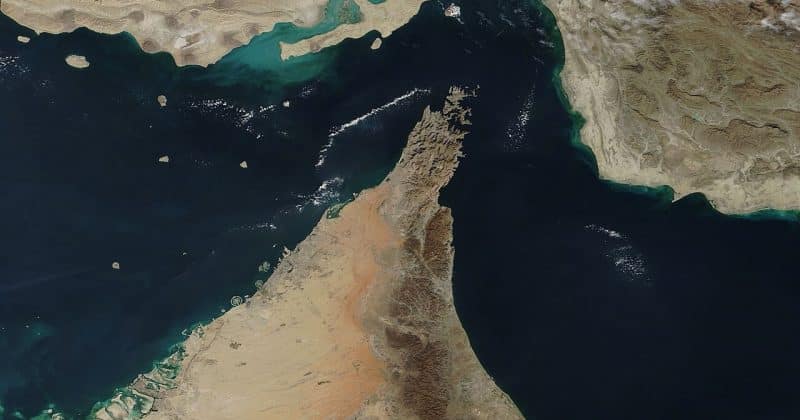
Trump directs US military to safeguard oil tankers in Strait of Hormuz, and crypto markets are paying attention
Project Freedom aims to restore the flow of 100 million stranded barrels through the world's most critical oil chokepoint, with ripple effects reaching Bitcoin and beyond.
President Donald Trump announced “Project Freedom” on May 3, directing the US military to escort commercial ships, including oil tankers, through the Strait of Hormuz. The initiative is effective immediately and targets a chokepoint responsible for roughly 20% of global oil trade.
An estimated 100 million barrels of oil had been stranded due to earlier disruptions in the region, with daily tanker transits plummeting from around 130 to as few as 6 during the worst of the conflict in early 2026.
What happened and why it matters
The Strait of Hormuz is a narrow waterway between Iran and Oman. Virtually every barrel of oil exported from the Persian Gulf passes through it.
Trump noted that Iran had permitted 10 oil tankers through as a goodwill gesture back in March, a diplomatic breadcrumb that apparently preceded the broader reopening effort. Project Freedom formalizes the military’s role in ensuring that passage stays open.
Oil prices responded by dropping about 2% immediately after the announcement.
Macro, rates, and crypto—what moved markets and what matters next.
Daily. Free. Join 34,000+ readers across crypto, finance, and policy.
Bitcoin’s geopolitical reflex
When blockade announcements hit in April, Bitcoin dropped below $71,000 on April 12. As peace deal news emerged in May, including the reopening of the strait, the price began recovering.
Perhaps the most intriguing development on the crypto side is the reported emergence of “Hormuz Safe,” a Bitcoin-settled maritime insurance platform that Iran has been exploring. The potential scale of such a platform has been estimated at around $10 billion.
What this means for investors
For energy market participants, Project Freedom should provide some near-term supply relief. Getting 100 million stranded barrels flowing again adds meaningful volume to global markets.
The Hormuz Safe concept, if it gains traction, could represent a meaningful new demand vector for Bitcoin. A $10 billion maritime insurance platform settled in BTC would also likely draw intense regulatory scrutiny from the US, which has historically taken a dim view of sanctions evasion through crypto channels.