
Nexo Earn with Nexo
Trump relaunches tariffs war after court strikes down levies

Trump relaunches tariffs war after court strikes down levies

The president invoked a different trade law to reimpose global tariffs after the Supreme Court ruled his original levies unconstitutional, triggering fresh legal battles and crypto market volatility.

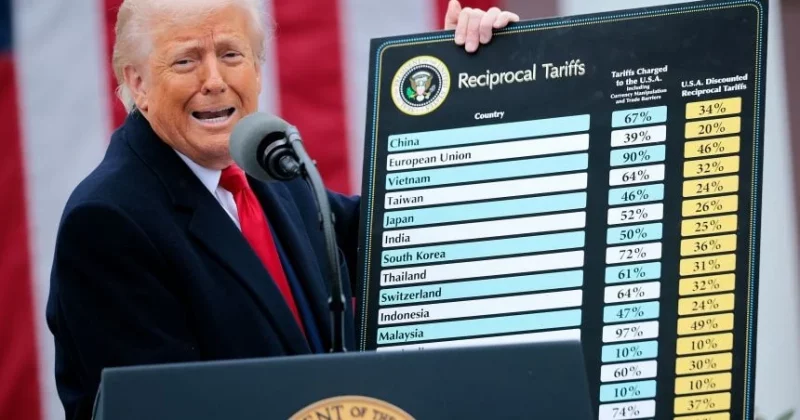
The tariff saga has entered its sequel phase, and it’s arguably messier than the original. After the US Supreme Court invalidated President Trump’s sweeping import levies in a 6-3 ruling, the administration wasted little time finding an alternative legal pathway to reimpose duties on global imports.

The result: a new 10% global tariff enacted under Section 122 of the Trade Act of 1974, which has since been bumped to 15%. That replacement tariff is now facing its own legal challenges, creating a loop of policy whiplash that has rattled both traditional and crypto markets.

The Supreme Court ruling and its aftermath

On February 20, 2026, the Supreme Court ruled that the president did not have the authority to impose broad-based tariffs under the International Emergency Economic Powers Act (IEEPA). The 6-3 decision effectively wiped out the existing duty structure and opened the door for importers to reclaim what they’d already paid.

The scale of those potential refunds is staggering: up to $166 billion. As of mid-May 2026, roughly $35.5 billion in refunds for the invalidated tariffs have already been processed through a newly created online portal, though delays have been reported due to ongoing litigation.

Advertisement

Trump’s response came quickly. Rather than accept the ruling as a policy dead end, the administration pivoted to Section 122 of the Trade Act of 1974, a statute that grants the president authority to impose temporary tariffs to address large trade deficits. The initial 10% rate was announced formally, followed by an increase to 15% via a Truth Social post.

The replacement tariffs haven’t had a smooth ride either. The Court of International Trade subsequently struck down elements of the new levies, though a temporary stay has prevented a full block on the 10% tariff as of May 2026.

Bitcoin and crypto markets feel the shockwaves

Bitcoin experienced a decline of more than 5% following the announcement of the tariff increases in February 2026. Tariff escalations have historically correlated with risk-off sentiment across both equity and crypto markets.

Analysts have noted that sustained policy instability and inflationary pressures from tariffs could drive more capital toward Bitcoin as a hedging instrument over time, even as traders sell Bitcoin on the tariff headline in the short term.

What this means for investors

For crypto investors specifically, the key variable to watch is inflation expectations. If the 15% global tariff survives legal challenges, or even if a reduced version persists, the inflationary impulse could complicate the Federal Reserve’s rate path.

The $35.5 billion in refunds already processed represents real liquidity flowing back into the economy. The remaining gap between that figure and the potential $166 billion ceiling is worth monitoring, as further refund distributions could provide additional fuel.

Traders should expect continued volatility tied to court rulings and administration announcements. The temporary stay preventing a full block on the replacement tariffs means another ruling could land at any point, and if history is any guide, Bitcoin will react before anyone has time to read the actual opinion.

Disclosure: This article was edited by Editorial Team. For more information on how we create and review content, see our Editorial Policy.

Trump relaunches tariffs war after court strikes down levies

Trump relaunches tariffs war after court strikes down levies

The president invoked a different trade law to reimpose global tariffs after the Supreme Court ruled his original levies unconstitutional, triggering fresh legal battles and crypto market volatility.

The tariff saga has entered its sequel phase, and it’s arguably messier than the original. After the US Supreme Court invalidated President Trump’s sweeping import levies in a 6-3 ruling, the administration wasted little time finding an alternative legal pathway to reimpose duties on global imports.

The result: a new 10% global tariff enacted under Section 122 of the Trade Act of 1974, which has since been bumped to 15%. That replacement tariff is now facing its own legal challenges, creating a loop of policy whiplash that has rattled both traditional and crypto markets.

The Supreme Court ruling and its aftermath

On February 20, 2026, the Supreme Court ruled that the president did not have the authority to impose broad-based tariffs under the International Emergency Economic Powers Act (IEEPA). The 6-3 decision effectively wiped out the existing duty structure and opened the door for importers to reclaim what they’d already paid.

The scale of those potential refunds is staggering: up to $166 billion. As of mid-May 2026, roughly $35.5 billion in refunds for the invalidated tariffs have already been processed through a newly created online portal, though delays have been reported due to ongoing litigation.

Advertisement

Trump’s response came quickly. Rather than accept the ruling as a policy dead end, the administration pivoted to Section 122 of the Trade Act of 1974, a statute that grants the president authority to impose temporary tariffs to address large trade deficits. The initial 10% rate was announced formally, followed by an increase to 15% via a Truth Social post.

The replacement tariffs haven’t had a smooth ride either. The Court of International Trade subsequently struck down elements of the new levies, though a temporary stay has prevented a full block on the 10% tariff as of May 2026.

Bitcoin and crypto markets feel the shockwaves

Bitcoin experienced a decline of more than 5% following the announcement of the tariff increases in February 2026. Tariff escalations have historically correlated with risk-off sentiment across both equity and crypto markets.

Analysts have noted that sustained policy instability and inflationary pressures from tariffs could drive more capital toward Bitcoin as a hedging instrument over time, even as traders sell Bitcoin on the tariff headline in the short term.

What this means for investors

For crypto investors specifically, the key variable to watch is inflation expectations. If the 15% global tariff survives legal challenges, or even if a reduced version persists, the inflationary impulse could complicate the Federal Reserve’s rate path.

The $35.5 billion in refunds already processed represents real liquidity flowing back into the economy. The remaining gap between that figure and the potential $166 billion ceiling is worth monitoring, as further refund distributions could provide additional fuel.

Traders should expect continued volatility tied to court rulings and administration announcements. The temporary stay preventing a full block on the replacement tariffs means another ruling could land at any point, and if history is any guide, Bitcoin will react before anyone has time to read the actual opinion.

Disclosure: This article was edited by Editorial Team. For more information on how we create and review content, see our Editorial Policy.