
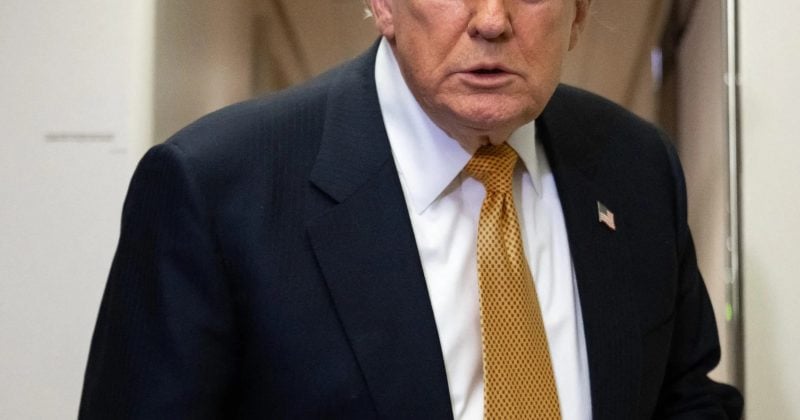
Trump backs Russia sanctions bill with 500% tariffs, raising crypto evasion concerns

Trump backs Russia sanctions bill with 500% tariffs, raising crypto evasion concerns

The Sanctioning Russia Act of 2025 imposes massive tariffs on Russian commodities while the question of crypto-based sanctions evasion looms large over the legislation.

President Donald Trump has agreed to support the Sanctioning Russia Act of 2025, a bipartisan bill originally championed by Senators Lindsey Graham and Richard Blumenthal that would impose a 500% tariff on imports of Russian petroleum, uranium, and other goods from non-compliant countries. The agreement, reached on July 10, 2026, marks a significant pivot for an administration that has often sent mixed signals on its approach to Moscow.

The bill, formally designated S.1241, had been collecting dust in Congress for more than a year after its introduction on April 1, 2025. Now it has the White House’s blessing, and the implications stretch well beyond traditional commodity markets, particularly into the crypto space where Russia has been quietly building sanctions evasion infrastructure.

Advertisement

What the bill actually does

A 500% tariff on Russian-origin petroleum, uranium, and other covered goods would apply to countries that continue importing those goods without compliance. The bill includes trigger mechanisms that activate additional sanctions under specific conditions. If Russia refuses to engage in peace negotiations, violates existing agreements, launches another invasion of Ukraine, or attempts to undermine the Ukrainian government, the penalties escalate further.

Senator Graham has framed the agreement with the Trump administration as a major boost to efforts pressuring Moscow amid a conflict with Ukraine that has now dragged on for five years. The bipartisan nature of the bill, co-authored with Democrat Richard Blumenthal, gives it a rare political durability that single-party initiatives tend to lack.

The crypto elephant in the room

The current draft contains no specific provisions targeting cryptocurrency as a sanctions evasion tool. Russia has moved over $2.2 billion through its A7A5 ruble-backed token network, a crypto infrastructure specifically designed to circumvent sanctions. That network was itself sanctioned in 2025. Since the invasion of Ukraine, Russian entities have increasingly turned to crypto as a pressure valve when traditional banking channels get squeezed.

What crypto investors should be watching

Crypto companies operating in sanctions compliance, including blockchain analytics firms like Chainalysis and Elliptic, stand to benefit from increased demand for transaction monitoring services. With $2.2 billion already documented flowing through just one Russian token network, the scale of the monitoring challenge is substantial.

Agencies like OFAC and FinCEN have the authority to extend sanctions compliance requirements to digital asset service providers without waiting for new legislation. Exchanges, custodians, and DeFi protocols with any exposure to Russian-linked wallets should be preparing for heightened scrutiny.

Disclosure: This article was edited by Editorial Team. For more information on how we create and review content, see our Editorial Policy.

Trump backs Russia sanctions bill with 500% tariffs, raising crypto evasion concerns

Trump backs Russia sanctions bill with 500% tariffs, raising crypto evasion concerns

The Sanctioning Russia Act of 2025 imposes massive tariffs on Russian commodities while the question of crypto-based sanctions evasion looms large over the legislation.

President Donald Trump has agreed to support the Sanctioning Russia Act of 2025, a bipartisan bill originally championed by Senators Lindsey Graham and Richard Blumenthal that would impose a 500% tariff on imports of Russian petroleum, uranium, and other goods from non-compliant countries. The agreement, reached on July 10, 2026, marks a significant pivot for an administration that has often sent mixed signals on its approach to Moscow.

The bill, formally designated S.1241, had been collecting dust in Congress for more than a year after its introduction on April 1, 2025. Now it has the White House’s blessing, and the implications stretch well beyond traditional commodity markets, particularly into the crypto space where Russia has been quietly building sanctions evasion infrastructure.

Advertisement

What the bill actually does

A 500% tariff on Russian-origin petroleum, uranium, and other covered goods would apply to countries that continue importing those goods without compliance. The bill includes trigger mechanisms that activate additional sanctions under specific conditions. If Russia refuses to engage in peace negotiations, violates existing agreements, launches another invasion of Ukraine, or attempts to undermine the Ukrainian government, the penalties escalate further.

Senator Graham has framed the agreement with the Trump administration as a major boost to efforts pressuring Moscow amid a conflict with Ukraine that has now dragged on for five years. The bipartisan nature of the bill, co-authored with Democrat Richard Blumenthal, gives it a rare political durability that single-party initiatives tend to lack.

The crypto elephant in the room

The current draft contains no specific provisions targeting cryptocurrency as a sanctions evasion tool. Russia has moved over $2.2 billion through its A7A5 ruble-backed token network, a crypto infrastructure specifically designed to circumvent sanctions. That network was itself sanctioned in 2025. Since the invasion of Ukraine, Russian entities have increasingly turned to crypto as a pressure valve when traditional banking channels get squeezed.

What crypto investors should be watching

Crypto companies operating in sanctions compliance, including blockchain analytics firms like Chainalysis and Elliptic, stand to benefit from increased demand for transaction monitoring services. With $2.2 billion already documented flowing through just one Russian token network, the scale of the monitoring challenge is substantial.

Agencies like OFAC and FinCEN have the authority to extend sanctions compliance requirements to digital asset service providers without waiting for new legislation. Exchanges, custodians, and DeFi protocols with any exposure to Russian-linked wallets should be preparing for heightened scrutiny.

Disclosure: This article was edited by Editorial Team. For more information on how we create and review content, see our Editorial Policy.