
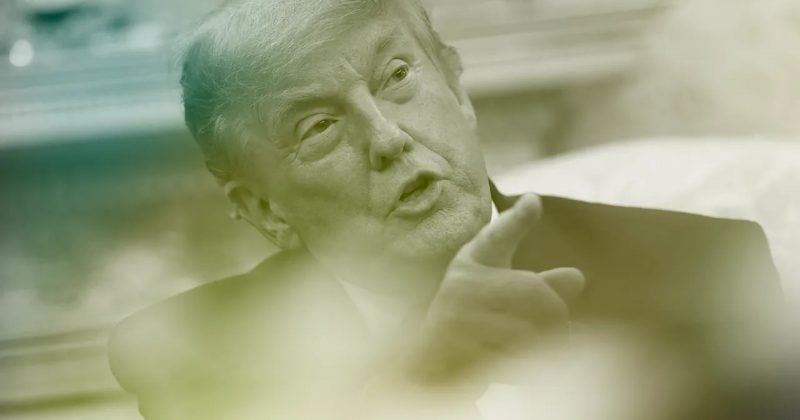
Trump endorses bipartisan Russia sanctions package with 500% tariff on Russian imports
The sweeping legislation targets Russia's energy sector and financial institutions, raising fresh questions about crypto's role in sanctions evasion.
President Trump has thrown his weight behind the Sanctioning Russia Act of 2025, a bipartisan sanctions package that would slam Russia with some of the harshest economic penalties ever proposed by the US Congress. The endorsement, confirmed on July 13, 2026, gives the legislation real political momentum in what has been a deeply divided Capitol Hill.
The bill, formally designated S.1241, was originally championed by the late Senator Lindsey Graham in collaboration with Senator Richard Blumenthal. Trump’s backing arrives shortly after Graham’s death, lending the measure both political gravity and a degree of bipartisan sentimentality that rarely surfaces in modern Washington.
What’s actually in the bill
The headline provision is a minimum tariff of 500% on Russian goods and services. Beyond the tariff, the bill includes visa and property-blocking sanctions targeting Russian interests, along with strict penalties aimed at Russian financial institutions. The energy sector, which remains Moscow’s economic lifeline, sits squarely in the crosshairs.
Key co-sponsors include Senators Richard Blumenthal, Roger Wicker, and Jeanne Shaheen. Graham introduced S.1241 on April 1, 2025. During a visit to Kyiv, Graham publicly asserted that the bill would ultimately become law.
The crypto angle no one is talking about yet
The Sanctioning Russia Act doesn’t mention cryptocurrencies or digital assets. The legislation is laser-focused on traditional economic levers: tariffs, banking restrictions, and asset freezes.
The news moving money, markets, and the world—before your day starts.
Daily. Free. Join 34,000+ readers across crypto, finance, and policy.
When the US and its allies froze Russian central bank reserves and cut major Russian banks from SWIFT following the 2022 invasion of Ukraine, regulators almost immediately turned their attention to whether crypto was being used as an escape hatch. The Treasury Department’s Office of Foreign Assets Control (OFAC) has since sanctioned multiple crypto wallets and mixing services tied to sanctioned entities.
After the 2022 SWIFT cutoffs, crypto exchanges faced intense pressure to implement sanctions screening. Several platforms delisted Russian-linked tokens and blocked accounts tied to sanctioned individuals.
Stablecoin issuers face particular exposure here. Tether and Circle have both had to respond to questions about whether their tokens are being used to circumvent sanctions. The Tornado Cash precedent, where OFAC sanctioned an entire smart contract protocol, suggests that DeFi platforms operating without any sanctions screening could face similar treatment.
What this means for investors
Russia remains one of the world’s largest oil and natural gas exporters, and any legislation that credibly threatens to further isolate Moscow from global markets will send ripples through energy pricing. Oil futures have historically spiked on sanctions escalation news.
For investors positioning around this news, keep an eye on Treasury Department guidance, OFAC designations, and any new FinCEN rulemaking that references Russia sanctions compliance in the digital asset context.