
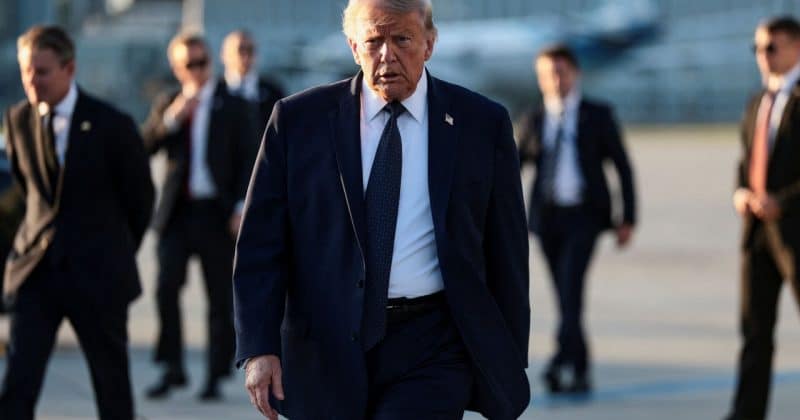
Donald Trump signs memo to end Iran war, White House official says
The 14-point memorandum of understanding, signed during the G7 summit in France, calls for reopening the Strait of Hormuz and sets a 30-to-60-day window for nuclear and sanctions negotiations.
President Donald Trump signed a memorandum of understanding with Iran on June 17, 2026, marking the most significant diplomatic breakthrough between Washington and Tehran in decades. The agreement, inked on the sidelines of the G7 summit in France, lays out a framework for ending hostilities that had been escalating throughout 2026.
Iranian President Masoud Pezeshkian also signed the document, confirming both nations’ commitment to the process. The MOU was executed in both electronic and hard copy formats, a procedural detail that underscores the formality of a moment many thought would never arrive.
What the 14-point agreement actually says
The memorandum contains 14 points centered on peace efforts and strategic negotiations between the two countries. Among the most consequential provisions: the reopening of the Strait of Hormuz, the narrow waterway through which a massive share of the world’s oil supply passes.
The MOU also mandates further negotiations on Iran’s nuclear program and sanctions relief within a 30-to-60-day window following the signing. Trump emphasized that the agreement asserts Iran will not acquire nuclear weapons, a red line his administration had drawn repeatedly in the months leading up to the deal.
This is not a peace treaty. Administration officials have been careful to characterize the MOU as a preliminary document, an interim step that creates the architecture for a comprehensive deal rather than delivering one.
The agreement builds on a ceasefire reportedly established in April 2026, which had already begun cooling tensions after months of escalating conflict involving the US, Israel, and Iran across the Middle East. Key negotiators from the Trump administration included Steve Witkoff and Jared Kushner, both of whom played central roles in facilitating the diplomatic channel.
The geopolitical backdrop
Discussions around a potential $300 billion reconstruction fund have also surfaced amid these talks, though the details of such a fund, including who would contribute and how it would be administered, remain part of the broader negotiations still ahead.
The G7 setting was no accident. Signing the memorandum in France, surrounded by leaders of the world’s largest advanced economies, gave the agreement a multilateral veneer even though it is fundamentally a bilateral deal between Washington and Tehran.
What this means for markets and crypto investors
The most immediate market impact runs through energy. The Strait of Hormuz is one of the most strategically important chokepoints on Earth for oil transportation. Its disruption during the conflict contributed to volatility in crude prices that rippled across every asset class.
No mention of cryptocurrencies or digital assets was made during the discussions surrounding the MOU.
Sanctions relief is particularly worth monitoring for crypto market participants. Iran has historically been one of the more active state-level users of cryptocurrency to circumvent economic restrictions. Any formal easing of sanctions could shift those dynamics, potentially reducing illicit flows while opening new questions about regulatory treatment of Iranian-linked wallets and transactions on major blockchains.
The $300 billion reconstruction fund discussions add another layer. Capital flows of that magnitude, if they materialize, would represent a significant reallocation of resources in the region.